1864 Copper-Nickel Indian Head Penny Value and What Yours Might Be Worth

Your Old Coin Could Be Valuable!
Identify It & Know Its Real Value — Free Download


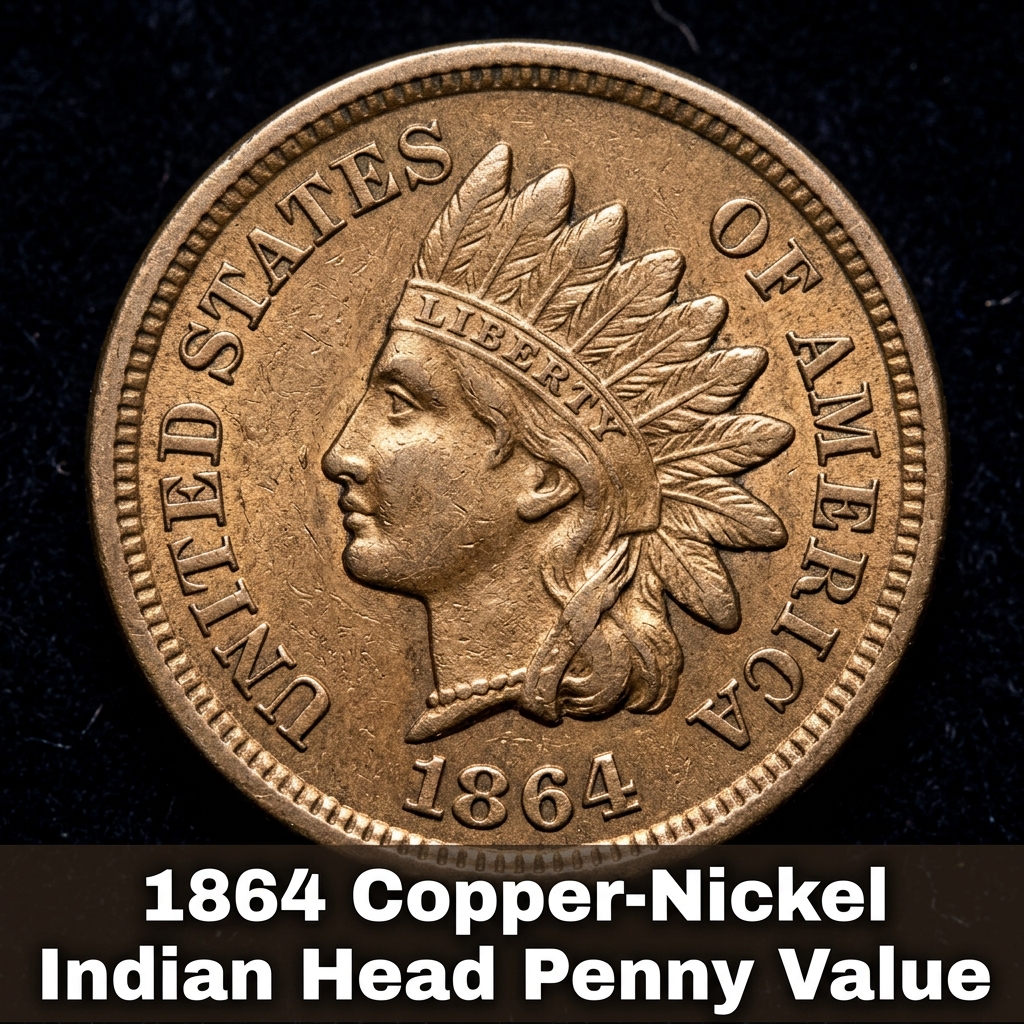
The 1864 Copper-Nickel Indian Head Penny is worth anywhere from $15 in heavily worn condition to over $200 in well-preserved mint state grades — and certain rare varieties can push that value even higher. If you’ve found one of these old pennies tucked away in a drawer or inherited from a family member, you’re holding a piece of Civil War-era American history that collectors genuinely want.
What Makes the 1864 Indian Head Penny Special
The year 1864 is one of the most interesting in the entire Indian Head Penny series. That’s because the U.S. Mint actually produced two distinct versions of the penny that year — one in the older copper-nickel composition, and a new bronze version introduced mid-year.
The copper-nickel version was the last of its kind. It had been used since 1859, but rising costs and wartime metal demands pushed the Mint to switch to a 95% copper alloy. This makes the 1864 copper-nickel penny historically significant and slightly harder to find than later bronze issues.
If you’re trying to figure out which version you have, a simple test helps: the copper-nickel coin has a lighter, almost silvery appearance compared to the warmer reddish tone of the bronze. You can also use a coin identifier and value app to quickly confirm your coin’s composition and date variety right from your phone.
Your Old Coin Could Be Valuable!
Identify It & Know Its Real Value — Free Download
How Much Is the 1864 Copper-Nickel Indian Head Penny Worth?
Value depends heavily on the coin’s condition, also called its “grade” in collector language. A coin that’s been in circulation for decades will show wear on the high points — Lady Liberty’s cheek, the feather tips, and the hair detail. The more wear, the lower the grade, and generally the lower the value.
Here’s a quick breakdown of typical values for the 1864 Copper-Nickel Indian Head Penny:
Your Old Coin Could Be Valuable!
Identify It & Know Its Real Value — Free Download
| Grade / Condition | Estimated Value |
|---|---|
| Good (G-4) | $15 – $20 |
| Very Good (VG-8) | $20 – $30 |
| Fine (F-12) | $30 – $45 |
| Very Fine (VF-20) | $50 – $75 |
| Extremely Fine (EF-40) | $90 – $130 |
| About Uncirculated (AU-50) | $140 – $180 |
| Mint State (MS-60 and above) | $200 – $500+ |
For a more detailed look at auction results and graded coin sales, you can check the 1864 Indian Head Penny price data in mint state grades to see exactly what collectors have paid in recent transactions.
How to Grade Your 1864 Copper-Nickel Penny at Home
You don’t need to be a professional numismatist to get a rough idea of your coin’s grade. Start with good lighting and a magnifying glass if you have one.
Your Old Coin Could Be Valuable!
Identify It & Know Its Real Value — Free Download
Look at the feathers in the headdress on the obverse — if they’re clearly separated and well-defined, you’re likely looking at a Fine or better grade. If the design is flat and mushy with little detail, it’s probably Good or Very Good.
Check the reverse too. The wreath details and the “ONE CENT” lettering should be bold and readable in higher-grade coins. Rim sharpness also matters — a full, clean rim suggests less circulation wear.
CoinKnow is a great tool for this step. You can photograph both sides of your coin and get an instant grade estimate along with current market values. It takes the guesswork out of the process, especially if you’re new to coin collecting.
Your Old Coin Could Be Valuable!
Identify It & Know Its Real Value — Free Download
The Difference Between the 1864 Copper-Nickel and Bronze Versions
Because both versions were struck in the same year, confusion is common. The copper-nickel version weighs 4.67 grams and measures 19mm in diameter. The bronze version weighs slightly less at 3.11 grams. A small postal or kitchen scale can help you tell them apart.
The copper-nickel coins also have a slightly different look to the portrait — the design is crisper in some areas due to die differences. If you’re comparing your coin to reference images and something looks slightly off, it’s worth checking both varieties.
You might also find it helpful to explore Indian Head coin values across different years and types to understand how the series fits together and what factors drive prices up or down throughout the collection.
Tips for Selling or Keeping Your 1864 Indian Head Penny
If your coin grades EF or better, it’s worth getting it professionally graded by PCGS or NGC before selling. The cost of grading can be worth it because a certified coin almost always sells for more than a raw one — buyers trust the grade.
Your Old Coin Could Be Valuable!
Identify It & Know Its Real Value — Free Download
For lower-grade coins, you can easily sell on eBay, at local coin shops, or at coin shows. Dealers typically pay 50–70% of retail value, so knowing what your coin is worth first gives you negotiating power.
CoinKnow can help you set realistic price expectations before you walk into a dealer’s shop. Just scan your coin, review the grade estimate and recent sales data, and go in with confidence.
If you decide to keep it, store the coin in a non-PVC flip or a hard plastic holder. Never clean it — even a gentle polish can drop a coin’s collector value dramatically.
—
Your Old Coin Could Be Valuable!
Identify It & Know Its Real Value — Free Download
Frequently Asked Questions
Q: How do I know if my 1864 penny is copper-nickel or bronze?
A: The easiest way is to weigh it. Copper-nickel examples weigh about 4.67 grams, while the bronze version weighs around 3.11 grams. You can also look at the color — copper-nickel has a lighter, grayish tone compared to the warmer reddish-brown of bronze coins.
Q: Is the 1864 Copper-Nickel Indian Head Penny rare?
A: It’s not extremely rare, but it is genuinely scarce compared to later Indian Head Pennies. The Mint struck around 13 million of the copper-nickel variety that year, but many have been lost or heavily worn over 160 years. High-grade examples are definitely harder to find.
Q: Can I clean my 1864 Indian Head Penny to improve its value?
A: No — please don’t. Cleaning a coin almost always lowers its value in the eyes of collectors and grading services. Even if it looks shiny afterward, professionals can spot a cleaned coin instantly, and it will be labeled as such, reducing what you can sell it for significantly.