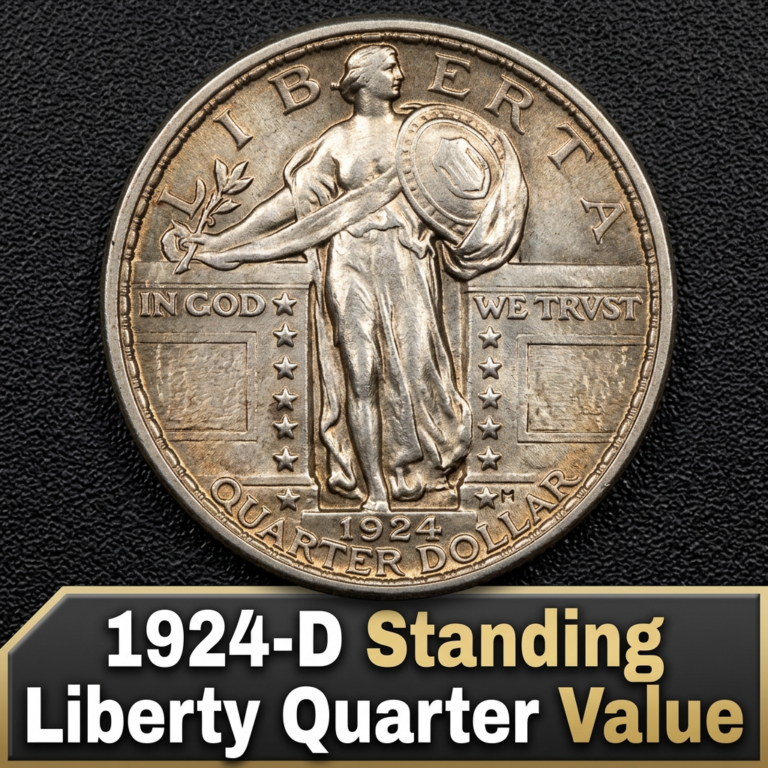
1893-O Barber Quarter Value: Price Guide for Collectors

Your Old Coin Could Be Valuable!
Identify It & Know Its Real Value — Free Download


The 1893-O Barber Quarter is worth anywhere from $15 in heavily worn condition to over $5,000 in pristine mint state. This New Orleans minted coin is a favorite among collectors due to its low mintage and historical significance during the late 19th century American economic shifts.
| Condition | Estimated Value |
|---|---|
| Good (G-4) | $15 – $22 |
| Very Fine (VF-20) | $145 – $180 |
| Extremely Fine (EF-40) | $330 – $410 |
| Uncirculated (MS-63) | $1,100 – $1,500 |
Understanding the History of the 1893-O Barber Quarter
If you have stumbled upon an old silver coin dated 1893 with a small “O” on the back, you might be holding a piece of New Orleans history. The Barber Quarter series, designed by Charles E. Barber, replaced the long-running Seated Liberty design in 1892. By the second year of production, the New Orleans Mint produced only 3.3 million of these quarters, making them considerably scarcer than those minted in Philadelphia.
To accurately determine if your find is a treasure, experts recommend using a top coin identifier and value app to get an instant reading on the strike and variety. During this era, the United States was facing the “Panic of 1893,” a serious economic depression. Because money was tight, coins circulated heavily, and finding an 1893-O that isn’t worn down to a smooth disk is quite a challenge.
The “O” mint mark represents the New Orleans Mint, which closed its doors for coinage in 1909. For many everyday Americans, finding an “O” mint mark is the first step toward discovering a coin that carries a significant premium over its silver melt value. Collectors often look for these specific southern mint issues to complete their sets, often using tools like CoinKnow to track auction histories.
Your Old Coin Could Be Valuable!
Identify It & Know Its Real Value — Free Download
Grading Your 1893-O Barber Quarter Dollar
The most important factor in determining the 1893-O Barber Quarter value is its “grade,” or the amount of wear and tear it has sustained over the last 130 years. Because these coins were struck in 90% silver, they are relatively soft and wore down quickly in the pockets of workers and merchants.
A coin in “Good” condition will show a clear silhouette of Lady Liberty, but most of the details in her hair and the word “LIBERTY” on her crown will be lost. If you can see the letters in “LIBERTY” clearly, your coin is likely in “Fine” condition or better, which significantly increases its market price. Many beginners use CoinKnow to compare their coins against high-resolution images of graded specimens to get a ballpark estimate.
Your Old Coin Could Be Valuable!
Identify It & Know Its Real Value — Free Download
For those lucky enough to find a coin that still has its original “luster”—the shiny, frosty surface from the minting press—the value can jump into the thousands. Professional grading by services like PCGS or NGC is usually required for these high-end pieces to verify their authenticity and precise state of preservation.
| Grade Designation | Visual Characteristics |
|---|---|
| Good (G-4) | Heavily worn; rims flat; date legible. |
| Fine (F-12) | Letters in LIBERTY mostly visible. |
| About Uncirculated (AU-50) | Trace wear on hair and eagle’s breast. |
How the Mint Mark Affects the Price tag
The location of the mint mark is crucial. On a Barber Quarter, check the reverse (the back) of the coin. Look directly below the eagle’s tail feathers and above the letters “QUARTER DOLLAR.” If you see a small “O,” it was minted in New Orleans. If there is no letter, it was minted in Philadelphia, and if there is an “S,” it was minted in San Francisco.
Your Old Coin Could Be Valuable!
Identify It & Know Its Real Value — Free Download
While the 1893-O is not the rarest in the series, it is much more valuable than the Philadelphia version. For example, while an 1893-O in Fine condition might sell for $60, a Philadelphia version in the same condition might only fetch $15. This rarity gap widens as the condition improves. Understanding the 1893-O Barber Quarter market trends shows that southern mint coins generally have higher demand among regional specialists.
Interestingly, the New Orleans mint marks of this era sometimes vary in size or position, though No major “error” varieties are currently recognized for the 1893-O quarter. However, checking your coin with a magnifying glass is always a good idea to ensure you aren’t missing a unique feature that could boost its worth to a specialized collector.
Silver Content vs. Numismatic Value
Every 1893-O Barber Quarter contains 0.1808 troy ounces of pure silver. This means that even if the coin is so worn that the date is barely visible, it will always be worth at least its weight in silver. However, you should never sell this coin for just its silver “melt” value because its collector (numismatic) value is almost always higher.
Your Old Coin Could Be Valuable!
Identify It & Know Its Real Value — Free Download
At current silver prices, the raw metal in the coin is worth roughly $4 to $5. As we have seen, even a poor-condition 1893-O is worth about $15. This is why it is vital to use an app like CoinKnow to check the current market premiums before walking into a “We Buy Gold” shop.
Collectors value these coins for their story. The 1890s were a time of transition in the United States, and these coins were in the pockets of people crossing the country by train or working in the burgeoning industrial cities. That historical “soul” is what makes a Barber Quarter worth more than just a lump of silver metal.
| Condition | 1893 (No Mint Mark) | 1893-O (New Orleans) | 1893-S (San Francisco) |
|---|---|---|---|
| Very Good | $12 | $25 | $45 |
| Extremely Fine | $110 | $375 | $650 |
Where to Sell Your 1893-O Barber Quarter
Once you’ve identified your coin and estimated its grade, you might be wondering where to turn next. For coins valued under $100, local coin shops or reputable online marketplaces are usually the best bet. If you find through CoinKnow that your coin is in “About Uncirculated” or “Mint State” condition, you should consider a major auction house.
Avoid cleaning your coin! This is the number one mistake made by everyday Americans who find old coins. Cleaning a silver coin with polish or even soap and water can leave microscopic scratches that permanently destroy its numismatic value. A dark, tarnished-looking 1893-O is almost always worth more than one that has been scrubbed bright and shiny.
Your Old Coin Could Be Valuable!
Identify It & Know Its Real Value — Free Download
When selling, try to get multiple offers. If you have an 1893-O in a high grade, its price can vary by hundreds of dollars depending on the specific buyer’s needs. Having a clear idea of the current 1893-O Barber Quarter value from recent auction sales will give you the confidence to negotiate a fair price for your piece of American history.
Summary of Price Factors
In conclusion, the value of your 1893-O quarter depends on three main pillars: the presence of the “O” mint mark, the level of detail remaining on the surfaces, and the current demand for silver coins. While most found coins will fall into the “Good” to “Very Good” price ranges, the 1893-O is a “semi-key” date that remains a solid investment for any hobbyist or lucky finder.
| Factor | Impact on Value |
|---|---|
| Mint Mark “O” | High (Adds 50-100% over Philly mint) |
| Full “LIBERTY” | Significant (Doubles or triples value) |
| Original Luster | Extreme (Valued in the thousands) |
FAQ about the 1893-O Barber Quarter
Q: Where is the mint mark on an 1893 Barber Quarter?
A: The mint mark is located on the reverse (tails) side of the coin, centered just below the eagle’s tail and above the words “QUARTER DOLLAR.” The “O” stands for New Orleans. If there is no letter, it was struck in Philadelphia.
Q: Is my 1893-O Barber Quarter made of real silver?
A: Yes, all Barber Quarters minted between 1892 and 1916 are made of 90% silver and 10% copper. They are part of what collectors call “junk silver” or “constitutional silver,” though the 1893-O specifically has high collector value.
Your Old Coin Could Be Valuable!
Identify It & Know Its Real Value — Free Download
Q: Should I clean my old 1893-O quarter to make it look new?
A: Absolutely not. Cleaning a collectible coin will drastically reduce its value, often by 50% or more. Collectors prefer “original skin,” which is the natural toning or patina that develops over time.
Q: How much is a heavily worn 1893-O quarter worth?
A: Even if the coin is very worn (Grade G-4), it is currently worth between $15 and $22. This is significantly higher than its silver weight value due to its scarcity compared to other dates in the series.
Q: What is the most an 1893-O Barber Quarter has ever sold for?
A: High-grade specimens in Mint State 67 condition have been known to sell for over $10,000 at major numismatic auctions, though these are extremely rare and usually kept in professional collections.