1933-S Walking Liberty Half Dollar Value What This Rare San Francisco Coin Is Worth Today

Your Old Coin Could Be Valuable!
Identify It & Know Its Real Value — Free Download


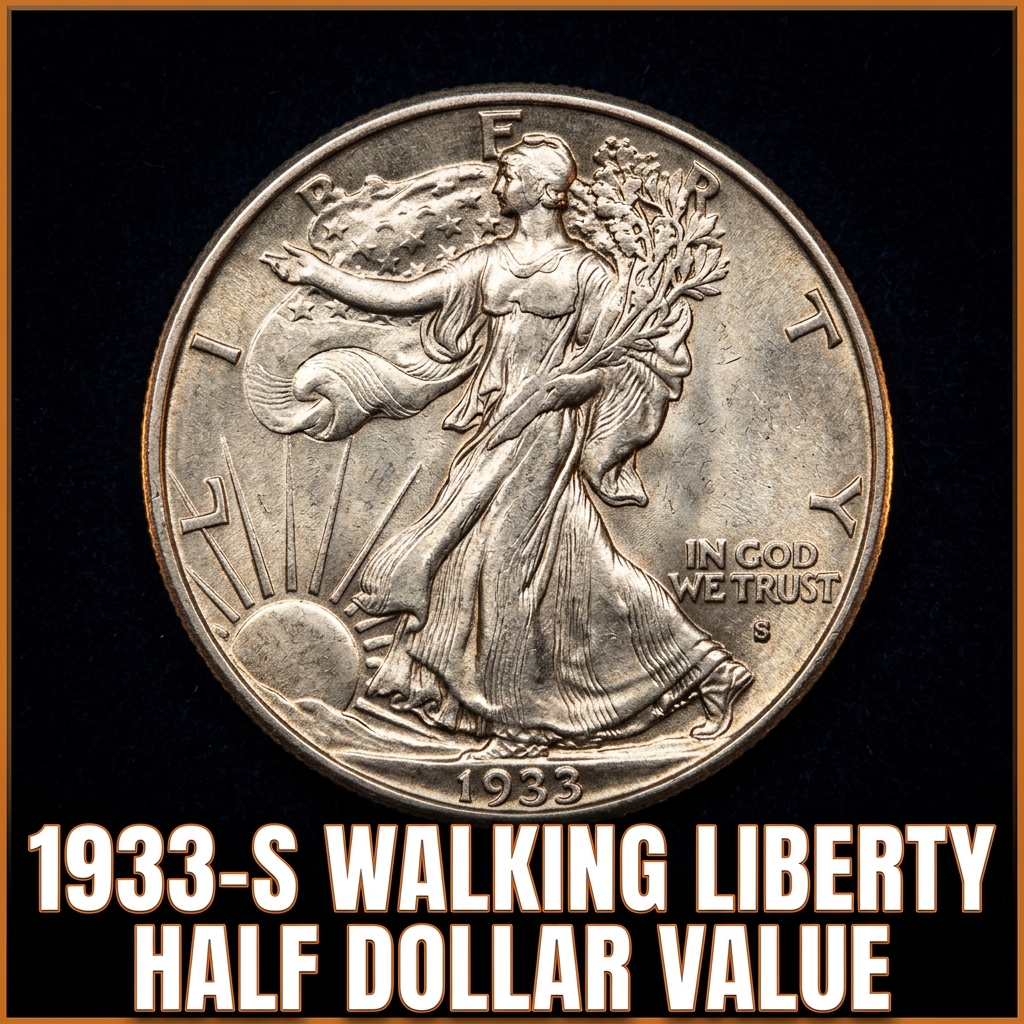
The 1933-S Walking Liberty Half Dollar is worth anywhere from $25 in heavily worn condition to well over $1,500 or more in mint state, making it one of the more desirable issues in the entire Walking Liberty series. If you’ve come across one of these coins in an old collection or coin jar, you’re in luck — keep reading to find out exactly what you might have.
What Makes the 1933-S Half Dollar Special
The 1933-S Walking Liberty Half Dollar was struck at the San Francisco Mint during the heart of the Great Depression. With a mintage of just 1,786,000 coins, it’s one of the lower-production issues in the Walking Liberty series, which ran from 1916 to 1947.
That relatively small mintage — combined with the fact that many of these coins were heavily circulated during tough economic times — means that finding one in nice condition today is genuinely difficult. Collectors know this, and they’re willing to pay a premium for well-preserved examples.
The coin features Adolph Weinman’s iconic design: Lady Liberty draped in an American flag, striding confidently toward a rising sun on the obverse, and a proud American eagle on the reverse. It’s widely considered one of the most beautiful coin designs in U.S. history.
Your Old Coin Could Be Valuable!
Identify It & Know Its Real Value — Free Download
If you want to check your coin quickly using your phone, a coin identifier and value app can help you match the date, mintmark, and condition to get an instant estimate before you dig deeper.
1933-S Walking Liberty Half Dollar Value by Grade
Coin value depends heavily on condition, which collectors measure using a grading scale from 1 (barely identifiable) to 70 (perfect uncirculated). Here’s a general breakdown of what the 1933-S Walking Liberty Half Dollar is worth at various grades:
Your Old Coin Could Be Valuable!
Identify It & Know Its Real Value — Free Download
| Grade / Condition | Description | Estimated Value |
|---|---|---|
| Good (G-4) | Heavily worn, major design visible | $25 – $35 |
| Very Good (VG-8) | Moderate wear, clearer details | $35 – $55 |
| Fine (F-12) | Even wear, design elements clear | $55 – $90 |
| Extremely Fine (EF-40) | Light wear on high points only | $120 – $200 |
| About Uncirculated (AU-50) | Slight wear, most luster present | $250 – $400 |
| MS-63 (Mint State) | Uncirculated with minor marks | $700 – $1,000 |
| MS-65 and above | Gem uncirculated, exceptional quality | $1,500+ |
For the most up-to-date pricing data based on actual auction results, you can check out the 1933-S Walking Liberty Half Dollar price data across mint state grades to see how the market has been moving recently.
How to Find the Mintmark and Confirm What You Have
Before you assume you have the San Francisco version, double-check the mintmark. On Walking Liberty Half Dollars, the mintmark appears on the reverse side of the coin, at the bottom left near the rim, just below the eagle’s tail feathers.
Your Old Coin Could Be Valuable!
Identify It & Know Its Real Value — Free Download
An “S” mintmark confirms your coin was struck in San Francisco. No mintmark means Philadelphia, and a “D” indicates Denver. The San Francisco issues from 1933 are particularly valued, so this one small letter makes a big difference in what your coin is worth.
If you’re having trouble reading a worn mintmark, try using CoinKnow — the app uses your phone’s camera to identify coins, read mintmarks, and pull up current value estimates in seconds. It’s a handy tool for anyone just starting out with coin collecting.
Silver Content and Melt Value
Even in the worst condition, the 1933-S Walking Liberty Half Dollar still has real intrinsic value because it’s made of 90% silver. Each coin contains 0.3617 troy ounces of pure silver.
Your Old Coin Could Be Valuable!
Identify It & Know Its Real Value — Free Download
With silver prices generally trading in the $28–$32 range (depending on the market at any given time), the silver melt value of this coin alone sits around $10–$12 at minimum. That means even a heavily worn, undesirable example still has a floor value tied to its precious metal content.
Of course, for a coin like the 1933-S, collector value far exceeds melt value in most grades. You’d only consider melt value for extremely damaged or cleaned coins with no numismatic appeal.
For a full breakdown of what this coin is worth across all conditions, the 1933 Half Dollar value guide covers both the S-mint and Philadelphia issues with detailed grade-by-grade pricing.
Your Old Coin Could Be Valuable!
Identify It & Know Its Real Value — Free Download
Tips for Selling or Getting Your Coin Appraised
If you think your 1933-S Walking Liberty Half Dollar might be in nice condition, it’s worth getting a professional opinion before selling. Coins graded by PCGS or NGC (the two leading third-party grading services) typically sell for significantly more because buyers trust the certification.
Start by using CoinKnow to get a quick at-home estimate, then consider submitting your coin to a grading service if it appears to be in EF-40 or better condition. The cost of grading is often well worth it for coins potentially worth several hundred dollars or more.
You can sell through local coin dealers, coin shows, or online auction platforms like eBay or Heritage Auctions. Just be aware that raw, ungraded coins often sell for 20–30% less than certified examples, even if the quality is similar.
—
Your Old Coin Could Be Valuable!
Identify It & Know Its Real Value — Free Download
Frequently Asked Questions
Q: How do I know if my 1933-S Walking Liberty Half Dollar is valuable?
A: Condition is everything. Check for sharp details, original luster, and no cleaning or damage. Even a circulated example in Fine or better condition is worth $55 or more, and uncirculated coins can reach well into the hundreds. Use CoinKnow for a fast initial estimate.
Q: Is a cleaned 1933-S Walking Liberty Half Dollar still worth anything?
A: Yes, but significantly less than an original-surface coin. Collectors heavily discount cleaned coins because the cleaning process damages the natural patina and surface. A cleaned AU example might only bring what a raw VF coin would — or less. It still holds silver melt value, however.
Q: Where can I sell my 1933-S Walking Liberty Half Dollar?
A: Good options include local coin dealers (fast but often lower offers), online auctions like eBay or Heritage Auctions (wider audience, potentially higher prices), and coin shows. If your coin grades EF-40 or better, getting it certified by PCGS or NGC first can significantly boost its resale value.