1937 Mercury Dime Value With No Mint Mark What It’s Worth Today

Your Old Coin Could Be Valuable!
Identify It & Know Its Real Value — Free Download


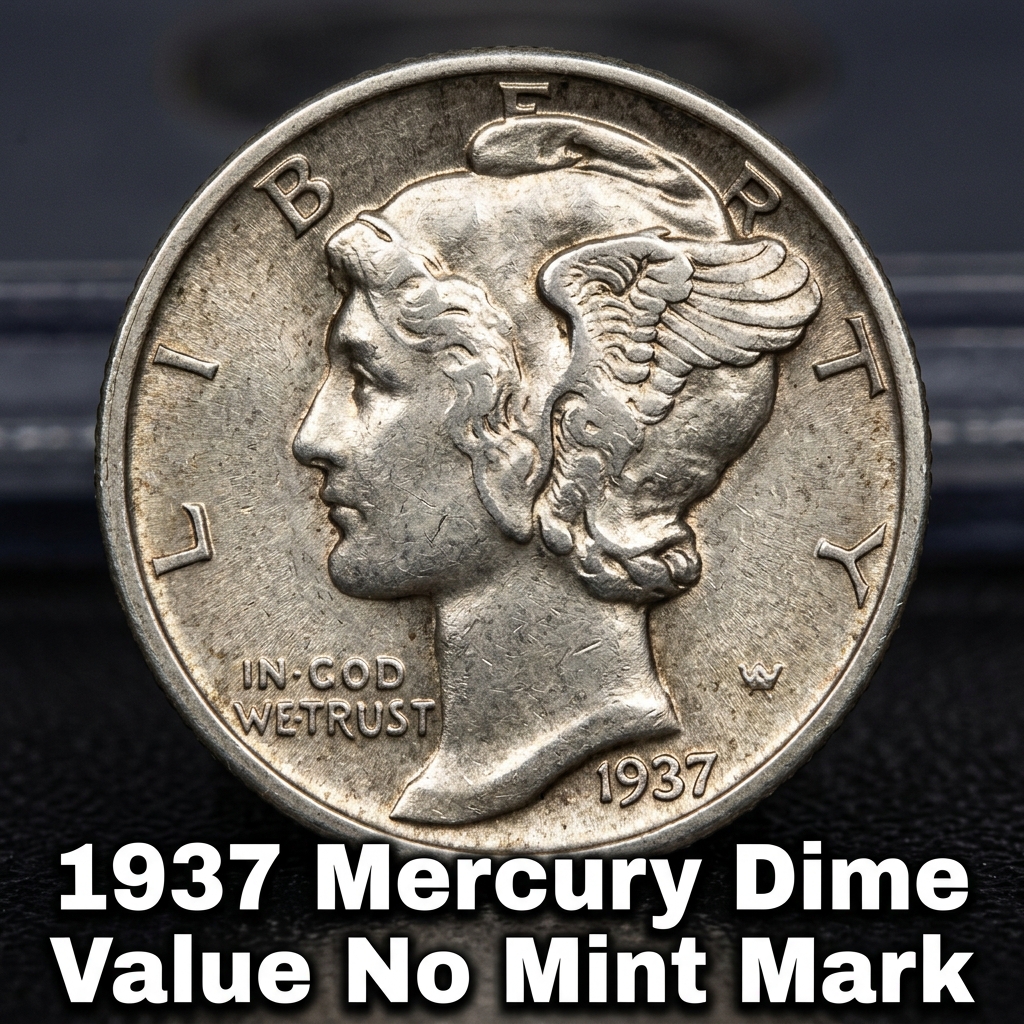
The 1937 Mercury Dime (no mint mark) is worth anywhere from $2 to $3 in well-worn condition, up to $25 or more in lightly circulated grades, and potentially hundreds of dollars in pristine uncirculated condition. If you found one of these small silver coins tucked away in a drawer or old coin jar, you’re in the right place to find out exactly what it’s worth.
If you’re not sure which mint produced your coin or want to quickly check its grade, a coin identifier and value app can help you scan and identify your coin in seconds — saving you time and guesswork before you decide whether to sell, hold, or add it to your collection.
What Is the 1937 Mercury Dime With No Mint Mark?
The 1937 Mercury Dime without a mint mark was struck at the Philadelphia Mint, which traditionally did not place a mint mark on its coins during this era. The “Mercury” nickname comes from the winged Liberty cap on the obverse, which many people mistook for the Roman god Mercury — though the design actually represents Liberty.
Designed by Adolph A. Weinman, this coin is widely considered one of the most beautiful American coins ever made. The reverse features a fasces — a bundle of rods with an axe — symbolizing strength and unity. The coin is composed of 90% silver and 10% copper, giving it intrinsic metal value even in worn condition.
Your Old Coin Could Be Valuable!
Identify It & Know Its Real Value — Free Download
Philadelphia produced over 56 million of these dimes in 1937, making them relatively common in circulated grades. However, well-preserved examples and those with the coveted Full Bands (FB) designation on the reverse can command strong premiums among collectors.
How Much Is the 1937 No Mint Mark Mercury Dime Worth?
The value of your 1937 Mercury Dime depends heavily on its condition. Coin grading runs from Poor (P-1) to Perfect Mint State (MS-70), and even small differences in grade can mean big differences in value.
Your Old Coin Could Be Valuable!
Identify It & Know Its Real Value — Free Download
Here’s a general value breakdown based on condition:
| Grade | Condition Description | Estimated Value |
|---|---|---|
| Good (G-4) | Heavy wear, design visible | $2 – $3 |
| Fine (F-12) | Moderate wear, main details clear | $3 – $5 |
| Extremely Fine (EF-40) | Light wear on high points | $8 – $14 |
| About Uncirculated (AU-55) | Slight wear, strong luster | $15 – $25 |
| MS-63 | Uncirculated, minor blemishes | $30 – $50 |
| MS-65 Full Bands | Gem quality, sharp band details | $100 – $300+ |
For more detailed 1937 Mercury Dime price data across mint state grades, including auction records and population reports, it’s worth checking specialist resources before buying or selling.
Your Old Coin Could Be Valuable!
Identify It & Know Its Real Value — Free Download
What Makes the Full Bands Designation So Valuable?
One of the biggest value factors for the 1937 Mercury Dime is the Full Bands (FB) designation. This refers to the horizontal bands in the middle of the fasces on the reverse — they must be fully separated and sharply struck to qualify.
Most circulated coins lost this detail long ago. But even among uncirculated coins, weak strikes are common, meaning many MS-65 coins without FB are worth only a fraction of their FB counterparts.
A 1937 Philadelphia dime graded MS-65 without Full Bands might sell for $40–$60, while the same coin with Full Bands can fetch $150 to $300 or more. At the top of the grading scale — MS-67 FB — auction prices have reached into the thousands.
Your Old Coin Could Be Valuable!
Identify It & Know Its Real Value — Free Download
This is why professional grading from services like PCGS or NGC matters so much if you think your coin is in top condition. CoinKnow can help you understand grading basics and determine whether it’s worth submitting your coin for professional authentication.
Silver Value and Why Your Dime Is Worth At Least Something
Even if your 1937 Mercury Dime is scratched, heavily worn, or otherwise damaged, it still contains real silver. Each coin has approximately 0.0723 troy ounces of pure silver.
With silver prices typically ranging between $25 and $35 per troy ounce, your coin carries a melt value of roughly $1.80 to $2.50 just in metal content alone. That means even the most beat-up example has a floor value based on silver — it’s never truly worthless.
Of course, collector value usually exceeds melt value for coins in any decent condition. You can find a full breakdown of 1937 Mercury Dime value across all grades and mint marks to compare Philadelphia, Denver, and San Francisco issues side by side.
Your Old Coin Could Be Valuable!
Identify It & Know Its Real Value — Free Download
If you use CoinKnow, you can also track live silver prices alongside your coin’s collector premium — a handy way to know the real total value of your silver coins at any given moment.
Tips for Selling or Keeping Your 1937 Mercury Dime
If you have a well-worn 1937 no mint mark Mercury Dime, it’s perfectly fine to keep it as a collectible or trade it at a coin shop for a few dollars. These are charming pieces of American history and fun to collect.
If your coin looks bright, lustrous, and uncirculated — hold on to it. Have it evaluated before selling. A coin dealer or CoinKnow community can give you a quick ballpark, but for coins potentially worth $100 or more, a PCGS or NGC grading submission is money well spent.
Never clean your coins. Cleaning destroys the natural surface and drastically lowers collector value — a cleaned MS-63 might drop to a fraction of its original worth. Store silver coins in airtight holders away from humidity and sulfur-emitting materials.
Your Old Coin Could Be Valuable!
Identify It & Know Its Real Value — Free Download
FAQ
Q: How do I know if my 1937 dime is from Philadelphia?
A: Philadelphia coins from this era have no mint mark. Look at the reverse of the coin near the bottom of the fasces — if there’s no letter (no D for Denver, no S for San Francisco), it was made in Philadelphia.
Q: Is a 1937 Mercury Dime rare?
A: Not especially. Over 56 million were minted in Philadelphia, making it a common date in circulated grades. However, gems with Full Bands are genuinely scarce and collectible, so condition is everything with this coin.
Q: Where’s the best place to sell a 1937 Mercury Dime?
A: For common circulated examples, a local coin shop or coin show is quick and easy. For higher-grade or Full Bands coins, eBay or a numismatic auction house will get you more competitive prices. Always get the coin professionally graded first if you believe it’s uncirculated.