1938 Walking Liberty Half Dollar Value Guide What This Classic Coin Is Worth Today

Your Old Coin Could Be Valuable!
Identify It & Know Its Real Value — Free Download


The 1938 Walking Liberty Half Dollar is worth anywhere from $12 in heavily worn condition to well over $500 or more in high-grade mint state — and certain rare varieties can push that number even higher. If you’ve found one of these beautiful silver coins tucked away in an old collection or inherited it from a family member, you’re in the right place to find out exactly what it might be worth.
What Makes the 1938 Walking Liberty Half Dollar Special
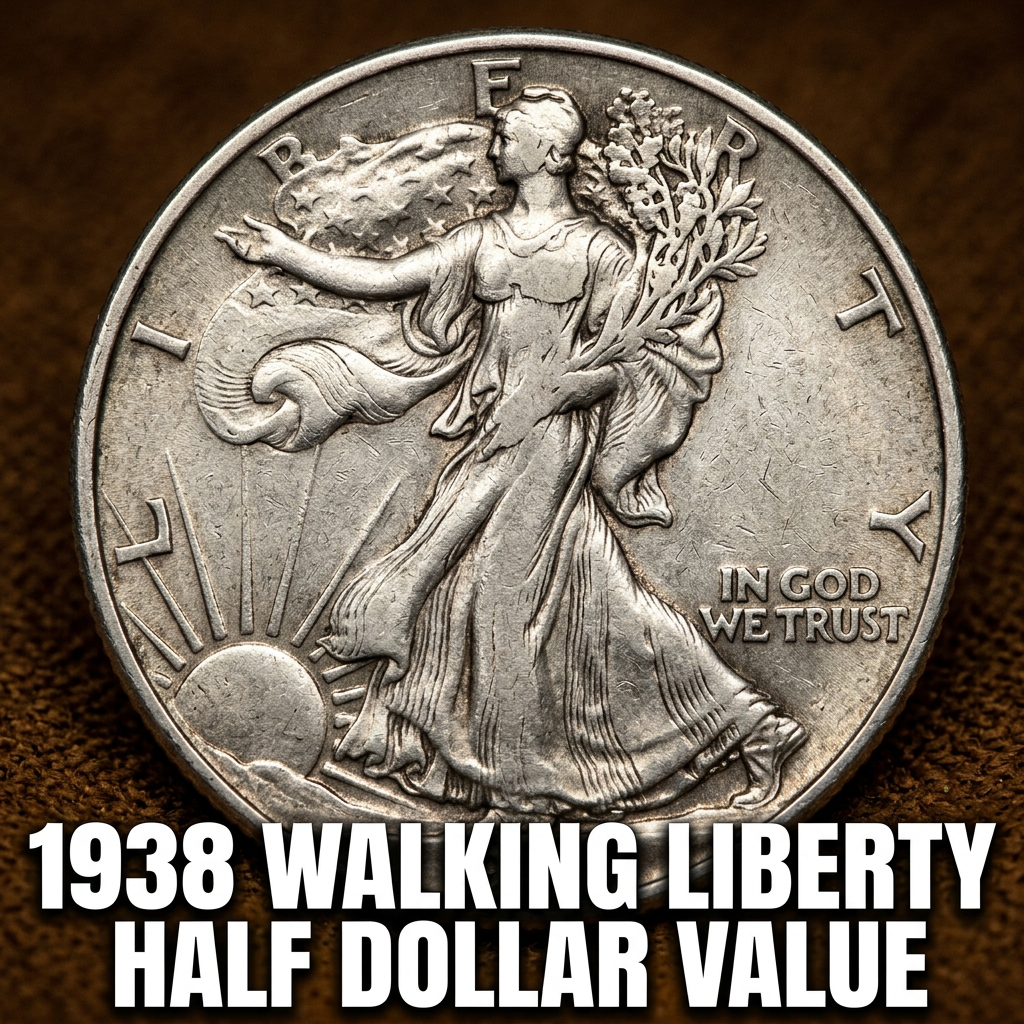
The Walking Liberty Half Dollar is widely considered one of the most beautiful coins ever struck by the U.S. Mint. Designed by Adolph A. Weinman, the obverse features Lady Liberty draped in the American flag, striding confidently toward the sun — a powerful symbol of freedom. The reverse shows a proud American eagle perched on a mountain crag.
The 1938 issue holds a special place in collector circles. Production numbers were relatively modest compared to earlier years in the series, and the coin was minted at two facilities: Philadelphia (no mint mark) and San Francisco (S mint mark). Understanding which version you have is the first step in figuring out its value.
If you want a quick and accurate identification, using a coin identifier and value app on your smartphone can instantly tell you which mint struck your coin and give you a real-time value estimate — no coin shop visit required.
Your Old Coin Could Be Valuable!
Identify It & Know Its Real Value — Free Download
1938 Walking Liberty Half Dollar Mintage and Mint Marks
Knowing where your coin was made matters a lot when it comes to value. The 1938-S (San Francisco) had a mintage of just 8,930,000, while the Philadelphia issue came in even lower at only 4,118,152 pieces. Lower mintage generally means higher collector demand and higher prices.
Your Old Coin Could Be Valuable!
Identify It & Know Its Real Value — Free Download
The mint mark on Walking Liberty Half Dollars from 1938 appears on the obverse side, on the lower left near Lady Liberty’s hand. Philadelphia coins carry no mint mark at all, while San Francisco coins show a small “S.”
Both versions are considered semi-key coins in the series, meaning they’re not the rarest but are still meaningful finds. Collectors actively seek both in all grades, especially problem-free examples with original luster.
Your Old Coin Could Be Valuable!
Identify It & Know Its Real Value — Free Download
1938 Walking Liberty Half Dollar Value by Grade
Coin value depends heavily on condition, which is measured on a scale from 1 to 70. Here’s a general breakdown of what you can expect to pay or receive for a 1938 Walking Liberty Half Dollar depending on its grade:
| Grade | Description | 1938 (Philadelphia) | 1938-S (San Francisco) |
|---|---|---|---|
| G-4 (Good) | Heavy wear, major details visible | $12 – $15 | $12 – $14 |
| VF-20 (Very Fine) | Moderate wear, clear design | $18 – $28 | $16 – $25 |
| EF-40 (Extremely Fine) | Light wear on high points | $32 – $50 | $28 – $45 |
| MS-63 (Choice Uncirculated) | No wear, some marks | $120 – $200 | $100 – $175 |
| MS-65 (Gem Uncirculated) | Strong luster, minimal marks | $400 – $600+ | $350 – $550+ |
For the most up-to-date auction results and certified coin values, you can explore detailed 1938 Walking Liberty Half Dollar price data in mint state grades to see exactly what these coins are selling for right now.
Your Old Coin Could Be Valuable!
Identify It & Know Its Real Value — Free Download
Silver Content and Melt Value
One thing that sets the Walking Liberty Half Dollar apart from modern coins is its silver content. Every 1938 Walking Liberty Half Dollar is made of 90% silver and contains 0.3617 troy ounces of pure silver. That means even a worn, heavily circulated example has real precious metal value regardless of its numismatic condition.
With silver prices fluctuating around $28–$30 per troy ounce (as of recent market data), the melt value of your coin is roughly $10–$11 at a minimum. So even if your coin is too worn to attract collector premiums, it’s not without worth.
CoinKnow is a fantastic tool for tracking the real-time silver melt value of your coins alongside their collector value. Many everyday coin finders are surprised to discover their old half dollars carry both kinds of value.
Tips for Selling or Getting Your Coin Appraised
If you think you’ve got a high-grade 1938 Walking Liberty Half Dollar, getting it professionally graded by PCGS or NGC can significantly increase its marketability and potentially its sale price. Buyers trust certified coins, especially for examples in MS-63 and above.
Your Old Coin Could Be Valuable!
Identify It & Know Its Real Value — Free Download
For a quick informal estimate, CoinKnow lets you scan and grade your coin using your phone’s camera — it’s a practical first step before committing to professional grading fees.
You can also check recent sold listings on major auction platforms, or review a comprehensive breakdown of 1938 Half Dollar values across all grades and mint marks to better understand where your coin fits.
Avoid cleaning your coin no matter what. Even a gentle wipe can scratch the surface and dramatically reduce its value in the eyes of collectors and graders.
Your Old Coin Could Be Valuable!
Identify It & Know Its Real Value — Free Download
Frequently Asked Questions
Q: How do I tell if my 1938 Walking Liberty Half Dollar is from Philadelphia or San Francisco?
A: Look at the obverse (front) of the coin near Lady Liberty’s left hand at the lower left edge. If you see a small “S,” it was minted in San Francisco. No letter means it came from Philadelphia. Both are collectible, though values differ slightly by grade.
Q: Is a 1938 Walking Liberty Half Dollar worth more than face value?
A: Absolutely. Even in poor condition, the silver content alone makes it worth well above its 50-cent face value. In circulated grades, expect $12–$50 depending on wear. High-quality uncirculated examples can fetch several hundred dollars or more.
Q: Should I get my 1938 Walking Liberty Half Dollar graded?
A: If your coin appears to be in uncirculated condition with strong luster and few marks, professional grading through PCGS or NGC is likely worth the investment. For circulated coins in average condition, grading fees may exceed the added value — use CoinKnow or a trusted dealer to get a quick assessment first.