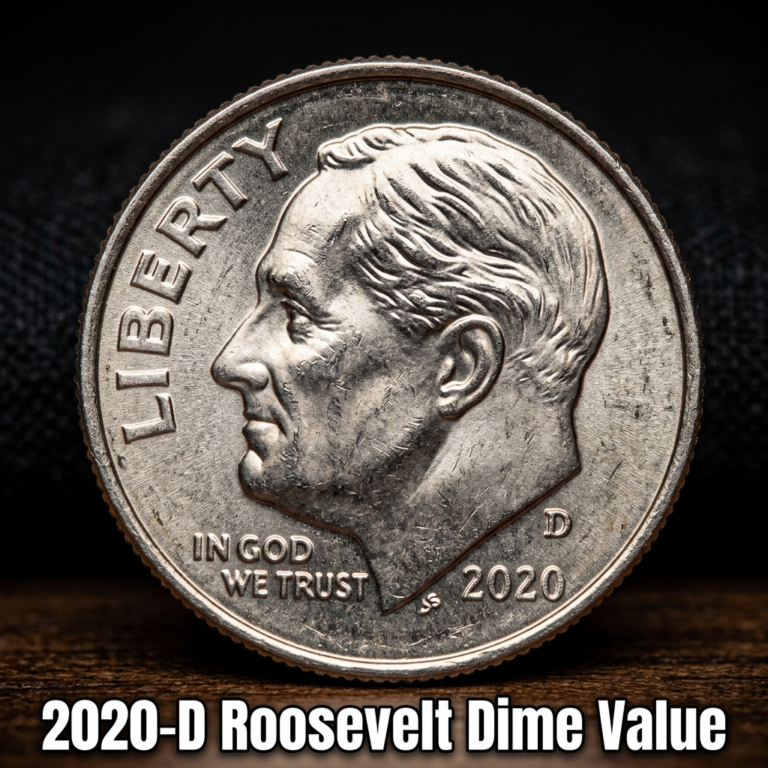
1954 Roosevelt Dime Value: Is Your No Mint Mark Coin Rare?

Your Old Coin Could Be Valuable!
Identify It & Know Its Real Value — Free Download


The 1954 Roosevelt Dime is worth anywhere from $2.50 in worn condition to over $600 in high-grade mint state. Finding one of these silver treasures in your pocket change or an old jar is an exciting discovery, as every 1954 dime contains 90% silver, making it inherently more valuable than modern clad coins.
| Condition | Estimated Value (USD) |
|---|---|
| Good / Fine (Circulated) | $2.50 – $3.50 |
| Extremely Fine | $4.00 – $6.00 |
| Uncirculated (MS60+) | $10.00 – $35.00 |
| Gem Mint State (MS67+) | $150.00 – $600.00+ |
Understanding the 1954 Roosevelt Dime No Mint Mark
If you are looking at a 1954 Roosevelt dime and cannot find a letter near the torch on the back, you have a coin minted in Philadelphia. During this era, the Philadelphia Mint did not use a mint mark on its coins. While some beginners worry that “no mint mark” means a “counterfeit” or an “error,” it is actually the standard for this year and location.
Because millions were produced, these coins are common in circulated grades. However, because they are composed of 90% silver and 10% copper, they are highly sought after by “stackers” who collect silver for its metal content. Identifying the quality of your coin is the first step, and using a top coin identifier and value app like CoinKnow can help you determine the specific grade and rarity of your find within seconds.
The 1954 Philadelphia dime had a mintage of roughly 65 million pieces. Compared to modern production numbers, this is relatively low, but in the world of numismatics, it is high enough that circulated examples are not considered “rare.” To really see a jump in price, the coin needs to be in pristine condition, showing no signs of wear on Roosevelt’s hair or the torch’s flame.
Your Old Coin Could Be Valuable!
Identify It & Know Its Real Value — Free Download
The Silver Content and Melt Value Factor
One of the most important things for everyday Americans to understand about the 1954 Roosevelt dime value no mint mark is the “melt value.” Unlike the dimes you use at the vending machine today, which are made of copper and nickel, this 1954 dime is a precious metal. It contains approximately 0.07234 troy ounces of pure silver.
When silver prices rise, the value of this coin naturally follows. Even if the coin is scratched, bent, or heavily worn, it will never be worth just ten cents. It will always be worth its weight in silver. Collectors often track the 1954 dime value based on current silver spot prices to ensure they are getting a fair deal when selling to coin shops or pawn brokers.
If you have a large bag of these coins, the value can add up quickly. A single dime might be worth $2.50 today, but a roll of 50 could net you over $100. Always check the current silver market, but remember that collectors will pay more than the melt price if the coin is in beautiful condition.
Your Old Coin Could Be Valuable!
Identify It & Know Its Real Value — Free Download
Grading Your 1954 Philadelphia Dime
To determine if your coin is worth $3 or $300, you have to look at the “grade.” Grading is the process of measuring how much wear a coin has sustained. For the 1954 Roosevelt dime, the most wear usually appears on the cheek of Franklin D. Roosevelt and the horizontal bands on the torch on the reverse side.
Professional graders use a 1-to-70 scale. Most coins found in change are “Circulated” (Grades 1-50). If the coin looks like it was just made yesterday and has a brilliant shine, it might be “Uncirculated” or “Mint State.” Knowing the 1954 dime auction records for Mint State grades is essential when dealing with high-quality specimens.
Your Old Coin Could Be Valuable!
Identify It & Know Its Real Value — Free Download
| Grade Designation | Visual Characteristics |
|---|---|
| About Uncirculated (AU) | Trace of wear on high points; original luster remains. |
| Mint State (MS63) | No wear; some distracting marks or scratches. |
| Gem Mint State (MS65) | Strong luster; very few marks; great eye appeal. |
If you are unsure about the grade, the CoinKnow app can provide a visual comparison to help you categorize your coin. This prevents you from underselling a valuable piece or overestimating a common one.
The Highly Coveted “Full Band” (FB) Designation
When researching the 1954 Roosevelt dime value no mint mark, you may encounter the term “Full Bands” or “FB.” This refers to the reverse of the coin, specifically the horizontal bands at the top and bottom of the torch. On most strikes, these bands are slightly blurry or merged together.
A coin that features “Full Bands” is one where the lines are completely split and distinct. This is a sign of a very strong strike by the minting press. For a 1954 Philadelphia dime, having the FB designation can double or even triple the price of a Mint State coin. Collectors are willing to pay a premium for this level of detail.
Your Old Coin Could Be Valuable!
Identify It & Know Its Real Value — Free Download
Because the Philadelphia Mint in 1954 often produced coins with slightly worn dies, finding a Full Band specimen is rarer than finding one from the San Francisco or Denver mints of the same year. If you spot clear, separated lines on that torch, hold onto that coin tightly! Use CoinKnow to zoom in and verify these details if you don’t have a magnifying glass handy.
Are There Any Rare 1954 Dime Errors?
While the 1954-P Roosevelt Dime is generally straightforward, there are a few mint errors that can skyrocket the value. Errors occur when something goes wrong during the manufacturing process. Common errors for this year include “clipped planchets,” where the coin looks like a bite was taken out of it, or “off-center strikes,” where the design is pushed to one side.
Another interesting thing to look for is “Die Cracks.” These appear as thin, raised lines of metal on the coin’s surface, caused by a breaking mold. While small die cracks only add a few dollars to the value, large, dramatic errors can sell for $50 to $100 or more at auction.
Always inspect both sides of your 1954 Roosevelt dime. Sometimes, errors are subtle, like a “doubled die,” where the lettering or the date looks like it has a faint shadow or ghost image. These are the “hidden gems” that keep the hobby of coin collecting exciting for everyday people.
Your Old Coin Could Be Valuable!
Identify It & Know Its Real Value — Free Download
| Error Type | Estimated Premium |
|---|---|
| Off-Center (10-20%) | $15.00 – $40.00 |
| Broadstruck | $20.00 – $50.00 |
| Major Die Crack | $5.00 – $25.00 |
How to Safely Store Your 1954 Silver Dime
Once you have identified that your 1954 Roosevelt dime no mint mark is valuable (especially if it is in Mint State), you must protect it. Silver is a soft metal and it tarnishes easily when exposed to air and moisture. This tarnish, known as “toning,” can sometimes be beautiful (rainbow colors), but usually, it just turns the coin black.
Never clean your coins! This is the number one rule of coin collecting. Cleaning a 1954 dime with polish or cloth will create tiny scratches that destroy its numismatic value, often reducing it back down to its basic silver melt value. Instead, handle the coin by its edges only.
For storage, use PVC-free plastic flips or cardboard “2×2” holders. These prevent the silver from reacting with harmful chemicals. If you find a coin that you believe is worth hundreds of dollars, you may eventually want to send it to a professional service like PCGS or NGC for “slabbing,” which provides a guaranteed grade and a protective hard shell.
## FAQ: Common Questions About the 1954 Roosevelt Dime
Q: Why doesn’t my 1954 Roosevelt dime have a mint mark?
A: Dimes struck at the Philadelphia Mint in 1954 did not have mint marks. If you see no letter on the back of the coin near the base of the torch, it was made in Philadelphia. This is completely normal and not an error.
Q: Is a 1954 Roosevelt dime real silver?
A: Yes, all Roosevelt dimes minted from 1946 through 1964 are made of 90% silver and 10% copper. Modern dimes (1965 to present) are made of a copper-nickel “clad” composition and do not contain silver.
Your Old Coin Could Be Valuable!
Identify It & Know Its Real Value — Free Download
Q: How much silver is in a 1954 dime?
A: A 1954 dime contains approximately 2.5 grams of total weight, with about 2.25 grams (0.0723 troy ounces) being pure silver. You can calculate its “melt value” by multiplying 0.0723 by the current market price of one ounce of silver.
Q: Where should I look for the mint mark on a 1954 dime?
A: On the Roosevelt dime, the mint mark is located on the reverse (back) of the coin. Look at the bottom of the torch. To the left of the base of the torch, you might see a “D” (Denver) or an “S” (San Francisco). If there is nothing there, it is a Philadelphia strike.
Q: Can I find a 1954 Roosevelt dime in my pocket change today?
A: It is becoming very rare, but it does happen. Most silver coins were pulled from circulation in the late 1960s, but occasionally an old collection is spent or a “silver seeker” misses one. Always check your change for any dime dated 1964 or earlier!