1972-S Jefferson Nickel Value What It’s Worth and Why Collectors Care

Your Old Coin Could Be Valuable!
Identify It & Know Its Real Value — Free Download


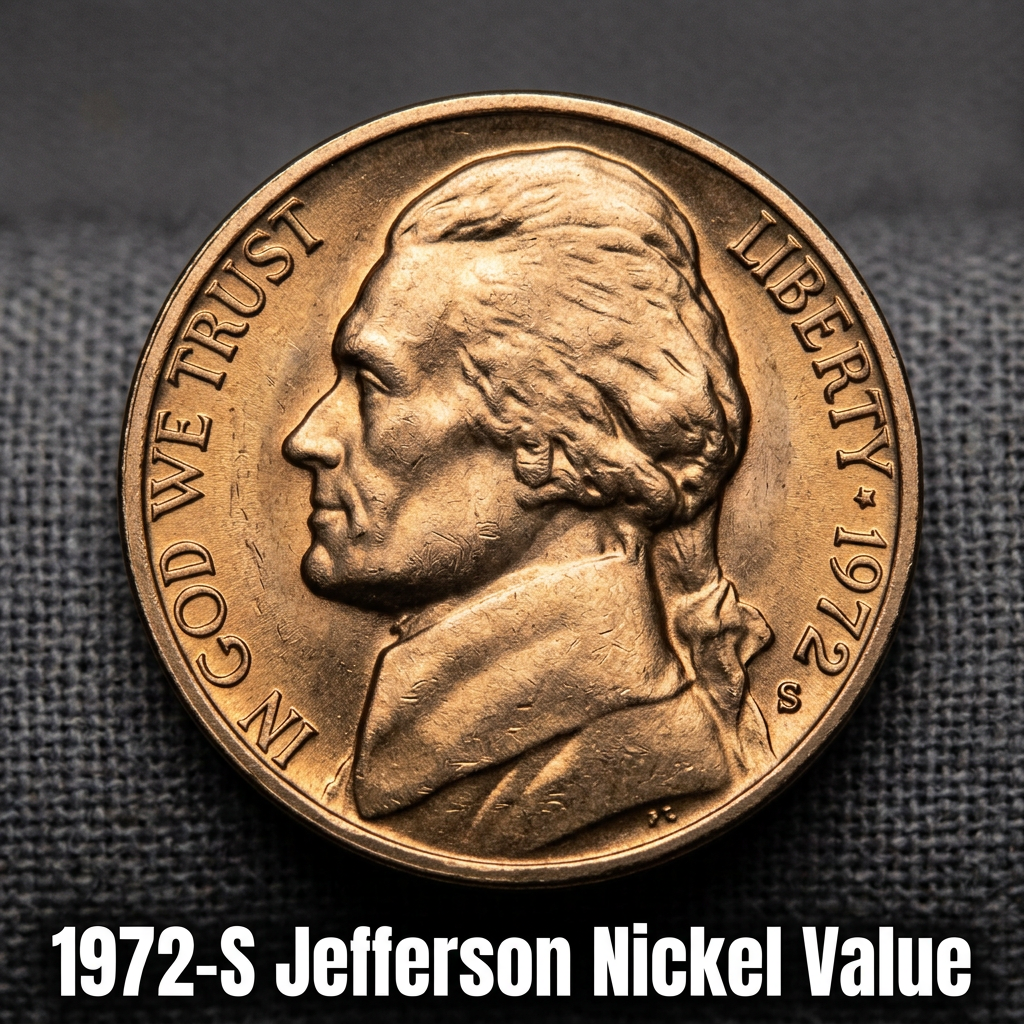
The 1972-S Jefferson Nickel is worth anywhere from $0.10 in heavily circulated condition to over $5 in mint state, with top-grade proof examples fetching $10 or more among collectors. If you’ve found one in a coin jar or old collection, it’s worth taking a closer look.
What Is the 1972-S Jefferson Nickel?
The 1972-S Jefferson Nickel was struck at the San Francisco Mint, which is why you’ll see that small “S” mintmark on the coin. During this era, the San Francisco Mint was primarily producing proof coins — specially struck pieces with sharp detail and mirror-like fields meant for collectors rather than everyday circulation.
That “S” mintmark makes a big difference in value compared to coins from Denver or Philadelphia. If you’re holding one of these and wondering what it’s worth, a coin identifier and value app can help you quickly identify the mint mark and get an instant value estimate right from your phone.
Most 1972-S nickels you’ll encounter were either sold in proof sets directly from the U.S. Mint or passed down through family collections. They were never really meant to jingle around in your pocket — and coins that stayed in their original packaging tend to be worth the most.
Your Old Coin Could Be Valuable!
Identify It & Know Its Real Value — Free Download
How Much Is the 1972-S Jefferson Nickel Worth?
Value depends heavily on condition, and that’s true for almost every coin. For the 1972-S, here’s a general breakdown of what you can expect:
Your Old Coin Could Be Valuable!
Identify It & Know Its Real Value — Free Download
| Grade / Condition | Estimated Value |
|---|---|
| Circulated (Good to Fine) | $0.10 – $0.25 |
| Extremely Fine (EF-40) | $0.50 – $1.00 |
| Mint State (MS-63 to MS-65) | $1.50 – $5.00 |
| Proof (PR-65) | $3.00 – $7.00 |
| Deep Cameo Proof (PR-67 DCAM) | $10.00 – $25.00+ |
For a more detailed breakdown of 1972-S Jefferson Nickel prices across different mint state grades, you can explore certified sale records to see what real buyers have paid recently.
Proof vs. Business Strike — What’s the Difference?
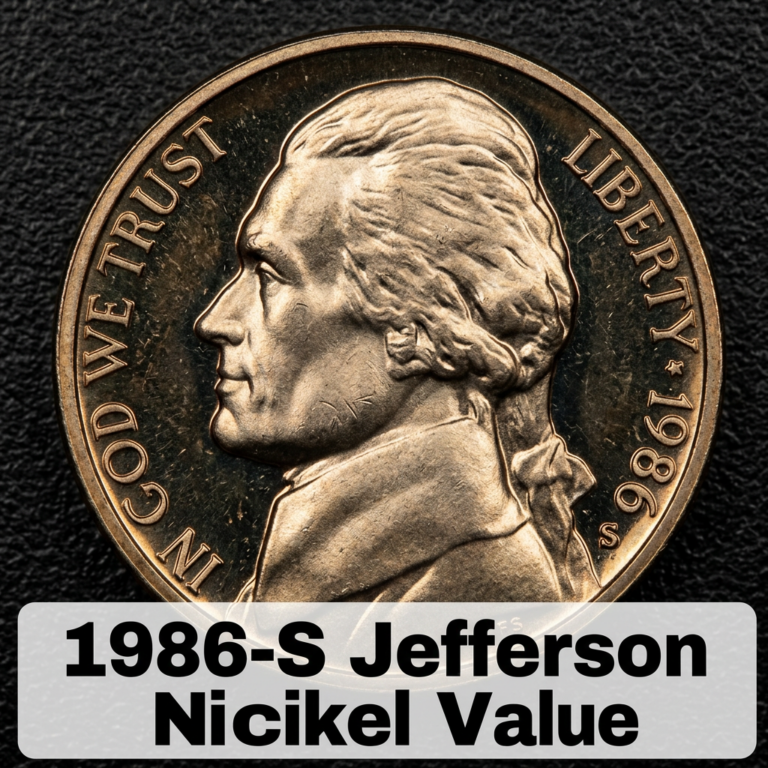
Most 1972-S Jefferson Nickels are proof coins. A proof coin isn’t a grade — it’s a method of production. These were struck multiple times using polished dies and specially prepared blanks, which gives them that frosted, mirror-like appearance you might notice if you look closely.
Your Old Coin Could Be Valuable!
Identify It & Know Its Real Value — Free Download
The most desirable versions are called Deep Cameo Proofs (sometimes labeled DCAM or DC). These have a strong contrast between the frosted raised design and the mirror-flat background fields. Coins that score PR-67 DCAM or higher from grading services like PCGS or NGC can command strong premiums.
If your coin looks extra shiny and sharp — almost like it was never touched — there’s a good chance it’s a proof. Try not to touch the surface with your bare fingers, as oils from your skin can reduce its value. Handle by the edges only.
Factors That Affect the 1972-S Nickel Value
Beyond grade and strike type, a few other things influence how much your coin is worth.
Your Old Coin Could Be Valuable!
Identify It & Know Its Real Value — Free Download
Eye appeal matters more than people realize. Two coins with the same grade can look very different. A coin with a clean, undisturbed surface and strong luster will always attract more collector interest than one with toning, spots, or surface marks — even if both technically grade the same.
Certification adds confidence for buyers. Having your coin slabbed by PCGS or NGC means a professional has authenticated and graded it. This matters most for high-grade examples where the price difference between PR-65 and PR-67 can be $15 or more.
Original packaging also helps. If you still have the original U.S. Mint proof set box with the 1972-S nickel inside, some collectors prefer buying the full intact set. You can check out detailed 1972 nickel value data including proof and business strike pricing to see where your coin falls.
Your Old Coin Could Be Valuable!
Identify It & Know Its Real Value — Free Download
How to Check Your 1972-S Jefferson Nickel Value at Home
You don’t need to be an expert to get a ballpark idea of what your coin is worth. Start by finding the mintmark — it should be just below Monticello on the reverse (back) of the coin. If you see an “S,” you’ve got a San Francisco issue.
Next, examine the coin’s condition in good lighting. Look for wear on Jefferson’s cheekbone, hair above the ear, and the steps of Monticello. The sharper those details, the higher the grade.
CoinKnow is a great tool for everyday people who want quick, reliable coin valuations without digging through price guides. Just scan your coin with the CoinKnow app and get an instant estimate based on current market data — no numismatic background required.
—
Your Old Coin Could Be Valuable!
Identify It & Know Its Real Value — Free Download
FAQ
Q: Is the 1972-S Jefferson Nickel rare?
A: Not particularly rare in terms of mintage — over 3 million proof sets were sold that year. However, finding one in gem-quality Deep Cameo condition is less common, and those pieces do carry a premium with collectors.
Q: Can I spend a 1972-S Jefferson Nickel?
A: Technically yes — it’s still legal tender worth 5 cents. But if it’s a proof coin in good condition, it’s worth holding onto. Even a basic proof example is worth more than face value to a collector.
Q: How do I know if my coin has been cleaned?
A: Cleaned coins often look unnaturally bright or show fine hairline scratches under magnification. A coin with original luster looks softer and more natural. Cleaning almost always reduces a coin’s collector value, so it’s best to leave coins as-is and let a professional evaluate them. CoinKnow can also flag common issues when you scan your coin for an appraisal.