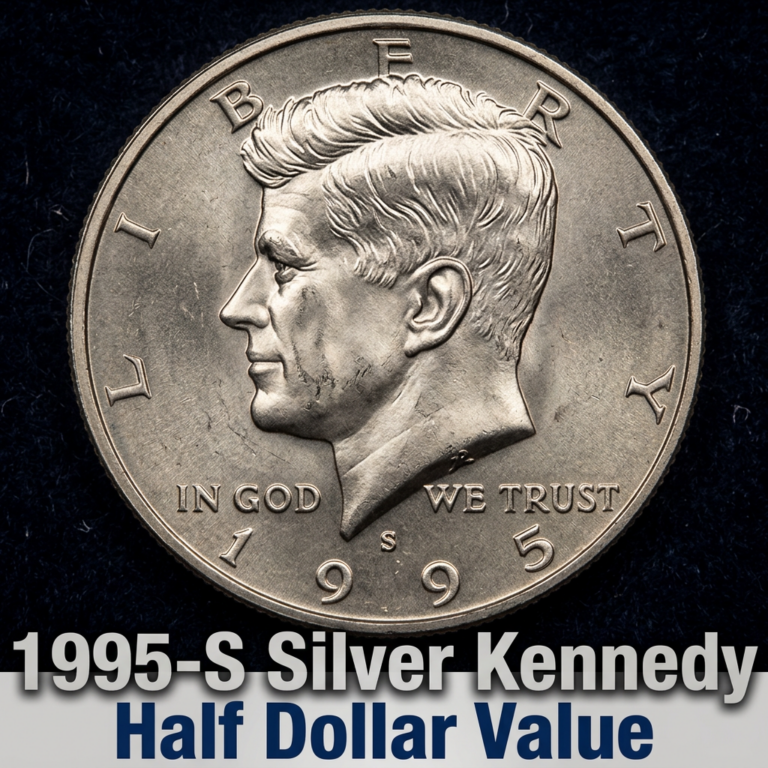
1972 Type 2 Eisenhower Dollar Value: What Is It Worth?

Your Old Coin Could Be Valuable!
Identify It & Know Its Real Value — Free Download


The 1972 Type 2 Eisenhower Dollar is worth anywhere from $20 in circulated grades to over $5,000 for high-quality mint specimens. This specific variety is a modern treasure hunt classic because it was created by mistake, making it far rarer than the common Type 1 or Type 3 versions found in pocket change.
| Condition / Grade | Estimated Market Value |
|---|---|
| Average Circulated (AU) | $30 – $80 |
| Uncirculated (MS63) | $150 – $300 |
| Choice Uncirculated (MS65) | $1,000 – $2,500 |
| Superb Gem (MS66+) | $5,000+ |
Why the 1972 Type 2 Eisenhower Dollar is Special
If you’ve recently inherited a jar of large “Ike” dollars, you might assume they are all the same. However, the 1972 Type 2 Eisenhower Dollar is a unique exception that excites collectors worldwide. To understand its value, you first need to identify it correctly using a top coin identifier and value app which can spot the subtle differences in the earth’s design on the reverse.
The Type 2 was never supposed to happen for general circulation in Philadelphia. It occurred when a proof die—intended only for silver coins minted in San Francisco—was accidentally used for regular copper-nickel coins in Philadelphia. Because these dies were used until they wore out, only about 40,000 to 100,000 are estimated to exist, a tiny fraction of the hundreds of millions of Ike dollars made.
When you use the CoinKnow app to scan your coins, you are looking for a specific “incuse” look on the Earth detail on the reverse. The Type 2 is notoriously difficult to find in high grades because it was a “mistake” coin meant for daily spending, not for collectors’ sets. This scarcity drives the price up significantly compared to its common siblings.
Your Old Coin Could Be Valuable!
Identify It & Know Its Real Value — Free Download
How to Identify the Rare Type 2 Variation
The key to identifying a 1972 Type 2 Eisenhower Dollar lies entirely on the reverse side of the coin, specifically the depiction of planet Earth above the eagle. There are three types of 1972 Eisenhower Dollars from the Philadelphia mint. The Type 1 has flat islands and a distinct “Florida” shape. The Type 3 shows well-defined islands. The Type 2, however, shows a “smeared” Earth where the islands (specifically Cuba and the Caribbean) are not distinct and seem to flow into the ocean.
Checking the 1972 Eisenhower Dollar price data shows a massive jump once you move from Type 1 to Type 2. On a Type 2 coin, the planet Earth appears much more rounded (high relief) but the details of the continents are blurred. This is because the die used was meant for the specialized Proof striking process, which uses higher pressure. On a regular circulation press, the details didn’t strike fully.
Your Old Coin Could Be Valuable!
Identify It & Know Its Real Value — Free Download
If you are unsure if your coin is a “smudged” Type 2 or just a worn Type 1, the CoinKnow app can provide a side-by-side visual comparison. Most people find these coins in old “junk silver” bags or inherited collections. Even if the coin is scratched, its status as a Type 2 error variety ensures it is worth much more than its face value of one dollar.
| Feature | Type 1 (Common) | Type 2 (Rare) | Type 3 (Common) |
|---|---|---|---|
| Earth Detail | Flat islands | Incuse/Blurry islands | Sharp, distinct islands |
| Florida | Pointed | Rounded/Smeared | Broad and clear |
Grading and Its Impact on Eisenhower Dollar Value
Condition is everything when it comes to the 1972 Type 2 Eisenhower Dollar value. Because these coins were made for general circulation, they often bumped against each other in ballistic bags at the Mint. This caused “bag marks” or scratches. Finding a Type 2 without these scratches is like finding a needle in a haystack. Professional grading by services like PCGS or NGC is highly recommended for this specific variety.
Your Old Coin Could Be Valuable!
Identify It & Know Its Real Value — Free Download
You can find more 1972 Eisenhower Dollar value information regarding the silver versions versus the nickel versions online, but remember: the Type 2 error only applies to the Philadelphia nickel-clad coins. If your coin has an “S” mint mark, it is a different category altogether. A Type 2 in MS65 grade (Mint State 65) can easily fetch $2,000 at auction.
The CoinKnow app is an excellent tool for preliminary grading. It allows you to see what a “Mint State” coin looks like compared to a “Circulated” coin. For the Type 2, even a “Very Good” or “Fine” grade coin that has been spent in stores is still worth $20 to $40. Collectors are always looking to fill this hole in their albums, so the demand remains high regardless of the wear.
Price History and Market Trends for the Type 2
The market for 1972 Type 2 Eisenhower Dollars has been remarkably stable, with a steady upward trend for high-grade examples. In the early 2000s, many collectors didn’t even know this variety existed. As information became more accessible through digital guides, the number of confirmed Type 2 coins grew, but the demand grew even faster.
Your Old Coin Could Be Valuable!
Identify It & Know Its Real Value — Free Download
Most 1972 Ike dollars you find will be the Type 1 (low relief) or Type 3 (modified high relief). The Type 2 was essentially a “transition” error. Because of this, it occupies a unique spot in American numismatics—it’s both a variety and an error. Auction records show that in 2021, a 1972 Type 2 Eisenhower Dollar graded MS66 sold for nearly $15,000. While your pocket change find might not be that perfect, it proves the potential of this coin.
| Year of Sale | Grade | Auction Price |
|---|---|---|
| 2022 | MS65 | $2,400 |
| 2023 | MS64 | $850 |
| 2020 | AU58 | $120 |
Where to Sell Your 1972 Eisenhower Dollar
If you’ve used CoinKnow to confirm you have a Type 2, your next step is deciding how to sell it. For coins in lower conditions (circulated), eBay or a local coin shop is often the best route. These buyers are looking for affordable examples to complete their collections. If your coin looks brand new and shiny, you should definitely consider professional grading before selling.
A professional grade “locks in” the value. A raw, uncertified 1972 Type 2 might sell for $100 because the buyer is taking a risk on the grade. However, that same coin in a PCGS holder labeled “MS64” could instantly jump to $800. Online forums and specialized Facebook groups for Eisenhower Dollar enthusiasts are also great places to find passionate buyers who understand the rarity of the Type 2 error.
Your Old Coin Could Be Valuable!
Identify It & Know Its Real Value — Free Download
Always be wary of buyers who offer “face value” or just a few dollars for an Ike dollar from 1972. While most 1972 dollars are indeed only worth $1.05 to $2.00, the Type 2 is a significant exception. Armed with the right data and identification tools, you can ensure you get the full market value for your discovery.
Final Thoughts on the 1972 Type 2 Ike Dollar
The 1972 Type 2 Eisenhower Dollar remains one of the most exciting coins for “cherrypickers”—collectors who look for rare varieties in common lots. Its value is protected by its genuine rarity and the interesting story of its accidental creation. Whether you are a seasoned numismatist or someone who just found a big silver-colored coin in a drawer, the Type 2 is a perfect example of why it pays to look closely at your money.
Remember to check the reverse, focus on the Earth above the eagle, and use digital tools to verify your find. Even in worn condition, you are looking at a coin that is worth at least 20 to 30 times its face value. In the world of modern American coins, that is a fantastic return on investment and a great piece of history to own.
FAQ
Q: How many 1972 Type 2 Eisenhower Dollars were made?
A: There are no official mint records because it was an error, but experts estimate that between 40,000 and 100,000 were produced before the mint realized the mistake and replaced the die.
Your Old Coin Could Be Valuable!
Identify It & Know Its Real Value — Free Download
Q: Is the 1972 Type 2 made of silver?
A: No. The Type 2 variety specifically refers to the copper-nickel clad business strike coins produced in Philadelphia. While silver 1972 dollars exist (minted in San Francisco), they are not part of this specific “Type 2” error category.
Q: Can I find a 1972 Type 2 in pocket change today?
A: While extremely rare, it is possible. Most Eisenhower dollars have been pulled from circulation, but they are still occasionally found in bank rolls or at estate sales. Always check the reverse of any 1972 dollar you find!
Q: What is the best way to verify my coin is a Type 2?
A: The best method is to compare the Earth on the reverse to known examples. The Type 2 will have no visible islands below Florida; it will look like a smooth, incuse smudge. Using a high-resolution identification app like CoinKnow can help confirm these details.