2012-S Hawaii Volcanoes Quarter Value — A Complete Guide

Your Old Coin Could Be Valuable!
Identify It & Know Its Real Value — Free Download


The 2012-S Hawaii Volcanoes Quarter is worth anywhere from $0.25 in circulated condition to over $600 for high-grade specimens. While most quarters you find in change are face value, certain “S” Mint marks and high-quality finishes make this specific issue a prized find for casual collectors and enthusiasts alike.
| Condition/Grade | Estimated Market Value |
|---|---|
| Circulated (Average) | $0.25 – $0.50 |
| Uncirculated (MS63-MS65) | $5 – $15 |
| Proof (PR69 Deep Cameo) | $10 – $25 |
| Silver Proof (PR70 Deep Cameo) | $50 – $120+ |
| Rare High Grades (MS67+) | $300 – $600+ |
Understanding the 2012-S Hawaii Volcanoes National Park Quarter
The Hawaii Volcanoes National Park quarter was released in 2012 as part of the “America the Beautiful” series. This series commemorates national parks and historic sites across all 50 states and U.S. territories. If you have found one of these coins, your first step should be using a top coin identifier and value app to confirm the mint mark and condition immediately.
The design features a dramatic depiction of Kilauea Volcano’s East Rift eruption. It is one of the most visually striking coins in the series, capturing the raw power of nature. However, for collectors using CoinKnow, the real interest lies in the “S” mint mark found on the obverse (the “heads” side).
Unlike the common 2012-P or 2012-D quarters, the “S” quarters were struck at the San Francisco Mint. These were not intended for general circulation. Instead, they were sold in special bags and rolls for a premium, or included in collector sets. If you find one in your pocket change, someone likely broke open a collector’s set to spend it.
Your Old Coin Could Be Valuable!
Identify It & Know Its Real Value — Free Download
Distinguishing Between Regular Strike and Proof Versions
The San Francisco Mint produced two distinct types of 2012-S quarters: the “Business Strike” (Uncirculated) and the “Proof” versions. The Business Strike “S” quarters were made for collectors but were struck using a standard finish. These were limited in production, making them rarer than the billions of quarters circulating from Philadelphia or Denver.
Proof versions, on the other hand, are the “jewelry” of the coin world. They feature a mirror-like background and frosted details. In 2012, the San Francisco Mint produced both copper-nickel proofs and 90% silver proofs. The Hawaii Volcanoes quarter price guide data indicates that silver proofs carry a much higher baseline value due to their precious metal content.
Identifying which version you have is crucial. A standard “S” mint quarter might be worth a few dollars, but a flawless silver proof can reach much higher figures. When assessing your collection with CoinKnow, look closely at the edge of the coin. If you see a copper stripe, it’s a standard composition. If the edge is solid silver/white, you likely have the more valuable 90% silver version.
Your Old Coin Could Be Valuable!
Identify It & Know Its Real Value — Free Download
| Mint Mark & Type | Composition | Mintage (Approx) |
|---|---|---|
| 2012-S Business Strike | Copper-Nickel Clad | 1,385,820 |
| 2012-S Clad Proof | Copper-Nickel Clad | 1,114,350 |
| 2012-S Silver Proof | 90% Silver | 577,411 |
Determining the Grade and Value of Your 2012 Quarter
Condition is the single most important factor determining the price of any coin. Coins are graded on a scale from 1 to 70. A 2012-S quarter that has been handled, scratched, or carried in a pocket is considered “circulated.” These usually only sell for 25 to 50 cents unless they have a major error.
Uncirculated coins (Mint State) range from MS60 to MS70. For the 2012-S Hawaii Volcanoes Quarter, an MS67 grade is quite common, but once you reach MS68 or MS69, the price skyrockets. This is because very few coins are struck perfectly and preserved without even a single microscopic scratch.
Your Old Coin Could Be Valuable!
Identify It & Know Its Real Value — Free Download
According to current 2012-S Hawaii quarter value info, a certified MS68 specimen can sell for over $100. If you have a coin that looks absolutely flawless, it might be worth sending to a professional grading service like PCGS or NGC. Most collectors use CoinKnow to compare their coin’s appearance to high-resolution photos of graded examples before spending money on grading fees.
Rare Errors to Look For in 2012 Quarters
While the 2012-S Business Strike is valuable due to its low mintage, error hunters look for “mistakes” that happened during the minting process. Common errors for quarters in this series include doubled dies, die chips, and “off-center” strikes.
A “doubled die” occurs when the hub strikes the die twice at slightly different angles. Look for doubling in the lettering “HAWAII VOLCANOES” or in the details of the erupting lava. While no major “hub” doubling has been widely publicized for this specific date, minor doubling on the reverse can still command a premium from niche collectors.
Your Old Coin Could Be Valuable!
Identify It & Know Its Real Value — Free Download
Die chips—small raised bumps of extra metal—are often found on the volcano’s slopes. While these are common and don’t always add significant value, a large “cudge” or a unique chip pattern can make a coin more desirable to error enthusiasts. Always inspect your coins under a 10x magnifying glass to catch these subtle details.
| Error Type | Description | Estimated Premium |
|---|---|---|
| Doubled Die Reverse | Visible doubling on text or lava | $20 – $100+ |
| Die Chip (Lava) | Small bumps on the volcano image | $2 – $10 |
| Struck Through | Foreign object left an indent | $50 – $200 |
Why the 2012-S Quarters Are Special
The year 2012 was significant for the America the Beautiful program. It was the first year the U.S. Mint offered “San Francisco Mint Uncirculated Quarters” directly to the public in rolls and bags. Previously, “S” mint marks were reserved almost exclusively for Proof sets.
This makes the 2012-S Hawaii quarter part of a “low mintage” category. Only about 1.4 million of the business-strike “S” quarters were produced. Compare this to the 2012-P (Philadelphia), where over 44 million were made. The scarcity of the “S” mark is why you won’t often find them in your laundry money.
Because they were sold as collector items, most 2012-S quarters are in high grade. Paradoxically, this makes the very few “circulated” versions somewhat interesting, as it indicates a collector’s coin that “escaped” into the wild. However, for maximum value, always seek out the specimens that retain their original mint luster and sharp strike.
Your Old Coin Could Be Valuable!
Identify It & Know Its Real Value — Free Download
How to Sell Your 2012 Hawaii Volcanoes Quarter
If you believe you have a valuable 2012-S Hawaii Volcanoes Quarter, you have several options for selling. For common uncirculated versions worth $5-$10, online marketplaces like eBay or Etsy are your best bet. Be sure to provide clear, macro photos of both the “S” mint mark and the lava details on the reverse.
For high-grade coins (MS67 and above) or Silver Proofs, consider going through a reputable coin dealer or an auction house like Heritage Auctions. These venues specialize in coins where the difference between a $10 coin and a $500 coin is a single microscopic scratch.
Before selling, always check current “Sold” listings rather than “Asking” prices. This gives you a realistic idea of what people are actually paying. Many beginners see an asking price of $1,000 for a regular quarter and get excited, but the actual market price is generally much more grounded in recent transaction history.
FAQ
Q: How do I know if my 2012 Hawaii quarter is silver?
A: Check the edge of the coin. A standard copper-nickel clad quarter will show a brown/orange copper stripe. A 90% silver proof quarter will have a solid, shiny silver edge. Additionally, silver quarters are slightly heavier (6.25 grams) than clad ones (5.67 grams).
Q: Are the Philadelphia (P) and Denver (D) 2012 Hawaii quarters worth anything?
A: Generally, “P” and “D” mint quarters from 2012 are only worth their face value ($0.25) if they have been used in circulation. If they are in perfect, uncirculated condition, they may be worth $1 to $3. They are much more common than the “S” mint versions.
Your Old Coin Could Be Valuable!
Identify It & Know Its Real Value — Free Download
Q: Why is the 2012-S Hawaii Volcanoes Quarter so rare?
A: It is rare relative to other quarters because it was not intended for general circulation. It was produced in much smaller quantities (approx. 1.4 million) and sold specifically to collectors in bags and rolls by the U.S. Mint.
Q: Where is the mint mark located?
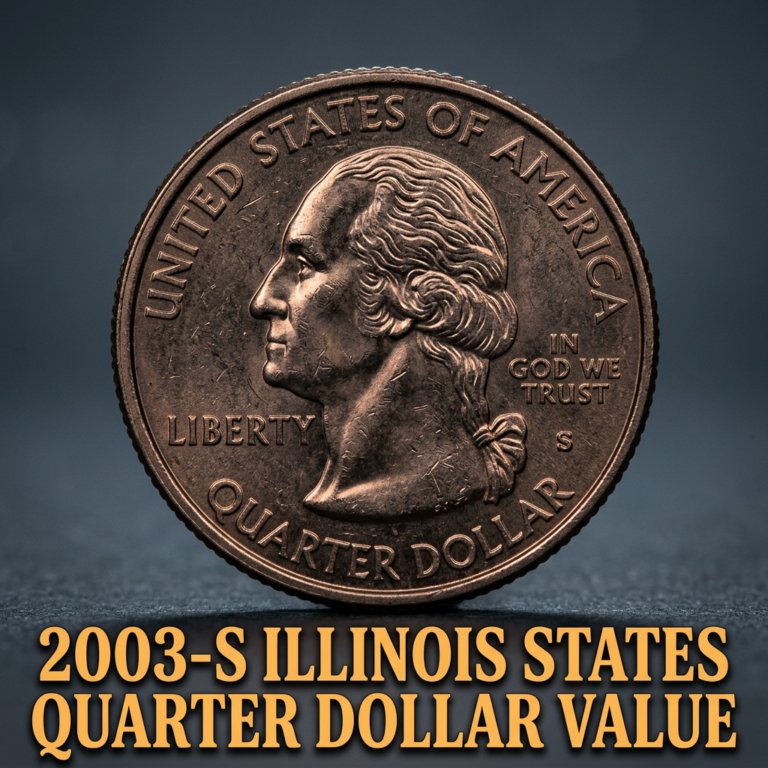
A: The mint mark (S, P, or D) is located on the obverse (front) of the coin, to the right of George Washington’s ponytail, just below the “In God We Trust” motto.
Q: Should I clean my coin to make it look better?
A: Never clean a collectible coin! Cleaning a coin with chemicals or clothes creates tiny scratches that ruin its numismatic value. A dirty, original coin is almost always worth more than a “shiny” cleaned one.