1964-D DDO Kennedy Half Dollar Value Guide What This Rare Variety Is Really Worth

Your Old Coin Could Be Valuable!
Identify It & Know Its Real Value — Free Download


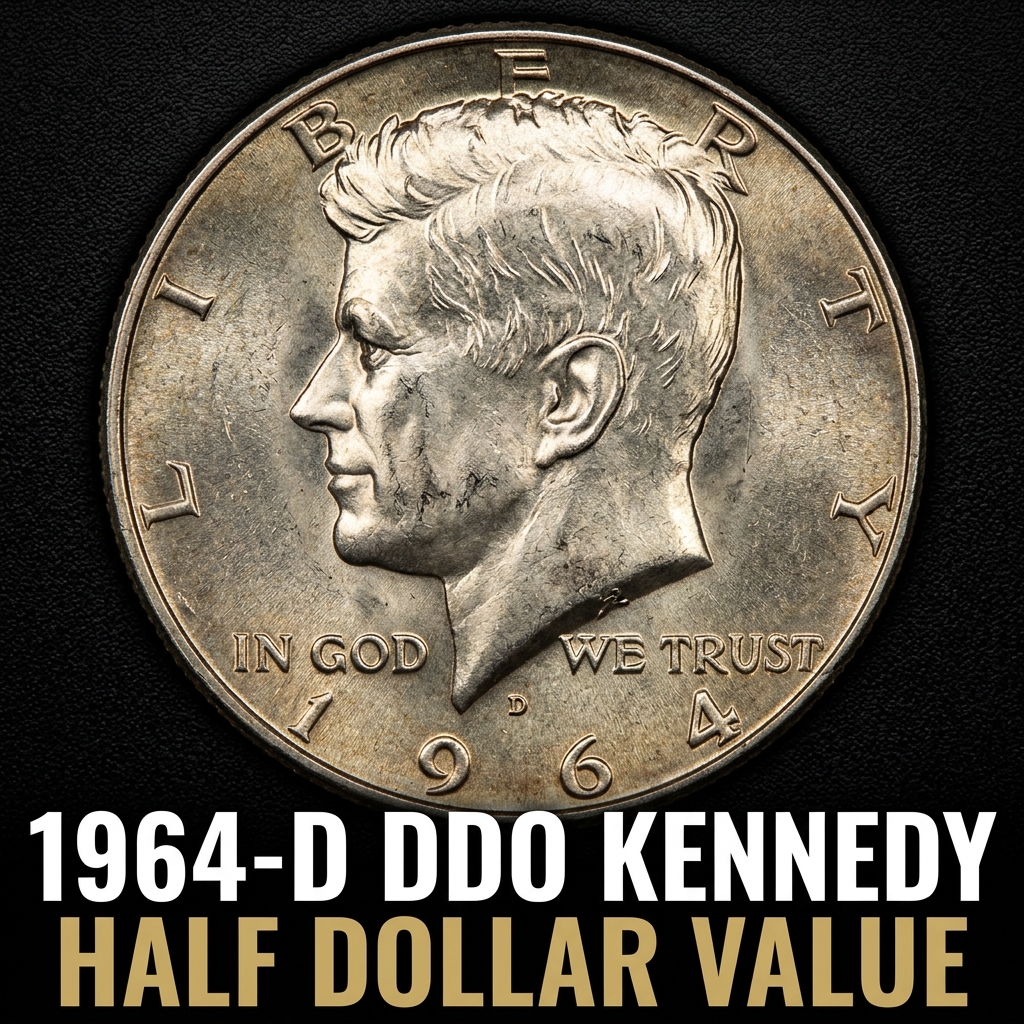
The 1964-D DDO Kennedy Half Dollar is worth anywhere from $30 in heavily circulated condition to well over $500 or more in high mint state grades, with exceptional examples fetching even higher prices at auction. If you’ve stumbled across one of these coins in an old collection or coin jar, you may be holding something genuinely valuable — and this guide will walk you through exactly what to look for and what it’s worth.
What Makes the 1964-D DDO Kennedy Half Dollar Special
The 1964-D DDO (Doubled Die Obverse) Kennedy Half Dollar is one of the most sought-after varieties from the entire Kennedy half dollar series. It was struck at the Denver Mint in 1964, just months after President John F. Kennedy’s assassination, making the entire 1964 Kennedy half dollar series emotionally and historically significant to many Americans.
The “DDO” designation means the coin’s obverse — the side with Kennedy’s portrait — shows doubling caused by a misalignment during the die-hubbing process. This creates a visible doubling effect on lettering, the date, or Kennedy’s facial features.
Not every 1964-D half dollar is a DDO. You need to look closely with a magnifying glass or jeweler’s loupe at the inscription “IN GOD WE TRUST,” the date “1964,” and the profile of Kennedy’s jaw and hair detail. If you see a slight shadow or echo effect on those areas, you may have the real thing.
Your Old Coin Could Be Valuable!
Identify It & Know Its Real Value — Free Download
If you’re not sure what you’re looking at, a coin identifier and value app can help you scan the coin and get a quick preliminary identification before you spend money on a professional appraisal.
1964-D DDO Kennedy Half Dollar Value by Grade
The grade of your coin has a massive impact on its value. A coin that’s been passed through cash registers for years will be worth far less than one that’s been sitting untouched in a mint set or envelope since 1964.
Your Old Coin Could Be Valuable!
Identify It & Know Its Real Value — Free Download
Here’s a general value breakdown based on coin grade:
| Grade | Description | Estimated Value |
|---|---|---|
| VG-8 (Very Good) | Heavy wear, major details visible | $30 – $50 |
| F-12 (Fine) | Moderate wear, all lettering clear | $50 – $90 |
| EF-40 (Extremely Fine) | Light wear, sharp details | $100 – $175 |
| MS-63 (Mint State) | Uncirculated, some bag marks | $250 – $400 |
| MS-65 (Gem Mint State) | Brilliant, nearly flawless | $500+ |
For more detailed grade-by-grade pricing on this coin, you can browse current Kennedy half dollar market prices by mint state grade to see how the market is trending right now.
Your Old Coin Could Be Valuable!
Identify It & Know Its Real Value — Free Download
Silver Content and Its Role in the Coin’s Value
One thing that every owner of a 1964-D Kennedy half dollar should know: this coin is 90% silver. It contains 0.3617 troy ounces of pure silver, which gives it an inherent silver melt value regardless of its variety status.
With silver prices fluctuating around $25–$30 per troy ounce in recent years, a 1964 Kennedy half dollar has a base melt value of roughly $9 to $11 just from its silver content alone. But as a DDO variety, the collectible premium far exceeds its metal value.
This is important because even if your coin is heavily worn and the doubling is difficult to see, it still has more than face value. The combination of silver content plus the DDO variety premium makes this a coin worth holding onto rather than spending.
Your Old Coin Could Be Valuable!
Identify It & Know Its Real Value — Free Download
How to Confirm You Have the DDO Variety
Identifying a genuine 1964-D DDO requires a careful eye. The most reliable doubling on this variety appears on the obverse inscriptions and Kennedy’s portrait details. Look especially at the letters in “LIBERTY” and “IN GOD WE TRUST” — on a confirmed DDO, you’ll notice a slight but clear second impression alongside the primary lettering.
Comparing your coin side-by-side with reference images from a trusted variety catalog like the Cherrypickers’ Guide is a smart move. Many collectors have found valuable DDO coins hiding in unchecked rolls or estate collections simply because they took the time to look.
CoinKnow is a great tool for variety identification — you can use the app to get a quick visual match and check whether your coin’s doubling aligns with known DDO markers before taking it to a dealer or submitting it to PCGS or NGC for official grading.
Your Old Coin Could Be Valuable!
Identify It & Know Its Real Value — Free Download
Getting your coin professionally graded and slabbed by a top grading service is highly recommended if it appears to be in mint state or near-mint condition. A certified grade dramatically increases buyer confidence and realized auction prices.
Where to Sell and What to Expect
Once you’ve confirmed you have a 1964-D DDO Kennedy half dollar, your selling options include auction platforms like Heritage Auctions or Stack’s Bowers, online marketplaces like eBay, or local coin dealers. Certified examples in high grades consistently attract serious collectors.
For a full breakdown of 1964 half dollar values including variety premiums and silver value, it’s worth doing your research before you sell so you don’t leave money on the table.
CoinKnow also helps you track recent sale prices for specific varieties so you can benchmark your coin against real market data — useful when negotiating with dealers or setting a reserve price at auction.
Your Old Coin Could Be Valuable!
Identify It & Know Its Real Value — Free Download
FAQ
Q: How do I know if my 1964-D Kennedy half dollar is a DDO?
A: Look at the obverse lettering and Kennedy’s portrait under magnification (at least 5x). If you see a clear shadow or doubling effect on “IN GOD WE TRUST,” the date, or “LIBERTY,” it may be a DDO. Compare with reference images online or use CoinKnow to help identify the variety before seeking a professional opinion.
Q: Is every 1964 Kennedy half dollar made of silver?
A: Yes. All 1964 Kennedy half dollars, including the Denver Mint (D) issues, are made of 90% silver. This gives each coin a base silver melt value of around $9–$11, separate from any collector premium.
Q: Should I clean my 1964-D DDO Kennedy half dollar before selling it?
A: No — never clean a coin you think might be valuable. Cleaning removes the original surface and can reduce a coin’s grade from mint state to “details” status, which significantly lowers its value to collectors. Leave it exactly as you found it and consult a professional grader first.