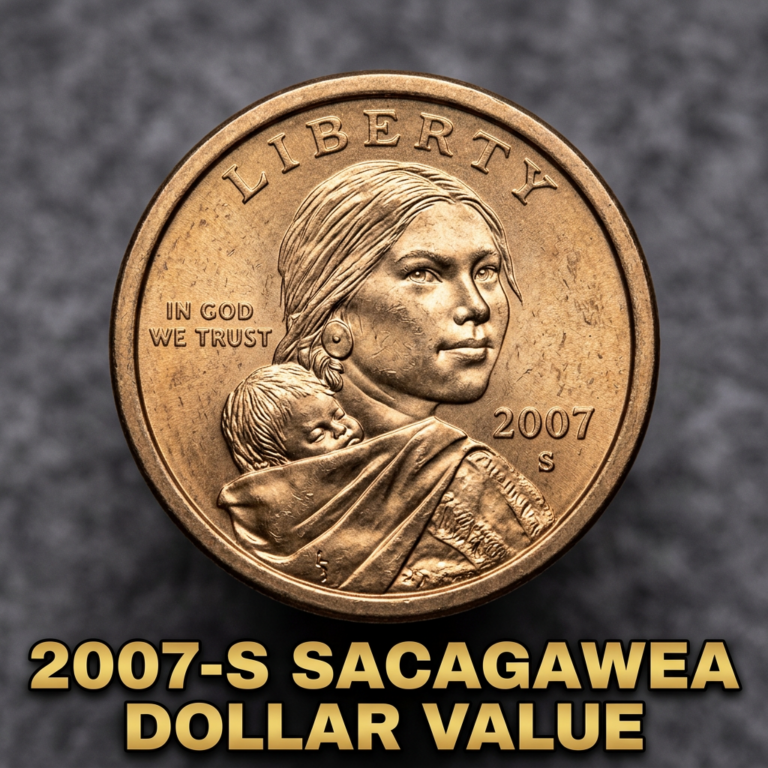
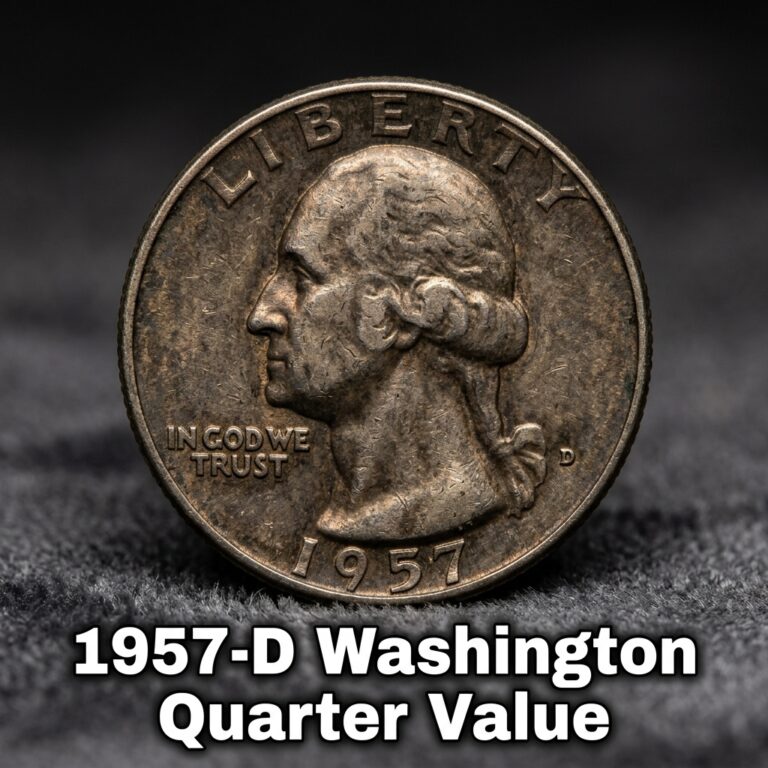
2009-D American Samoa Quarter Value: Is Your Coin Worth Money?

Your Old Coin Could Be Valuable!
Identify It & Know Its Real Value — Free Download


The 2009-D American Samoa Quarter is worth anywhere from its $0.25 face value in circulated condition to over $35 for high-grade Mint State specimens. While most examples you find in pocket change are common, certain “Satin Finish” versions and high-grade survivors command a significant premium among collectors today.
| Condition / Grade | Estimated Market Value |
|---|---|
| Circulated (Average Wear) | $0.25 – $0.50 |
| About Uncirculated (AU58) | $0.75 – $1.25 |
| Mint State 63 (Uncirculated) | $2.00 – $5.00 |
| Mint State 67 (High Grade) | $25.00 – $45.00 |
Why the 2009-D American Samoa Quarter Is Special
The 2009-D American Samoa Quarter is part of a very specific chapter in American numismatic history. For those who aren’t familiar with “mint marks,” the small “D” located on the obverse (the side with George Washington) indicates it was struck at the Denver Mint. In 2009, following the ten-year long 50 State Quarters Program, the U.S. Mint launched the District of Columbia and U.S. Territories Quarters Program.
This specific coin honors American Samoa with a reverse design featuring an ava bowl (tanoa), a whisk, and a staff—symbols representing the authority of Samoan chiefs. If you have found one of these coins and are unsure if it’s a “keeper,” using a top coin identifier and value app can help you distinguish between a common pocket change find and a high-grade collector’s item.
What makes 2009 coins particularly interesting to collectors is their low mintage. During the Great Recession of 2009, the demand for new coinage plummeted. As a result, the mintage numbers for 2009 quarters are significantly lower than those from the years immediately preceding or following them. This scarcity often creates a higher floor for the 2009 American Samoa D quarter’s worth compared to standard state quarters.
Your Old Coin Could Be Valuable!
Identify It & Know Its Real Value — Free Download
Many new hobbyists use the CoinKnow app to quickly scan their change. The app uses advanced image recognition to determine if your 2009-D quarter has the luster and surface quality that professional graders look for, which is essential because the difference between a 25-cent coin and a 20-dollar coin often comes down to microscopic scratches.
Grading and Mintage of the 2009 Denver Mint Samoa Quarter
When assessing the 2009-D American Samoa Quarter value, you must first understand the mintage figures. The Denver Mint struck approximately 39,600,000 of these quarters. While nearly 40 million sounds like a lot, it is a fraction of the hundreds of millions produced during the peak of the State Quarters program in the early 2000s.
Your Old Coin Could Be Valuable!
Identify It & Know Its Real Value — Free Download
Because these were released during a time of economic hardship, fewer people were “hoarding” new rolls from banks, meaning many of these coins entered circulation and underwent wear and tear. Finding a 2009-D in “Mint State” (MS) condition today is significantly harder than finding a 2000-P New Hampshire quarter in similar condition.
| Mint Mark | Mintage Quantity | Rarity Scale |
|---|---|---|
| 2009-D (Denver) | 39,600,000 | Uncommon (Low mintage year) |
| 2009-P (Philadelphia) | 42,600,000 | Uncommon |
Coin grading uses a 1-70 scale. Most coins you find in your wallet are graded between G-4 (Good) and EF-40 (Extremely Fine). At these levels, the 2009-D American Samoa quarter is generally only worth its face value. However, once you reach MS65 (Gem Uncirculated) or higher, the price begins to climb. Professional tools like CoinKnow can help you see high-resolution examples of what these grades look like.
The “Satin Finish” Variety and Its Value
In 2009, the U.S. Mint included special “Satin Finish” versions of the quarters in official Uncirculated Coin Sets. These were not intended for general circulation. These coins have a distinct, matte-like appearance that is smoother and more uniform than the standard “business strike” coins meant for spending.
Your Old Coin Could Be Valuable!
Identify It & Know Its Real Value — Free Download
If you happen to find a 2009-D American Samoa quarter that looks unusually “fuzzy” or soft in its luster, it might be a Satin Finish coin. These are technically classified as “SP” (Specimen) or “Satin” by grading services. Because they were handled with more care at the mint, they often survive in higher grades and are highly sought after by registry set collectors.
| Finish Type | Grade SP67 Value | Grade SP69 Value |
|---|---|---|
| Satin Finish (Mint Set) | $5.00 – $8.00 | $25.00 – $60.00 |
Determining the difference between a brilliant uncirculated business strike and a satin finish can be tricky for the naked eye. This is where CoinKnow becomes an invaluable resource, providing side-by-side comparisons so you don’t accidentally spend a premium specimen at the vending machine.
Are There Any Rare Errors on the 2009-D Samoa Quarter?
Error hunters are always on the lookout for mistakes made during the minting process. While the 2009-D American Samoa Quarter doesn’t have a “major” famous error like the 2004 Wisconsin Extra Leaf, there are minor anomalies that can increase its worth.
Your Old Coin Could Be Valuable!
Identify It & Know Its Real Value — Free Download
One common area to check is the reverse design around the tanoa (ava bowl). Collectors look for “Die Chips” or “Die Cracks.” These appear as small, raised bumps of extra metal on the surface. While a small die chip might only add a few dollars to the value, a significant error can make the coin worth $20 to $50 to the right buyer.
Another thing to look for is “Machine Doubling.” This is often confused with the much more valuable “Double Die” error. Machine doubling happens when the die shifts slightly during the strike, creating a shelf-like effect on the letters. While not as valuable as a true hub-doubled die, it is still a point of interest for many amateur collectors.
Where to Sell Your 2009-D American Samoa Quarter
If you’ve checked your coin and believe it’s a high-grade specimen or a rare error, you might be wondering where to cash in. For coins worth less than $10, selling on platforms like eBay can be difficult due to shipping costs. In these cases, it is often better to keep them as part of a personal collection or wait until you have a larger “lot” of 2009 quarters to sell together.
For coins that appear to be in pristine, flawless condition (MS67 or higher), it may be worth having them professionally graded by services like PCGS or NGC. A certified high-grade 2009-D American Samoa quarter can fetch a premium at specialized numismatic auctions.
Your Old Coin Could Be Valuable!
Identify It & Know Its Real Value — Free Download
Before spending money on grading fees, which can range from $20 to $50 per coin, use CoinKnow to get an initial estimate. This allows you to vet your coins at home and only send in the ones that have a realistic chance of returning a profit.
| Sale Platform | Best For… | Pros/Cons |
|---|---|---|
| Local Coin Shop | Quick cash / Appraisal | Lowest price, but instant |
| eBay (Auction) | Individual high-grade coins | High fees, high reach |
| Numismatic Auctions | Certified Top-Pop coins | Highest price for rarities |
Summary: Is It Worth Holding Onto?
In conclusion, the 2009-D American Samoa Quarter is a fascinating coin with a lower-than-average mintage that makes it a favorite for modern coin hunters. While most of the coins you find in circulation won’t make you rich, they are certainly worth more than their face value if they are in exceptionally clean condition or possess the elusive Satin Finish.
Always keep an eye out for the “D” mint mark and check the reverse for any signs of doubling or die cracks. As time goes on and more of these coins disappear into private collections or become heavily worn, the value of the few remaining “Gem” examples is likely to stay steady or increase.
FAQ
Q: How can I tell if my 2009-D Quarter is a “Satin Finish”?
A: Satin Finish coins have a very uniform, silky appearance rather than a mirror-like or flashy luster. They were only sold in 2009 Mint Sets and were not intended for circulation. If the coin looks exceptionally smooth with no contact marks but lacks a deep “shiny” reflection, it might be the satin variety.
Your Old Coin Could Be Valuable!
Identify It & Know Its Real Value — Free Download
Q: Why is the mintage of 2009 quarters so low?
A: The mintage was low due to the economic recession in 2009. The Federal Reserve required fewer new coins for commerce, leading the Treasury to significantly reduce production for all six territory quarters issued that year.
Q: Is there a “Silver” version of the American Samoa Quarter?
A: No, there is no “D” mint mark silver version. Silver versions of the 2009 American Samoa Quarter were minted in San Francisco and bear the “S” mint mark. These are found in Special Silver Proof sets and are 90% silver.
Q: Should I clean my 2009-D quarter to make it look better?
A: Never clean your coins! Cleaning a coin creates microscopic scratches that professional graders can detect instantly. A cleaned coin, even if it looks shiny to you, will lose a significant portion of its numismatic value.