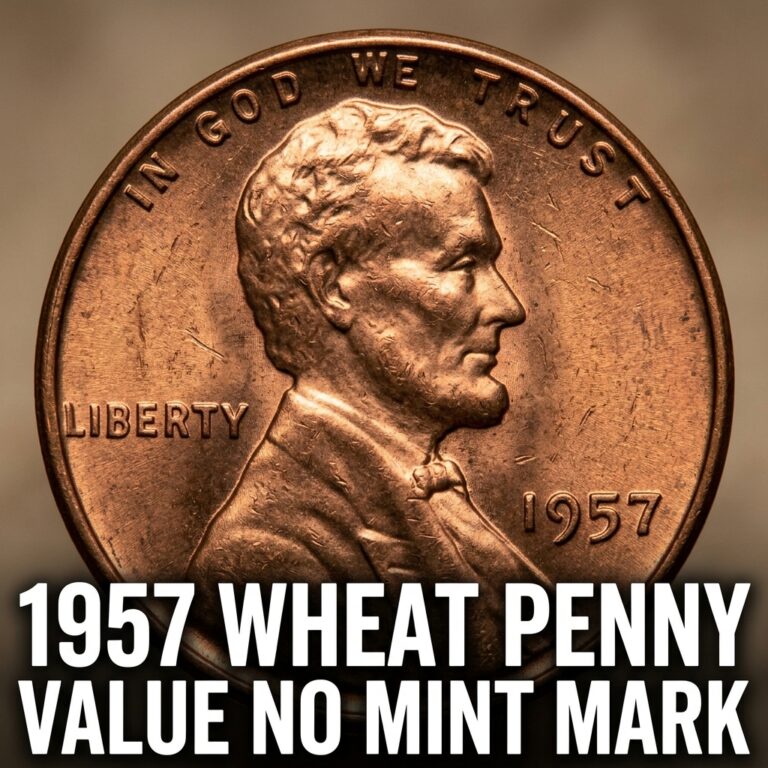
1978-D Lincoln Penny Value Guide: Is Your Coin Worth Money?

Your Old Coin Could Be Valuable!
Identify It & Know Its Real Value — Free Download


The 1978-D Lincoln Penny is worth anywhere from $0.02 in worn condition to over $600 in high-grade mint state. While most of these pennies found in your pocket change are only worth their face value or copper melt price, certain rare specimens and errors can command significant premiums from collectors.
| Condition | Estimated Value |
|---|---|
| Circulated (Average Wear) | $0.02 – $0.05 |
| Uncirculated (MS60 – MS63) | $0.10 – $1.00 |
| Choice Mint State (MS65 Red) | $10.00 – $25.00 |
| Superb Gem (MS67+ Red) | $100.00 – $600.00+ |
Understanding the History of the 1978-D Lincoln Penny
The 1978-D Lincoln Penny was minted in Denver during a decade of massive transition for the United States Treasury. By the late 1970s, the billion-coin production mark was common, as the economy required a high volume of small change for daily transactions.
If you are looking to identify your finds quickly, using a top coin identifier and value app can help you distinguish between a common spender and a potential treasure. The Denver Mint, indicated by the small “D” below the date, produced over 4.2 billion pennies this year alone.
Because the mintage was so high, finding one in your couch cushions isn’t surprising. However, what makes a specific 1978-D penny valuable to a collector isn’t nostalgia; it is the “Red” (RD) color designation and the absence of any contact marks or scratches. Using CoinKnow helps you understand these grading nuances better.
Your Old Coin Could Be Valuable!
Identify It & Know Its Real Value — Free Download
Most of these coins were bagged and shipped immediately, leading to “bag marks” where coins hit each other during transport. Finding one that survived without these tiny nicks is what collectors pay handsomely for in today’s market.
Grading and Color: Why It Matters for Your 1978 Penny
In the world of Lincoln Memorial cents, color is king. Copper coins are classified into three categories: Red (RD), Red-Brown (RB), and Brown (BN). A 1978-D penny that is still bright orange-red is significantly more valuable than one that has turned brown through circulation and oxidation.
A Brown coin typically sells for its copper melt value (around 2 cents), while a vibrant Red 1978-D penny price guide data shows that MS67 specimens are rare and highly sought after. Professional grading services like PCGS or NGC are usually required to certify these high-end grades.
Your Old Coin Could Be Valuable!
Identify It & Know Its Real Value — Free Download
When checking your coins with CoinKnow, look for the luster. If the coin “shimmers” when you rotate it under a light, it might be in Uncirculated condition. If the surface looks dull or chocolatey, it is likely a common circulated coin worth only a few cents.
| Color Designation | Visual Characteristics | Market Desirability |
|---|---|---|
| Red (RD) | 95%+ original copper luster | Very High |
| Red-Brown (RB) | 5% to 95% original red color | Moderate |
| Brown (BN) | Less than 5% original red color | Low (Melt Value) |
Valuable Errors to Look For in 1978-D Pennies
While most 1978-D pennies are standard, some left the mint with dramatic mistakes. These “error coins” are the lottery tickets of the coin world. One of the most common errors is the “Off-Center Strike,” where the coin isn’t lined up correctly with the dies, resulting in a blank crescent on part of the penny.
Your Old Coin Could Be Valuable!
Identify It & Know Its Real Value — Free Download
Another interesting variety is the “Die Crack” or “BIE” error. If you see a small vertical lump of copper between the letters “B” and “E” in the word “LIBERTY,” you have found a BIE penny. While these aren’t worth thousands, they can sell for $5 to $15 to specialized error collectors.
Double dies are also a hot topic. While there isn’t a famous 1955-style doubled die for 1978, you should look closely at the date and the lettering. If you see clear doubling of the numbers, you might have something unique. For a detailed breakdown of 1978 penny value information, you should search for recognized “Doubled Die Reverse” (DDR) listings.
If you suspect you have an error, CoinKnow can be a great tool to compare your coin against known genuine errors. Significant errors like a “wrong planchet” (a penny struck on a dime blank) can be worth over $500.
Your Old Coin Could Be Valuable!
Identify It & Know Its Real Value — Free Download
Detailed Price Chart by Mint State Grade
As mentioned, the jump in price between a “clean” coin and a “perfect” coin is massive. Most 1978-D pennies you find will be in “About Uncirculated” (AU) condition or lower. These are generally not worth the cost of shipping if sold individually online.
However, once you reach the MS66 and MS67 levels, the scarcity kicks in. There are fewer than 100 known examples in MS67+ RD condition, which explains why they sell for hundreds of dollars at major auctions like Heritage Auctions or Stack’s Bowers.
| Grade (RD) | 1978 (No Mint Mark) | 1978-D (Denver) | 1978-S (Proof) |
|---|---|---|---|
| MS63 | $0.25 | $0.25 | N/A |
| MS65 | $15.00 | $12.00 | $5.00 (PR65) |
| MS66 | $45.00 | $35.00 | $12.00 (PR69) |
| MS67 | $250.00 | $150.00 | $2,500.00+ (PR70) |
The Composition of the 1978-D Penny
One of the reasons older pennies are often kept by people is their metal content. Every penny minted in 1978 is composed of 95% copper and 5% zinc. This is important because, in 1982, the U.S. Mint changed the composition to 97.5% zinc with a thin copper plating.
Because of the high copper content, a 1978-D penny currently has a metal value of roughly 2 to 3 cents, depending on the current market price of copper. While it is currently illegal to melt down U.S. pennies for their metal, many people hoard “pre-1982” pennies as a hedge against inflation.
Your Old Coin Could Be Valuable!
Identify It & Know Its Real Value — Free Download
Each 1978-D penny weighs 3.11 grams. If you find one that feels light or looks silvery, it might be a rare “Struck on a Dime Planchet” error, which would weigh significantly less. Always keep a digital scale handy if you are serious about hunting for rare pennies.
Where to Sell Your 1978-D Lincoln Cent
If you’ve checked your change and believe you have a high-grade or error 1978-D penny, you have several options for selling. For common red pennies, eBay is often the best marketplace. You can list them as “Buy It Now” for a few dollars to attract collectors looking to fill their folders.
For high-value errors or coins that appear to be in perfect condition, you should consider professional grading. However, be cautious: it costs roughly $30-$50 to grade a single coin. If the coin is only worth $10, you will lose money on the transaction.
Local coin shops are great for quick valuations, but keep in mind they need to make a profit, so they may offer you “wholesale” prices. For the average person, holding onto these pennies until you have a large collection of copper cents is often the most practical choice.
FAQ
Q: Is a 1978-D penny made of gold?
A: No, 1978-D pennies are made of a copper-zinc alloy. Sometimes these pennies are plated in gold for novelty sets, but they are not minted in gold by the U.S. Treasury and do not hold high precious metal value.
Your Old Coin Could Be Valuable!
Identify It & Know Its Real Value — Free Download
Q: What does the “D” stand for on a 1978 penny?
A: The “D” mint mark indicates that the coin was produced at the Denver Mint in Colorado. Pennies without a mint mark were made in Philadelphia.
Q: How can I tell if my 1978-D penny is uncirculated?
A: An uncirculated coin will have no wear on the high points of Lincoln’s cheek or the pillars of the Lincoln Memorial on the back. It should also possess “mint luster,” a spinning light effect when viewed under a lamp.
Q: Is it worth keeping 1978-D pennies for their copper?
A: Many “stackers” keep all pennies dated 1981 and earlier because they contain about double their face value in copper. While you can’t melt them yet, they are considered by some to be a good long-term store of value.