1956 Washington Quarter Value No Mint Mark: Price Guide

Your Old Coin Could Be Valuable!
Identify It & Know Its Real Value — Free Download


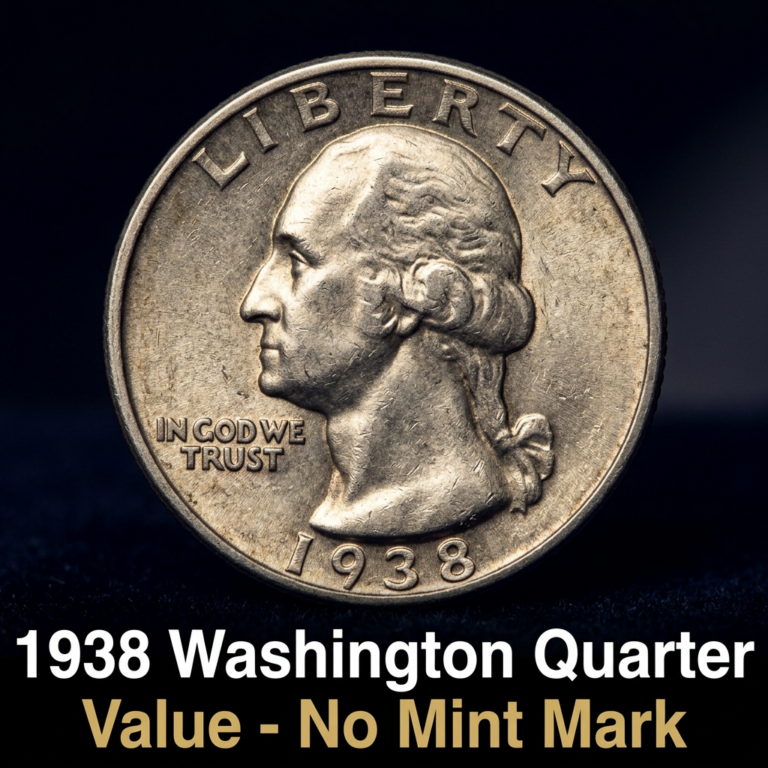
The 1956 Washington Quarter with no mint mark is worth anywhere from $6 in worn condition to over $11,000 in rare, high-grade mint states. If you have found one of these silver coins in your change jar, you are likely holding a piece of American history that is worth significantly more than its twenty-five-cent face value.
| Condition / Grade | Estimated Value |
|---|---|
| Circulated (Good to About Uncirculated) | $6.00 – $8.50 |
| Uncirculated (MS60 – MS64) | $10.00 – $25.00 |
| Choice Uncirculated (MS65 – MS66) | $35.00 – $120.00 |
| Superb Gem (MS67+) | $600 – $11,000+ |
| Proof Strike (PR65+) | $25.00 – $500.00+ |
History and Identification of the 1956 Washington Quarter
The Washington Quarter was first introduced in 1932 to commemorate the 200th anniversary of George Washington’s birth. By 1956, the design had become a staple of American commerce. For the everyday collector, the most important thing to know about the 1956 Washington Quarter is its metal composition. Unlike the copper-nickel quarters we use today, quarters minted in 1956 are made of 90% silver and 10% copper. Finding one today is like finding a small treasure because the silver melt value alone is often worth 20 times the face value of the coin.
To identify if your coin has “no mint mark,” you need to look at the reverse (back) of the coin. Specifically, look just below the wreath that the eagle is perched upon. If that space is empty, your coin was minted at the Philadelphia Mint. During this era, the Philadelphia Mint did not use a “P” mint mark. If you are unsure about the details of your coin, using a top coin identifier and value app can help you confirm the origin and variety of your specific piece instantly.
The 1956 Philadelphia strike had a mintage of roughly 44,114,000 business strike coins. This was a relatively healthy production number for the mid-50s, which is why worn examples are still accessible to hobbyists today. However, finding these coins in pristine, “untouched” condition is a much harder task for the modern collector.
Your Old Coin Could Be Valuable!
Identify It & Know Its Real Value — Free Download
The Silver Content and Intrinsic Value
One of the primary reasons the 1956 Washington Quarter value no mint mark remains high is its precious metal content. Every 1956 quarter contains 0.1808 troy ounces of pure silver. Because of this, the coin’s value fluctuates daily based on the spot price of silver. Even if the coin is incredibly worn, scratched, or damaged, it will never be worth less than its weight in silver.
For many Americans, these coins represent a “hedge” against inflation. When you use the CoinKnow app to track your collection, you can see how the silver market impacts your total portfolio value. Collectors often refer to these as “junk silver,” but there is nothing junk about a coin that has appreciated over 2,400% in value since it was first minted.
Your Old Coin Could Be Valuable!
Identify It & Know Its Real Value — Free Download
| Metal Component | Percentage / Weight |
|---|---|
| Silver Content | 90% Silver (0.18084 oz) |
| Copper Content | 10% Copper |
| Total Weight | 6.25 Grams |
Grading and Mint State Premium Values
When we talk about the 1956 Washington Quarter value no mint mark, the “grade” is the most decisive factor. Grading refers to the physical condition of the coin on a scale from 1 to 70. Most coins found in circulation today will grade between “Very Good” (VG8) and “About Uncirculated” (AU58). These are great for silver stackers but usually don’t command a high numismatic premium.
The real money is found in Mint State (MS) coins. An MS65 grade means the coin has a strong luster and very few distracting marks. If you manage to find an MS67, you are looking at a coin that could sell for thousands of dollars at auction. You can check the latest 1956 quarter auction records and MS prices to see just how much the price jumps once you reach the top-tier grades.
Your Old Coin Could Be Valuable!
Identify It & Know Its Real Value — Free Download
Professional grading services like PCGS or NGC are typically used for high-value coins. However, before spending money on professional grading, many people use CoinKnow to get a preliminary idea of their coin’s condition and whether it is worth the grading fee.
The Rare 1956 Proof Washington Quarter
In addition to the coins meant for pocket change, the Philadelphia mint also produced 669,384 Proof quarters in 1956. Proof coins are struck using special polished dies and planchets, resulting in a mirror-like finish and incredible detail. These were sold in sets directly to collectors and were never intended to be spent.
If you find a 1956 quarter that looks exceptionally shiny, even after 60 years, it might be a Proof. Within the Proof category, look for “Type B” reverses or “Cameo” finishes. A Cameo (CAM) or Deep Cameo (DCAM) proof has a sharp contrast between the frosted devices (Washington’s head) and the mirror fields. These are highly sought after by specialists.
Your Old Coin Could Be Valuable!
Identify It & Know Its Real Value — Free Download
| Proof Grade | Average Market Price |
|---|---|
| PR65 (Proof) | $25 – $35 |
| PR68 (Proof) | $100 – $150 |
| PR69 (Deep Cameo) | $400 – $900+ |
Key Varieties and Errors to Look For
While the 1956 Philadelphia quarter is not known for as many major errors as the 1943 cent, there are still some exciting varieties for collectors to hunt. The most famous is the 1956 “Type B” Reverse. This occurred when the Mint accidentally used a Proof die to strike regular business-strike coins.
How do you spot a Type B Reverse? Look at the space between the “E” and “S” in the word “STATES” on the back. On a normal business strike, the leaves of the wreath are very close to the letters. On a Type B (Proof die), there is a distinct, wider gap between the leaf and the letters. These varieties can add $20 to $100 to the current market value of a 1956 silver quarter.
Other minor errors include “Die Cracks” or “Clipped Planchets.” While these aren’t as common in the 1956 series as in others, they always command a premium from error collectors. If you notice something “wrong” with your coin—such as a weird bump or a missing piece—don’t clean it! Cleaning a coin permanently destroys its numismatic value.
Is Your 1956 Quarter Worth Grading?
Determining whether to send your coin to a professional grading service is a difficult choice for most beginners. As a rule of thumb, if your coin has been rolling around in a piggy bank and has visible scratches, it is likely worth its silver value (around $6-$8). In this case, the $20-$40 grading fee would be more than the coin is worth.
Your Old Coin Could Be Valuable!
Identify It & Know Its Real Value — Free Download
However, if you found a coin in a protective flip or a pristine original roll, it might be a candidate for high-grade status. If you suspect your coin could grade MS66 or higher, the investment in grading is absolutely worth it. High-grade 1956 quarters are “condition rarities,” meaning they are only rare because so few survived in perfect condition.
For most casual collectors, using the CoinKnow app provides a perfect middle ground. It allows you to identify your coin and get a realistic price estimate without the high cost of professional certification. This helps you enjoy the hobby of coin collecting without the stress of wondering if you’re missing out on a fortune.
| Action | Recommendation |
|---|---|
| Worn/Circulated | Keep for silver value; do not grade. |
| Shiny/Uncirculated | Identify using an app; consider grading if MS66+. |
| Suspected Error | Research “Type B” reverse; consult a local coin shop. |
FAQ about the 1956 Quarter Value
Q: Where is the mint mark on a 1956 Washington Quarter?
A: The mint mark is located on the reverse (back) of the coin, directly below the eagle and above the word “QUARTER.” If you see a “D,” it was made in Denver. If there is no letter at all, it was made in Philadelphia.
Q: How much silver is in a 1956 quarter?
A: Each 1956 quarter is composed of 90% silver. This amounts to approximately 0.1808 troy ounces of pure silver. You can calculate the “melt value” by multiplying 0.1808 by the current market price of silver.
Your Old Coin Could Be Valuable!
Identify It & Know Its Real Value — Free Download
Q: Why is my 1956 quarter so shiny?
A: It could be one of two things: it is either a “Proof” coin originally sold to collectors, or it is a “Mint State” coin that simply never entered circulation. Proof coins typically have a mirror-like background and very sharp details.
Q: Should I clean my 1956 silver quarter to make it worth more?
A: No! You should never clean any collectible coin. Collectors prefer the original “patina” or “toning.” Cleaning a coin leaves microscopic scratches that professional graders can easily spot, and it can reduce the coin’s value by 50% or more.
Q: What is the highest price ever paid for a 1956 Washington Quarter?
A: The record price for a 1956 Washington Quarter (No Mint Mark) is over $11,000 for a specimen graded MS67+ by PCGS. These ultra-high grades are extremely rare because most coins were bagged and bumped against each other, causing small nicks and scratches.