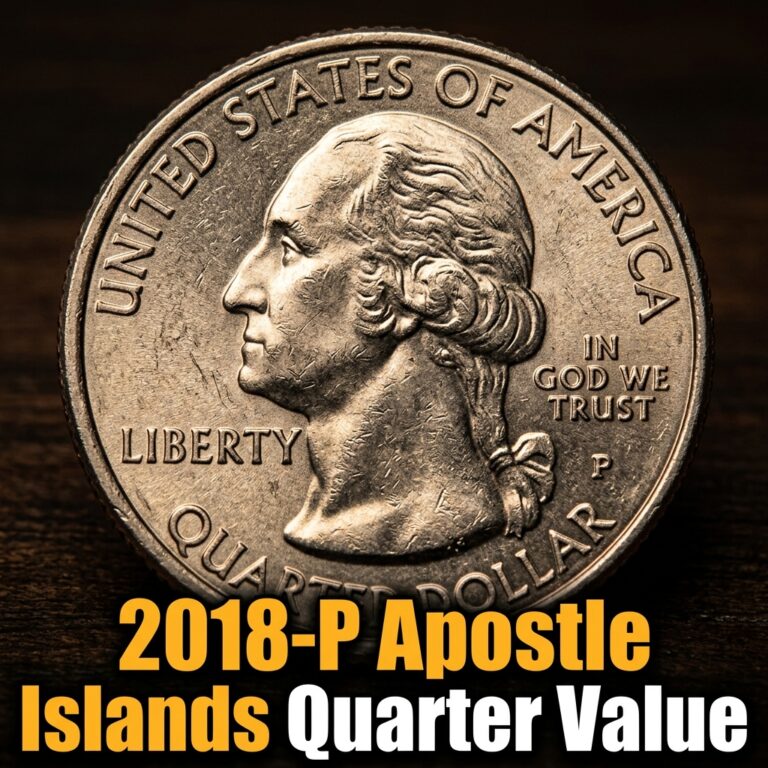
2009-D Northern Mariana Islands Quarter Value Guide

Your Old Coin Could Be Valuable!
Identify It & Know Its Real Value — Free Download


The 2009-D Northern Mariana Islands Quarter is worth anywhere from $0.25 in worn condition to over $35 for high-grade Unstable specimens. While most of these coins found in your change are only worth face value, certain high-quality strikes and errors can command a premium price from collectors looking to complete their sets.
| Condition | Estimated Value |
|---|---|
| Circulated (Average Wear) | $0.25 |
| About Uncirculated (AU) | $0.50 – $0.85 |
| Mint State (MS63-MS65) | $2.00 – $8.00 |
| High Grade (MS67+) | $35 – $100+ |
History of the 2009-D Northern Mariana Islands Quarter
The 2009-D Northern Mariana Islands Quarter was released as part of the District of Columbia and U.S. Territories Quarters Program. This program followed the wildly popular 50 State Quarters Program, extending the honor to federal districts and territories. The “D” mint mark signifies that this specific coin was struck at the Denver Mint in Colorado. Measuring the 2009 Northern Mariana Islands Quarter’s market worth requires understanding its historical context.
During 2009, the United States was in the midst of a significant economic recession. Because of this, the demand for new coinage from banks was at an all-time low. The U.S. Mint drastically reduced production numbers for all quarters minted that year. If you find one of these in your pocket change today, you should use a top coin identifier and value app to confirm its variety and quality.
Because the mintage numbers were so low compared to the state quarters of the early 2000s, many collectors consider the 2009 territorial quarters to be “semi-key” dates. This means they are harder to find in the wild. If you have the CoinKnow app installed on your phone, you can quickly scan any 2009 quarter to see if you have one of these scarcer territorial issues or a more common Washington quarter.
Your Old Coin Could Be Valuable!
Identify It & Know Its Real Value — Free Download
Analyzing the Design and Symbols
The reverse side of the 2009-D Northern Mariana Islands Quarter features a beautiful design that represents the unique culture and geography of the territory. It depicts the sea shore with a large limestone pillar, known as a Latte Stone, which is a traditional foundation for Chamorro houses. To the right of the Latte Stone is a Carolinian canoe under sail, representing the seafaring skills of the indigenous people.
Two local items are also featured: a “mwar” (decorative lei) and a latte stone. The inscriptions include “Northern Mariana Islands,” “E Pluribus Unum,” and the date “2009.” The obverse remains the familiar portrait of George Washington, used since 1932. When you use CoinKnow, the image recognition software can identify these specific design elements to ensure you aren’t looking at a fake or a different year.
Your Old Coin Could Be Valuable!
Identify It & Know Its Real Value — Free Download
The design was selected by the Governor of the Northern Mariana Islands and then approved by the United States Secretary of the Treasury. Artists Richard Masters and Phebe Hemphill brought the vision to life. Understanding these details helps collectors appreciate the artistic value alongside the monetary value. The intricate details on the Latte Stone and the canoe’s sail are the first places to look for wear when grading your coin.
Mintage Figures and Rarity Factors
As mentioned, the 2009-D Northern Mariana Islands Quarter has a significantly lower mintage than the quarters from previous years. In the world of coin collecting, lower supply often leads to higher demand and higher prices over time. While millions were still produced, they are seen far less frequently in circulation than the 1999 or 2000 state quarters.
Your Old Coin Could Be Valuable!
Identify It & Know Its Real Value — Free Download
| Mint Facility | Mintage Quantity |
|---|---|
| Denver (D) | 37,600,000 |
| Philadelphia (P) | 35,200,000 |
| San Francisco (S) – Proof | 2,113,390 |
| San Francisco (S) – Silver Proof | 993,584 |
Compared to the 1999 Connecticut Quarter, which had over 1.3 billion minted, the 37 million 2009-D quarters are quite rare. This relative scarcity is why collectors are often willing to pay a premium for “Mint State” rolls or individual coins that haven’t been scratched up in a vending machine. Using CoinKnow helps you keep track of these mintage stats and helps you realize why your 2009 quarter feels “different” from the older ones.
Value by Condition and Grade
The value of your 2009-D Northern Mariana Islands Quarter is strictly tied to its grade. “Grade” is a professional term for the condition of the coin on a scale from 1 to 70. Most coins you find in your pocket are in “Circulated” condition. These are usually only worth their face value of 25 cents. However, if you find one that looks shiny, as if it just came from a bank roll, it might be worth more.
| Grade Label | Description | Estimated Price |
|---|---|---|
| Very Fine (VF20) | Moderate wear on high points. | $0.25 |
| Uncirculated (MS60) | No wear, but many bag marks. | $1.50 |
| Choice Mint State (MS65) | Strong luster, few marks. | $7.00 |
| Superb Gem (MS67) | Nearly perfect to the eye. | $45.00 |
For a coin to reach the $100+ range, it usually needs to be graded MS68 by a professional service like PCGS or NGC. These are extremely rare because of how coins were handled at the mint. Most 2009 quarters were tossed into large canvas bags, causing “bag marks” or tiny scratches. A coin that survived this process without a scratch is a true prize for any collector.
Your Old Coin Could Be Valuable!
Identify It & Know Its Real Value — Free Download
Notable Errors and Varieties to Watch For
Sometimes, the U.S. Mint makes mistakes. These mistakes, known as “error coins,” can turn a 25-cent coin into a hundred-dollar treasure. For the 2009-D Northern Mariana Islands Quarter, there aren’t many widely recognized major varieties like the “Extra Leaf” Wisconsin quarter, but there are several minor errors that collectors look for.
Check for “Die Cracks,” which look like raised jagged lines on the surface of the coin. These occur when the metal stamp used to strike the coin begins to break. Another common error is the “Doubled Die.” This happens when the die itself has a ghosted or secondary image, leading to a blurred or doubled appearance on letters or numbers. While no major 2009-D doubled dies have been found yet, new discoveries happen every year.
Always look at the edges and the center of the Latte Stone for any unusual protrusions. If you find something that looks odd, don’t clean it! Cleaning a coin destroys its numismatic value. Instead, use a high-resolution camera or a coin app to compare your find with known examples of errors. Often, “errors” found in circulation are just post-mint damage, but it’s always worth a second look.
Your Old Coin Could Be Valuable!
Identify It & Know Its Real Value — Free Download
Tips for Selling Your 2009 Quarters
If you believe you have a high-value 2009-D Northern Mariana Islands Quarter, the first step is to protect it. Place it in a cardboard 2×2 holder or a plastic flip to prevent further scratching. Once protected, you need to decide if it’s worth the cost of professional grading. Grading usually costs $20-$50 per coin, so only do this if the coin is in pristine, perfect condition.
For most people, selling locally is the easiest route. Visit a reputable local coin shop, but don’t expect to get the full “book value.” Dealers need to make a profit, so they typically offer 50-70% of the retail value. If you have a true rarity, online auctions like eBay are a great way to reach a global audience. Detailed photos are the key to a successful online sale.
Finally, keep an eye on market trends. The value of modern quarters can fluctuate based on collector interest. Currently, the 2009 quarters are seeing a slight uptick in interest because the “younger” generation of collectors is looking to finish their territory sets. Holding onto your high-grade 2009-D quarters for a few more years might result in an even better payout as they become harder to find in circulation.
FAQ
Q: Is the 2009-D Northern Mariana Islands Quarter made of silver?
A: No, the standard quarters found in circulation are made of a copper-nickel clad composition. However, the U.S. Mint did produce a special 90% silver version at the San Francisco Mint for collectors, which will have an “S” mint mark.
Your Old Coin Could Be Valuable!
Identify It & Know Its Real Value — Free Download
Q: Why are 2009 quarters so hard to find?
A: 2009 quarters are difficult to find because the mintage numbers were drastically reduced due to the low demand for new coins during the “Great Recession.” They were produced in much smaller quantities than the quarters from 1999–2008.
Q: How can I tell if my 2009-D quarter is a “Mistake” or Error coin?
A: Look for features that seem out of place, such as doubled lettering, raised lines of metal (die cracks), or missing details. If the coin looks like it was smashed by a hammer or scratched by a machine, it is likely “post-mint damage” and not a valuable error.
Q: Should I keep every 2009 quarter I find?
A: While they aren’t all worth a fortune, many collectors choose to save 2009 quarters simply because they are less common. If you have the space, keeping a few of the cleanest ones you find is a low-risk way to start a small collection.