1993-D Roosevelt Dime Value: Worth More Than Ten Cents?

Your Old Coin Could Be Valuable!
Identify It & Know Its Real Value — Free Download


The 1993-D Roosevelt Dime is worth anywhere from its $0.10 face value in worn condition to over $500 for rare, high-grade specimens. While most of these coins found in your change are only worth ten cents, knowing what to look for can help you spot a valuable treasure in your pocket.
| Condition / Grade | Estimated Value |
|---|---|
| Circulated (Average Change) | $0.10 |
| Uncirculated (MS60 – MS63) | $0.25 – $1.50 |
| Choice Mint State (MS65) | $5.00 – $12.00 |
| Gem Mint State (MS67) | $25.00 – $60.00 |
| Superb Gem (MS68+) | $350.00+ |
Understanding the 1993-D Roosevelt Dime Value Today
If you just emptied your piggy bank or checked your car’s cup holder, you likely have a few Roosevelt dimes featuring the “D” mint mark. Produced by the Denver Mint, these coins are incredibly common, but that doesn’t mean they are all mundane. To accurately identify your find, many collectors use a top coin identifier and value app to distinguish between a common spender and a collector’s item.
The Denver Mint struck over 751 million dimes in 1993. Because of this massive production, the vast majority were released into circulation and have suffered the “wear and tear” of daily commerce. A circulated 1993-D dime is typically worth only ten cents. However, the 1993-D Roosevelt dime value starts to climb once you look at coins that never spent a day in a cash register.
Collectors are particularly interested in “Mint State” (MS) coins. These are pieces that look as fresh as the day they were struck. When using the CoinKnow app, you can often zoom in on high-resolution photos to see if your coin has the original “mint luster”—that satiny sheen found on new coins. If your dime is truly flawless, it could be worth significantly more than its face value.
The real money lies in the “Full Band” (FB) designation. This refers to the horizontal bands on the torch on the reverse side of the dime. If these bands are fully separated and distinct, the coin is much rarer. Serious numismatists will pay a premium for a 1993-D Roosevelt dime with these sharp details, as they are difficult to find in high grades.
Your Old Coin Could Be Valuable!
Identify It & Know Its Real Value — Free Download
Key Features and Identification of the 1993-D Dime
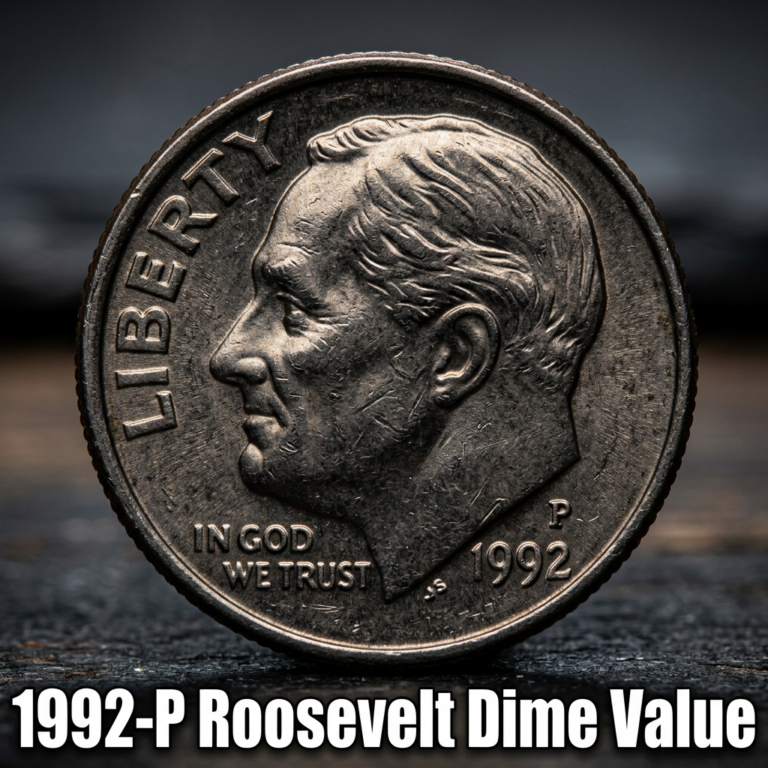
Identifying a 1993-D dime is straightforward for most Americans, but a few details are vital. The “D” mint mark is located just above the date on the obverse (front) of the coin. This signifies it was made in Denver. If there is a “P,” it was made in Philadelphia; if there is no mint mark, it is likely a Philadelphia strike from a different era, but for 1993, both main mints used marks.
The 1993 Roosevelt Dime is composed of a “clad” sandwich of metals: 75% copper and 25% nickel on the outside, bonded to a pure copper core. This gives the coin its silvery appearance but a distinct copper-colored edge if you look at it from the side. Unlike older dimes from 1964 and earlier, these do not contain any silver.
Your Old Coin Could Be Valuable!
Identify It & Know Its Real Value — Free Download
Because these coins are not made of precious metals, their value is derived entirely from their condition and rarity. Checking the 1993 Roosevelt Dime valuation guides helps collectors realize that while high-grade coins are rare, “junk” coins are plentiful. When evaluating your 1993-D, look for scratches on Roosevelt’s cheek or wear on the torch on the back.
The CoinKnow app can help beginners identify “weak strikes,” which were common in the early 90s. A weak strike might look like wear, but it actually happened at the mint. Collectors vastly prefer “strong strikes” where every hair strand on Roosevelt and every leaf on the olive branch is crisp and clear.
| Feature | Description for 1993-D |
|---|---|
| Composition | 91.67% Copper, 8.33% Nickel (Clad) |
| Weight | 2.27 grams |
| Edge | Reeded (118 reeds) |
| Mint Mark Location | Above the date |
Grading Your 1993-D Roosevelt Dime
Grading is the process of determining a coin’s condition on a scale from 1 to 70. For a modern coin like the 1993-D, anything below a grade of 60 is generally only worth face value. The magic happens at MS65 and above. When you check current market prices for Mint State Roosevelt dimes, you will see a massive price jump for coins graded MS67 or higher.
Your Old Coin Could Be Valuable!
Identify It & Know Its Real Value — Free Download
At MS65 (Gem Uncirculated), the coin should have an attractive luster and very few distracting marks. If you find one in a long-forgotten mint set, it might qualify. If the coin is in MS68 condition, it is nearly flawless. As of the current market, a 1993-D dime graded MS68 by a professional service like PCGS can sell for hundreds of dollars because so few have survived in that state.
The “Full Bands” (FB) designation is the second half of the grading puzzle. On the back of the dime, there is a torch. At the top and bottom of this torch are horizontal bands. To get the FB designation, these lines must be clearly separated with no “bleeding” between them. A 1993-D MS67 FB dime is the “holy grail” for this specific year and mint.
Most people using CoinKnow find that their dimes are “About Uncirculated” or “Extremely Fine.” These are perfect for filling a coin folder but won’t fund a retirement. However, it is always worth checking your change for that one-in-a-million pristine example that was accidentally spent shortly after being minted.
| Grade Designation | Physical Characteristics | Market Value |
|---|---|---|
| MS63 | Slight marks/scuffs, decent luster | $2 – $5 |
| MS65 | Strong luster, very few marks | $10 – $20 |
| MS67 | Nearly perfect to the naked eye | $50 – $100 |
| MS67 FB | Perfect bands on the torch | $250+ |
Rare 1993-D Dime Errors to Look Out For
Errors are where the 1993-D Roosevelt dime value can skyrocket. Even if a coin is worn, a significant mint error can make it worth $20, $50, or even $100 or more to the right collector. One of the most common errors for this era is the “Off-Center Strike.” This happens when the coin blank (planchet) isn’t properly centered in the press.
Your Old Coin Could Be Valuable!
Identify It & Know Its Real Value — Free Download
An off-center strike that is missing 10% of the design is cool, but one that is missing 50%—while still showing the 1993 date and the D mint mark—is highly valuable. These “mis-strikes” are easily spotted and are a favorite for people just starting their coin collecting journey.
Another error to watch for is a “Broadstrike.” This occurs when the retaining collar (which creates the ridges on the edge) fails. The coin ends up looking flatter and wider than a normal dime. Then there are “Die Cracks,” which look like raised, jagged lines running across Roosevelt’s face or the torch. While minor die cracks don’t add much value, large ones can be quite collectible.
The most famous 1990s errors aren’t usually found on the 1993-D, but “Double Dies” are always a possibility. Look for doubling in the letters of “LIBERTY” or the numbers in “1993.” If the doubling is clear and distinct without the help of a microscope, you might have found a unique error that hasn’t been widely documented yet.
Is a 1993-D Dime Worth Keeping?
For the average person, a 1993-D dime is best used at the grocery store. Since millions are in circulation, they are not rare. However, there are two reasons to keep one. First, if the coin is in “Proof-like” condition—meaning it looks like a mirror and has no scratches—it could be worth sending in for professional grading.
Your Old Coin Could Be Valuable!
Identify It & Know Its Real Value — Free Download
Second, if you are building a “date and mint” set, the 1993-D is a necessary piece of the puzzle. Most hobbyists enjoy the challenge of finding the cleanest possible version of each coin from circulation. It’s a low-cost way to get into numismatics and learn about American history through the pocket change we often take for granted.
Always remember that “eye appeal” matters. A 1993-D dime that has developed a beautiful “toning” (rainbow colors caused by oxidation) can sometimes sell for a premium over a standard white coin. While toning is more common on silver coins, clad dimes can occasionally develop blue or gold tints that attract specialized buyers.
If you are ever in doubt, keep the coin in a separate paper envelope or a plastic flip to prevent further scratching. Once a coin is scratched or cleaned, its value to a collector drops significantly. Never clean your coins with polish or soap, as this leaves micro-abrasions that professional graders can spot instantly.
| Mint Location | Mintage Quantity | Rarity Ranking |
|---|---|---|
| Philadelphia (1993-P) | 758,260,000 | Very Common |
| Denver (1993-D) | 751,856,531 | Very Common |
| San Francisco (1993-S Proof) | 3,394,792 | Uncommon (Sets only) |
FAQ
Q: Is the 1993-D Roosevelt dime made of silver?
A: No. The 1993-D Roosevelt dime is a copper-nickel clad coin. The last dimes made for general circulation that contained silver were minted in 1964.
Q: What is the highest price ever paid for a 1993-D dime?
A: High-grade specimens in MS69 condition have sold at auction for over $500, especially those with the “Full Bands” designation. However, these are extremely rare and usually come from original mint rolls that were handled with gloves.
Your Old Coin Could Be Valuable!
Identify It & Know Its Real Value — Free Download
Q: Where is the mint mark on a 1993 dime?
A: The mint mark is located on the obverse (heads) side, just above the date. Look for a small “D” for Denver or a “P” for Philadelphia.
Q: How can I tell if my 1993-D dime is “Full Bands”?
A: Look at the torch on the reverse side. There are two sets of horizontal bands (one near the top, one near the bottom). If you can see a clear, uninterrupted line separating the two bands in both sets, the coin may qualify as “Full Bands.”
Q: Is there a 1993-S dime?
A: Yes, the San Francisco Mint produced “Proof” versions of the 1993 dime for collectors. These were not released into general circulation and usually have a mirror-like finish. They are generally worth $2 to $5 in their original packaging.