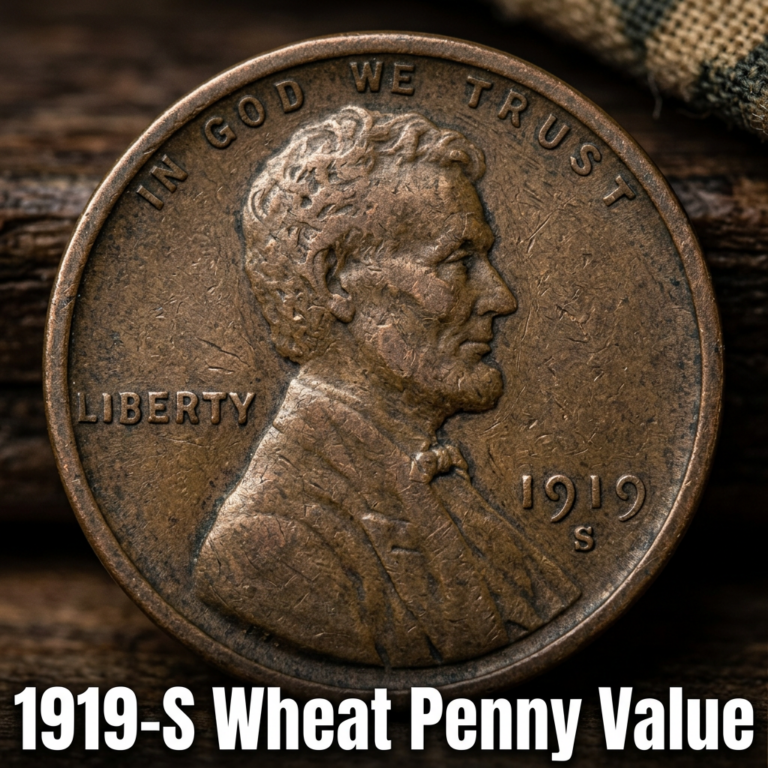
1944-D Wheat Penny Value: How Much Is Your Coin Worth?

Your Old Coin Could Be Valuable!
Identify It & Know Its Real Value — Free Download


The 1944-D Wheat Penny is worth anywhere from $0.05 in worn condition to over $12,000 for rare high-grade specimens. While most of these Lincoln cents found in pocket change are common, certain mint errors and exceptional grades can turn a simple penny into a significant payday for lucky collectors.
| Condition / Grade | Estimated Value |
|---|---|
| Average Circulated (G-VF) | $0.05 – $0.25 |
| Uncirculated (MS63) | $2.00 – $5.00 |
| Gem Mint (MS67 Red) | $150.00 – $400.00 |
| Rare Error (Steel Planchet) | $5,000 – $12,000+ |
History of the 1944-D Lincoln Wheat Penny
In 1944, the United States Mint was still grappling with the logistical challenges of World War II. The previous year, 1943, saw the production of the famous “Steel Penny” to conserve copper for the war effort. However, the steel cents proved unpopular and problematic in vending machines. By 1944, the Mint returned to a nearly all-copper composition, often sourced from recycled shell casings.
If you have discovered one of these coins in an old jar, using a top coin identifier and value app is the fastest way to confirm its origin. The Denver Mint, indicated by the small “D” mark, produced a staggering 430,580,000 pennies this year. Because production was so high, finding one today is relatively easy, but finding one in “Mint State” is where the real value lies.
Modern tools like CoinKnow make it simple for the average person to distinguish between a common filler coin and a true collector’s piece. While the 1944-D is common, its transition away from the wartime steel material makes it a fascinating piece of American history. Most people hold onto them because they contain 95% copper, which is inherently worth more than a modern zinc penny.
Your Old Coin Could Be Valuable!
Identify It & Know Its Real Value — Free Download
Determining the 1944-D Wheat Penny Grade
When evaluating a 1944-D specimen, “condition” is everything. Professional graders look at the amount of wear on Lincoln’s hair and the crispness of the wheat stalks on the reverse. A coin that has been passed around for decades will look dull and flat, while a coin tucked away in a piggy bank might still shine with its original luster.
Your Old Coin Could Be Valuable!
Identify It & Know Its Real Value — Free Download
For those looking for detailed pricing, checking the 1944-D penny price charts for Red Mint State grades can provide a clearer picture of market shifts. These coins are categorized by color: Brown (BN), Red-Brown (RB), and Red (RD). Red coins are the most desirable because they retain the original “new” copper glow.
If you aren’t sure where your coin falls, the CoinKnow app can help you photograph and compare your coin against high-resolution grading standards. Remember that even a tiny scratch visible only under a magnifying glass can drop a coin’s value from $50 down to $2. Grading is a precise science, and even the “D” mint mark must be sharp and clear to reach the highest price brackets.
Your Old Coin Could Be Valuable!
Identify It & Know Its Real Value — Free Download
| Grade Designation | Appearance | Market Value |
|---|---|---|
| Good (G4) | Heavily worn; outlines are clear but flat. | $0.05 |
| Extra Fine (XF40) | Slight wear on high points like the cheek. | $0.15 |
| Uncirculated (MS65) | Original luster, no wear, few marks. | $15 – $30 |
Rare 1944-D Wheat Penny Mint Errors to Look For
While most 1944-D pennies are worth just a few cents, mint errors can skyrocket the price into the thousands. The most legendary error is the 1944-D Steel Penny. These occurred when left-over steel planchets from 1943 were accidentally fed into the presses in 1944. If you have a 1944 penny that sticks to a magnet, you might be holding a coin worth more than a new car.
Another sought-after error is the D Over S (D/S) Repunched Mint Mark. This happened when a Denver “D” was punched over a San Francisco “S” on the die. You will need a jeweler’s loupe to see the faint traces of the “S” underneath the “D.” These varieties are highly prized by collectors who specialize in Lincoln Cents.
To stay updated on the latest auction results, you should review the 1944 wheat penny value trends and error guides regularly. Many collectors miss these errors because they don’t know what to look for. Always check the date and the mint mark twice; a simple double-die or a clipped planchet can turn your copper cent into a “treasure in your pocket.”
Your Old Coin Could Be Valuable!
Identify It & Know Its Real Value — Free Download
What Influences the Market Price of Wheat Pennies?
The value of a 1944-D Wheat Penny isn’t just about the metal or the grade; it’s also about supply and demand. Since hundreds of millions were made, the supply is high. However, the demand for “Lincoln sets” is also high because almost every coin collector starts with pennies. This keeps the market for high-grade 1944-D coins very liquid.
Precious metal prices also play a role. Copper prices have risen, making the melt value of a pre-1982 penny worth about 2 to 3 cents. While it is currently illegal to melt US pennies for their metal content, this “base value” ensures that even the most worn 1944-D penny will never be worth just one cent to a savvy investor.
If you are thinking about selling, the CoinKnow app can provide real-time updates on what similar coins are selling for on eBay and at major auction houses. This prevents you from selling a potentially valuable Red uncirculated coin for the price of a Brown circulated one. Market fluctuations are common, so timing your sale can lead to a better return.
Your Old Coin Could Be Valuable!
Identify It & Know Its Real Value — Free Download
| Factor | Impact on Value |
|---|---|
| Original Color (RD) | Increases value by 50% – 300% |
| Magnetism (Steel) | Increases value to $5,000+ |
| Professional Grading | Adds “liquid” value for high grades |
How to Safely Store Your 1944-D Pennies
If you find a 1944-D penny that looks remarkably shiny, you should stop touching it with your bare fingers immediately. The oils on your skin can cause “fingerprint corrosion” which permanently damages the coin’s surface and lowers its grade. Instead, handle it by the edges or use lint-free cotton gloves.
Storage is equally important for preserving the 1944-D Wheat Penny Value. High humidity can cause copper coins to develop “PVC damage” if stored in cheap plastic flips. Ideally, use acid-free paper envelopes or PVC-free plastic holders. Keeping your coins in a cool, dry place will ensure that a “Red” coin doesn’t turn “Brown” over the next decade.
Many beginners make the mistake of cleaning their coins to make them look “better.” Never clean a 1944-D penny! Cleaning creates microscopic scratches that professional graders can spot instantly. A cleaned coin, regardless of how rare it is, usually loses 50% or more of its numismatic value. Let the natural patina remain; collectors prefer an honest, aged look over a shiny, scrubbed one.
FAQ
Q: How can I tell if my 1944-D penny is a steel error?
A: The easiest way is to use a magnet. A normal 1944-D penny is made of copper and will not be attracted to a magnet. If your 1944-D penny sticks to a magnet, it is likely a rare steel planchet error worth thousands of dollars. Be careful of “fakes” that are simply copper pennies plated in zinc by science students!
Your Old Coin Could Be Valuable!
Identify It & Know Its Real Value — Free Download
Q: Where is the mint mark on a 1944-D Wheat Penny?
A: The mint mark is located on the “heads” (obverse) side of the coin, directly below the date (1944). A “D” stands for Denver, an “S” stands for San Francisco, and if there is no letter at all, it was minted in Philadelphia.
Q: Is it worth getting my 1944-D penny professionally graded?
A: It is only worth the cost (usually $30-$50) if the coin appears to be in “Mint State” (very shiny with no wear) or if you suspect it is a rare error. For common, worn pennies worth less than $1, the grading fee would be much higher than the coin’s actual value.
Q: Why are some 1944-D pennies called “Shell Case” cents?
A: During WWII, the US military used millions of brass shell casings. After the war began, these spent casings were gathered and melted down to create the copper alloy used for the 1944 and 1945 pennies. This gives these specific years a unique historical connection to the war effort.