1965-S Kennedy Half Dollar Value: What Is It Worth Today?

Your Old Coin Could Be Valuable!
Identify It & Know Its Real Value — Free Download


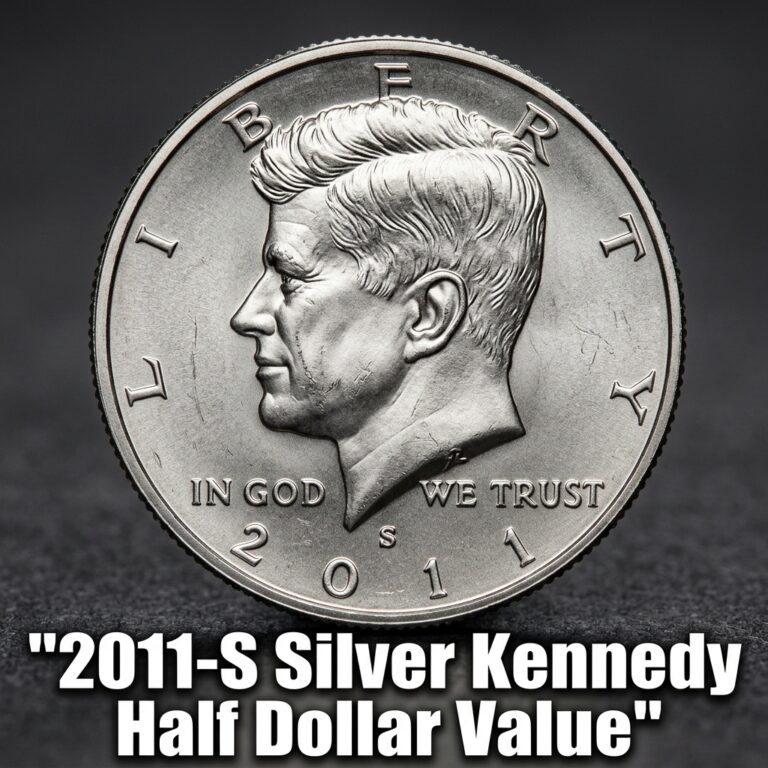
The 1965 Kennedy Half Dollar is worth anywhere from $8 in circulated condition to over $5,000 for rare high-grade specimens. While these coins don’t contain as much silver as the 1964 issues, they remain highly collectible treasures that many Americans still find in old jars or inherited collections today.
| Condition | Estimated Value |
|---|---|
| Circulated (F-XF) | $8.00 – $10.00 |
| About Uncirculated (AU) | $10.00 – $12.00 |
| Mint State (MS63-MS65) | $15.00 – $45.00 |
| High Grade (MS67+) | $500 – $5,000+ |
Understanding the 1965 Kennedy Half Dollar Silver Content
If you’ve recently stumbled upon a 1965 half dollar, the first thing you should know is that it occupies a unique spot in American numismatic history. For those trying to identify their finds, using a top coin identifier and value app can quickly clarify what you have in your hand. Unlike the 1964 Kennedy half dollars, which were 90% silver, the 1965 version was the first of the “clad” silver coins.
Due to a silver shortage in the mid-1960s, the U.S. Mint transitioned to a composite material. The 1965 half dollar consists of an inner core of 21% silver and 79% copper, with an outer layer of 80% silver and 20% copper. This creates an overall silver content of 40%. Even with a lower silver percentage, the melt value of these coins is often much higher than their face value of fifty cents.
When you use the CoinKnow app, you can see how the fluctuating market price of silver impacts the baseline value of your 1965 coins. Because of the silver content, even the most worn-out 1965 half dollar is worth significantly more than its face value. Collectors refer to these as “Silver Clad” halves, and they were produced through 1970.
Your Old Coin Could Be Valuable!
Identify It & Know Its Real Value — Free Download
The Mystery of the 1965-S Mint Mark
One common question from everyday collectors is: “Where is the mint mark on my 1965 half dollar?” During this era, the United States was facing a coin shortage. To discourage people from hoarding coins, the Mint decided to remove mint marks from all coins produced between 1965 and 1967. This means that whether your coin was minted in Philadelphia, Denver, or San Francisco, it will not have a letter (like ‘D’ or ‘S’) on it.
However, the San Francisco Mint did produce Special Mint Sets (SMS) in 1965. These coins are not quite business strikes, but they aren’t traditional proofs either. They were struck with higher pressure on specially cleaned planchets. If you see a 1965 Kennedy half dollar with a exceptionally smooth, satin-like finish and sharp details, you might be holding an SMS coin.
Your Old Coin Could Be Valuable!
Identify It & Know Its Real Value — Free Download
Because these were only sold in sets, finding one in loose change is rare. The CoinKnow app is an excellent tool for comparing the finish of your coin against high-resolution images of SMS strikes. Identifying these subtle differences is key to determining if your coin is worth ten dollars or several hundred dollars.
Grading and 1965 Kennedy Half Dollar Worth
The grade of a coin is the single most important factor after its metal content. Most 1965 half dollars found in circulations are considered “Average Circulated” or “About Uncirculated.” These coins have visible wear on Kennedy’s cheek and the feathers of the eagle on the reverse. For a detailed breakdown of how professional graders look at these pieces, check out the 1965 Kennedy Half Dollar grade-based prices.
Your Old Coin Could Be Valuable!
Identify It & Know Its Real Value — Free Download
In the world of coin collecting, the Sheldon Scale is used, ranging from 1 to 70. A coin graded MS60 (Mint State) has no wear but may have many surface marks. A coin graded MS67 is nearly perfect. In 1965, the Mint’s quality control wasn’t perfect, so coins that survived in MS66 or higher are incredibly rare and highly sought after by registry set collectors.
| Grade Group | Price Range | Rarity |
|---|---|---|
| Good to Fine (G-F) | $7 – $9 | Common (Bullion value) |
| Uncirculated (MS60+) | $12 – $35 | Common |
| Gem Quality (MS66) | $150 – $400 | Scarce |
| Superb Gem (MS67+) | $1,000+ | Very Rare |
Special Mint Set (SMS) Variations and Values
While there is no official “1965-S” business strike with a mint mark, the Special Mint Set coins from San Francisco are the “S” coins of that year. These sets were introduced as a compromise between regular coins and proof sets. Collectors look for “Cameo” or “Deep Cameo” (DCAM) effects on these coins. A Cameo coin has a strong contrast between the frosted design and the mirror-like fields.
If you find a 1965 SMS Kennedy Half Dollar with a Deep Cameo finish, you have hit a jackpot. These are extremely scarce because the production process for SMS coins didn’t consistently produce that heavy frosting. You can find more comprehensive 1965 half dollar value charts and strike info to help you distinguish between the satin finish and the prized cameo finish.
Your Old Coin Could Be Valuable!
Identify It & Know Its Real Value — Free Download
The CoinKnow app can help you identify these finishes by providing a database of auction records. Seeing a side-by-side comparison of a regular SMS strike versus a DCAM strike is the best way for a beginner to learn what to look for when hunting through older collections.
1965 Half Dollar Error Coins to Look For
Error hunters love the 1965 Kennedy Half Dollar because various mistakes occurred during the transition from 90% silver to 40% silver clad. One of the most famous (and valuable) errors is the 1965 half dollar struck on a 90% silver planchet. During the transition, a few 1964 silver blanks were left in the hoppers and struck with 1965 dies.
To check for this, you need a gram scale. A standard 40% silver 1965 Kennedy weighs 11.5 grams. If your coin weighs 12.5 grams, it might be the rare 90% silver transitional error. These can be worth thousands of dollars at auction. Other errors to watch for include:
| Error Type | Description | Est. Value |
|---|---|---|
| Double Die Obverse (DDO) | Doubling visible in the lettering or date | $50 – $200 |
| Struck Through | Debris caught between die and coin during strike | $20 – $100 |
| Clipped Planchet | The coin is missing a “bite” due to a cutting error | $30 – $150 |
How to Sell and Protect Your 1965 Kennedy Half Dollar
If you determine that your 1965 Kennedy Half Dollar is one of the rare high-grade or error varieties, your next step is protection. Never clean your coins! Cleaning a coin with chemicals or even a soft cloth can create micro-scratches that ruin its numismatic value. A cleaned coin will often be rejected by professional grading services like PCGS or NGC.
Your Old Coin Could Be Valuable!
Identify It & Know Its Real Value — Free Download
Instead, place the coin in a PVC-free flip or a plastic capsule. When you are ready to sell, you have several options. For common 40% silver coins, a local coin shop or a reputable bullion dealer is often the easiest route. They will pay you a percentage based on the silver “spot” price. For rare errors or MS67+ grades, an auction house like Heritage Auctions or Stacks Bowers is the best way to ensure you get the maximum value.
Before selling, always double-check the current market trends. The CoinKnow app provides real-time updates and historical pricing so you don’t get low-balled. Whether you choose to keep the coin as an investment in silver or sell it to fund a new hobby, knowing the history and value of this 1960s icon makes the experience much more rewarding.
FAQ
Q: Does the 1965 half dollar have a mint mark?
A: No, the 1965 Kennedy Half Dollar does not have a mint mark. To combat a coin shortage, the U.S. Mint removed mint marks from all coins from 1965 to 1967, regardless of where they were produced.
Q: How much silver is in a 1965 Kennedy Half Dollar?
A: The 1965 half dollar is 40% silver. It contains approximately 0.1479 troy ounces of pure silver. This is significantly less than the 1964 version, which is 90% silver.
Your Old Coin Could Be Valuable!
Identify It & Know Its Real Value — Free Download
Q: Is a 1965 half dollar worth more than 50 cents?
A: Yes! Because it contains 40% silver, even a heavily worn 1965 half dollar is typically worth between $7 and $10 based on the current price of silver bullion.
Q: How can I tell if my 1965 half dollar is a Special Mint Set (SMS) coin?
A: SMS coins have a much sharper strike and a smoother, satin-like surface compared to regular business strikes found in circulation. They do not have the typical “bag marks” (nicks and scratches) from being tossed into mint bags.
Q: What is the most expensive 1965 Kennedy Half Dollar ever sold?
A: High-grade specimens in MS67 or higher have sold for several thousand dollars. The record for a 1965 Kennedy Half Dollar is over $12,000 for a rare SMS specimen with deep cameo contrast in nearly perfect condition.