2000-S Massachusetts Silver State Quarter Value Guide

Your Old Coin Could Be Valuable!
Identify It & Know Its Real Value — Free Download


The 2000-S Massachusetts Silver State Quarter is worth anywhere from $7 in typical proof condition to over $100 for high-grade specimens. While most quarters you find in your pocket are made of copper and nickel, this special silver edition was minted specifically for collectors and holds a much higher premium.
| Condition / Grade | Estimated Market Value |
|---|---|
| PR 65 (Typical Proof) | $7 – $10 |
| PR 69 Deep Cameo | $15 – $25 |
| PR 70 Deep Cameo (Perfect) | $80 – $150 |
Understanding the 2000-S Massachusetts Silver State Quarter
If you’ve recently inherited a coin collection or found a shiny, mirrored quarter in a velvet box, you might be holding the 2000-S Massachusetts Silver State Quarter. This coin is part of the iconic 50 State Quarters Program, but unlike the billions of quarters minted for circulation in Philadelphia and Denver, this specific version was struck at the San Francisco Mint using 90% silver. If you are unsure what you have, using a top coin identifier and value app can help you distinguish between silver and clad versions immediately.
The design features a “Minuteman” statue against an outline of the state of Massachusetts. It commemorates the state’s historical role in the American Revolutionary War. Because these were sold as part of the 2000 Silver Proof Set, they were never intended to be spent at the grocery store. However, sets are often broken up, and individual coins make their way into the secondary market.
When evaluating your coin, remember that CoinKnow users often report finding these silver issues at estate sales or in bulk “junk silver” bags. Identifying the “S” mint mark under the “In God We Trust” motto is the first step, but verifying the silver edge is what truly confirms its worth.
Your Old Coin Could Be Valuable!
Identify It & Know Its Real Value — Free Download
Identifying Silver vs. Clad Massachusetts Quarters
It is easy to confuse the 2000-S Silver Quarter with the 2000-S Clad Proof Quarter. Both were minted in San Francisco and both have a shiny, mirror-like finish. The primary difference lies in the metal composition. The silver version is 90% silver and 10% copper, while the clad version is made of a copper-nickel alloy.
One of the easiest ways to tell them apart is the weight. A silver state quarter weighs 6.25 grams, whereas a regular clad quarter weighs 5.67 grams. Furthermore, if you look at the edge of the coin, a silver quarter will be solid white/silver all the way through. A clad coin will show a distinct copper stripe around the rim.
Your Old Coin Could Be Valuable!
Identify It & Know Its Real Value — Free Download
| Feature | Silver Proof | Clad Proof / Circulation |
|---|---|---|
| Weight | 6.25 Grams | 5.67 Grams |
| Edge Appearance | Solid Silver Color | Visible Copper Layer |
| Composition | 90% Silver, 10% Copper | 75% Copper, 25% Nickel |
Market Value Factors for the Silver Massachusetts Quarter
The value of the 2000-S Massachusetts Silver Quarter relies heavily on the “spot price” of silver and the coin’s numerical grade. Since this coin contains approximately 0.18 ounces of pure silver, it will always be worth at least its weight in precious metal. However, for collectors, the numismatic premium is where the real money is.
Most of these coins are found in PR 68 or PR 69 (Proof) condition. A “Perfect 70” is the holy grail for collectors, representing a coin with no visible flaws even under 5x magnification. You can find detailed 2000 Massachusetts silver quarter pricing charts that track how these grades fluctuate in the auction market.
Your Old Coin Could Be Valuable!
Identify It & Know Its Real Value — Free Download
Using an app like CoinKnow allows you to stay updated on these market shifts. If silver prices spike, the “floor” price for your quarter rises. Conversely, if a large hoard of PR 70 coins hits the market, the collector premium might dip slightly. Keeping an eye on recent sales is essential for getting the best price.
Grading and the “Deep Cameo” Effect
You will often see the term “Deep Cameo” (DCAM) associated with these silver quarters. This refers to the intense contrast between the frosted design (the Minuteman and the text) and the highly polished, mirror-like background (the field). For the 2000-S series, almost all silver proofs were struck with this finish.
If your coin has lost this contrast—perhaps due to being handled with bare fingers or stored in a humid environment—it may be downgraded to a simple “Proof” without the DCAM designation. This significantly affects the numismatic value of the 2000 silver quarter. Collectors pay top dollar for coins that look like they were struck five minutes ago.
Your Old Coin Could Be Valuable!
Identify It & Know Its Real Value — Free Download
To preserve this value, never clean your coins. Even a soft cloth can leave micro-scratches on the delicate mirror finish of a proof coin. If you find one in a plastic capsule, leave it there! The airtight seal prevents the silver from tarnishing (turning black or yellow), which is vital for maintaining the premium price.
| Grade Level | Visual Description | Typical Price |
|---|---|---|
| PR 67 | Minor spots or hairlines | $8 – $12 |
| PR 69 DCAM | Nearly perfect to the eye | $18 – $28 |
| PR 70 DCAM | Perfect under magnification | $100+ |
Collecting the 2000-S Silver Quarter Series
The Massachusetts quarter was the first state quarter released in the year 2000, followed by Maryland, South Carolina, New Hampshire, and Virginia. Many collectors prefer to buy these in the original five-coin Silver Proof Sets rather than as individual coins. If you have the full set with the government packaging and Certificate of Authenticity (COA), the set usually sells for $35 to $50.
If you are building a “Type Set” or a “Year Set,” the 2000-S Massachusetts Silver Quarter is a staple. It represent a time when the U.S. Mint was at the height of the coin collecting craze of the late 90s and early 2000s. While millions were made, the demand remains steady because of the silver content and the historical theme.
For those using CoinKnow, you can easily keep a digital inventory of your collection. This is particularly helpful for tracking multiple silver state quarters, as it’s easy to lose track of which states you’ve already acquired in the 90% silver format versus the standard clad format.
Your Old Coin Could Be Valuable!
Identify It & Know Its Real Value — Free Download
Errors and Varieties to Look For
While errors are much rarer in proof coins than in circulation coins, they do happen. Because the San Francisco Mint uses a much more controlled striking process, “out of-collar” errors or doubled dies are extremely valuable when they appear on silver proofs.
One thing to look for is “Toning.” Sometimes, silver reacts with the chemicals in the packaging to create vibrant rainbows of color on the surface. While some collectors prefer a white coin, many “toning” enthusiasts will pay a massive premium for a 2000-S Massachusetts quarter with natural, beautiful rainbow colors.
Always inspect the “S” mint mark carefully. While no major varieties are recognized for this specific year and state, crispness in the strike can vary. A coin that looks exceptionally “deep” in its strike will always be easier to sell to a professional dealer.
| Potential Finding | Description | Value Impact |
|---|---|---|
| Rainbow Toning | Natural oxidation creating colors | +20% to +100% |
| Frost Breaks | Shiny spots on the frosted design | Decreased Value |
| Fingerprints | Skin oils etched into the silver | Silver melt value only |
Frequently Asked Questions
Q: How can I tell if my 2000-S Massachusetts quarter is silver without a scale?
A: The most reliable visual method is the “edge test.” Hold the coin up and look at the ribbed edge. If you see a solid silvery-white color, it is likely the 90% silver version. If you see a brown or copper-colored stripe running through the middle, it is a clad coin worth only face value or a few cents more if it’s a proof.
Your Old Coin Could Be Valuable!
Identify It & Know Its Real Value — Free Download
Q: Where is the mint mark on the 2000-S silver quarter?
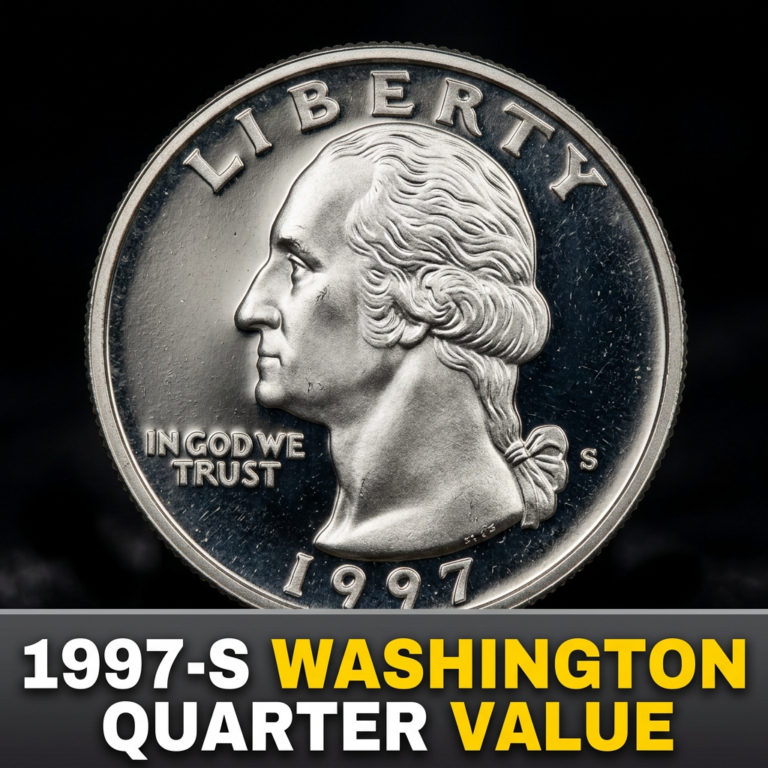
A: The mint mark is located on the “heads” (obverse) side of the coin. Look to the right of George Washington’s ponytail, just below the “In God We Trust” motto. An “S” indicates it was minted in San Francisco.
Q: Can I find a silver Massachusetts quarter in my pocket change?
A: It is very rare, but it does happen! This is known as a “proof in the wild.” Usually, this happens when someone spends a collection they’ve stolen or inherited without knowing the value. If you find one, it will likely be scratched and worn, meaning it is worth its silver melt value, currently around $5-$6.
Q: Is it worth getting my 2000-S Silver Quarter graded by PCGS or NGC?
A: Generally, it is only worth the grading fee if the coin is absolutely perfect. Because the grading process costs $30-$50 per coin, and a PR 69 is only worth about $20, you would lose money. However, if you believe your coin is a perfect PR 70, it could be worth over $100, making professionally grading a smart investment.