1923 Buffalo Nickel Value No Mint Mark What It’s Worth and Why Collectors Care

Your Old Coin Could Be Valuable!
Identify It & Know Its Real Value — Free Download


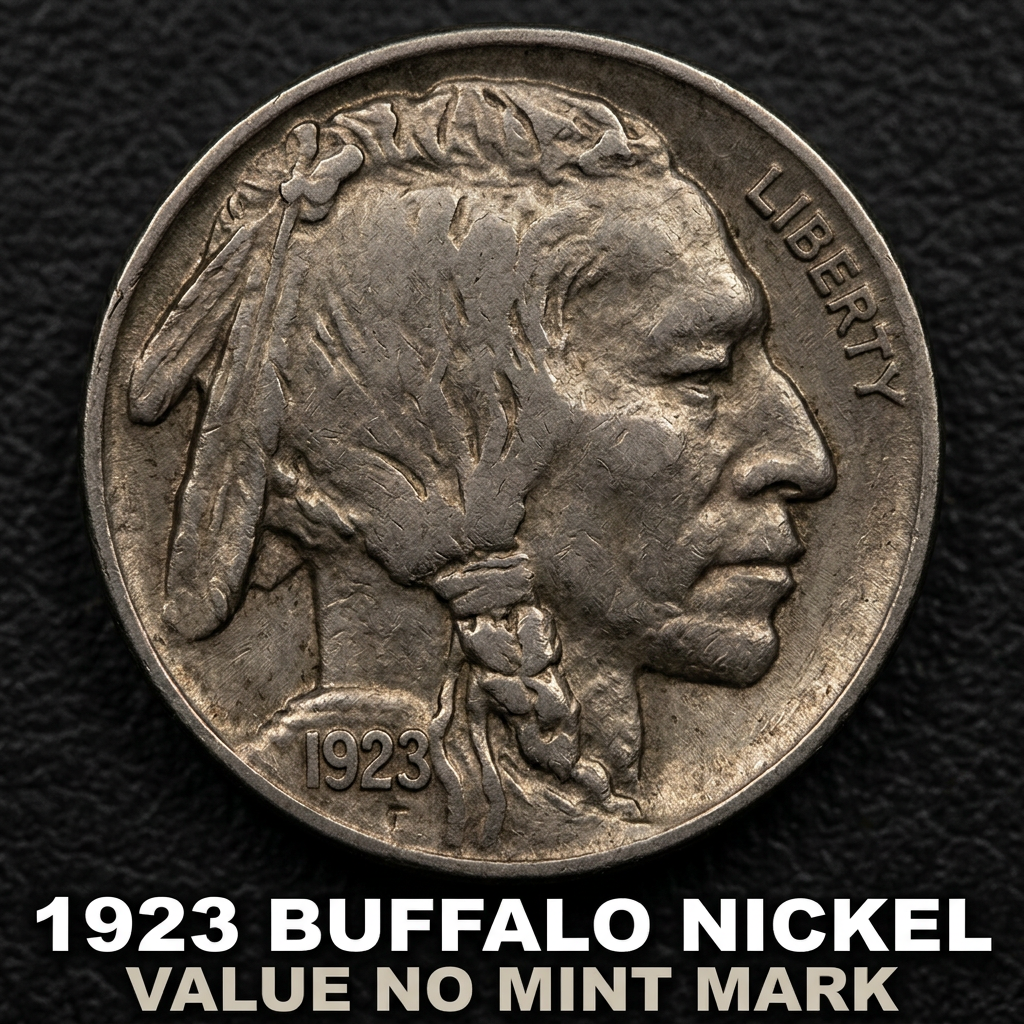
The 1923 Buffalo Nickel (Philadelphia Mint, no mint mark) is worth anywhere from $1 to $2 in heavily worn condition, up to $50 or more in fine shape, and can command $200 to $400+ in mint state grades. If you found one of these in an old jar or inherited coin collection, you’re holding a piece of American history that still has real value today.
What Makes the 1923 Buffalo Nickel Special
The 1923 Buffalo Nickel was struck at the Philadelphia Mint, which is why it carries no mint mark. Philadelphia was the primary production facility for these coins, and in 1923 alone, over 35 million were minted. That’s a relatively large mintage compared to some other Buffalo Nickel dates, which is why the no-mint-mark version is more accessible and affordable for collectors — but it’s still a beloved coin with a great design.
The Buffalo Nickel, also called the Indian Head Nickel, was designed by James Earle Fraser and first introduced in 1913. The obverse features a composite portrait of a Native American chief, and the reverse shows an American bison standing on a mound. These coins were made from 75% copper and 25% nickel.
If you’re not sure what you have, a coin identifier and value app can help you quickly identify the coin and get an instant value estimate right from your phone.
Your Old Coin Could Be Valuable!
Identify It & Know Its Real Value — Free Download
How Much Is a 1923 Buffalo Nickel Worth Today
The value of your 1923 Buffalo Nickel depends heavily on its condition, also known as its “grade.” Coins that have been in circulation for decades will show wear on the high points — particularly the bison’s shoulder and the Native American’s cheekbone and hair braid.
Here’s a breakdown of typical values by grade:
Your Old Coin Could Be Valuable!
Identify It & Know Its Real Value — Free Download
| Grade | Description | Estimated Value |
|---|---|---|
| Good (G-4) | Heavily worn, date visible | $1 – $2 |
| Very Good (VG-8) | Moderate wear, design clear | $3 – $5 |
| Fine (F-12) | Light to moderate wear | $8 – $15 |
| Very Fine (VF-20) | Light wear on high points | $20 – $35 |
| Extremely Fine (EF-40) | Slight wear, strong details | $50 – $75 |
| Mint State (MS-63) | Uncirculated, minor marks | $175 – $250 |
| Mint State (MS-65) | Gem quality, nearly perfect | $400+ |
For the most up-to-date pricing based on recent auction results and dealer sales, you can check out 1923 Buffalo Nickel mint state price data across multiple grades to see exactly what the market is paying right now.
How to Grade Your 1923 No Mint Mark Nickel at Home
Grading a coin at home isn’t as hard as it sounds. Start by looking at the coin under good lighting — natural sunlight or a single light source held at an angle works well. You’re checking for wear on the highest-relief areas of the design.
On the obverse, look at the Native American’s cheekbone and the braid of hair near his shoulder. If these areas are flat and worn smooth, the coin is likely in Good to Very Good condition.
Your Old Coin Could Be Valuable!
Identify It & Know Its Real Value — Free Download
On the reverse, the bison’s hip and front shoulder are the first spots to show wear. If the hip shows a flat spot where detail has rubbed away, that’s a sign the coin circulated for many years. If those details are sharp and the coin still has its original luster, you might have an uncirculated example worth significant money.
CoinKnow is a great tool for anyone who wants a more precise estimate without visiting a dealer. The app can analyze your coin’s details and give you a value range based on current market data — very handy if you’re just getting started.
What Affects the Value Beyond Condition
Beyond grade, a few other factors can push your 1923 Buffalo Nickel value higher or lower. Cleaning is a big one — coins that have been polished or dipped in cleaning solution lose their natural surface and are worth considerably less to collectors, even if they look shiny.
Your Old Coin Could Be Valuable!
Identify It & Know Its Real Value — Free Download
Strike quality matters too. Some 1923 Buffalo Nickels were struck with weak dies, resulting in soft details even on what should be a higher-grade coin. A coin with a full horn on the bison is more desirable than one where the horn appears worn away.
Professional certification also adds value. A coin graded and encased by PCGS or NGC (the two leading third-party grading services) is worth more than an ungraded “raw” coin in the same condition because buyers trust the grade.
If you want a comprehensive look at the full 1923 nickel value across all grades and mint marks, that resource breaks it down clearly with real collector data.
CoinKnow also lets you track the value of your entire collection over time — a feature that’s really useful once you start finding more coins to evaluate.
Your Old Coin Could Be Valuable!
Identify It & Know Its Real Value — Free Download
Should You Clean or Sell Your 1923 Buffalo Nickel
This is one of the most common questions from people who just found an old coin. The short answer: do not clean it. Even if the coin looks dark or dirty, that patina is actually protecting the coin’s surface and is expected by collectors. Cleaning removes that layer and can drop the coin’s value by 50% or more.
As for selling, your options include local coin dealers, coin shows, online auction platforms like eBay or Heritage Auctions, and collector forums. A reputable dealer can give you a quick offer, while auctions may take longer but often yield higher prices for better-condition coins.
If you’re unsure where to start, CoinKnow can give you a ballpark value before you walk into any dealer’s shop — so you go in informed and confident.
—
Your Old Coin Could Be Valuable!
Identify It & Know Its Real Value — Free Download
FAQ
Q: How do I know if my 1923 Buffalo Nickel has a mint mark?
A: The Philadelphia Mint did not put a mint mark on its coins, so a 1923 Buffalo Nickel with no mint mark is from Philadelphia. If your coin has a “D” below the words “FIVE CENTS” on the reverse, it was made in Denver and carries a different (and generally higher) value.
Q: Is a worn 1923 Buffalo Nickel worth anything?
A: Yes! Even in well-worn Good condition, the 1923 no-mint-mark Buffalo Nickel is worth $1 to $2 — several times its face value. In better grades, the value climbs quickly, especially in uncirculated condition.
Q: Can I get my 1923 Buffalo Nickel professionally graded?
A: Absolutely. Services like PCGS and NGC charge a fee to evaluate, grade, and encapsulate your coin in a tamper-evident holder. It’s generally worth the cost if your coin appears to be in Extremely Fine or Mint State condition, where the difference in grade can mean hundreds of dollars.