2010-P Grand Canyon Quarter Value Explained What It’s Worth and Why Collectors Care

Your Old Coin Could Be Valuable!
Identify It & Know Its Real Value — Free Download


The 2010-P Grand Canyon Quarter is worth between 25 cents and $15 for most circulated examples, but well-preserved mint state coins can climb to $30 or more depending on grade. If you found one of these in your pocket change or a coin jar, you might be sitting on more than face value — and this guide will help you figure out exactly what you have.
If you’re not sure how to identify your coin or check its condition, a coin identifier and value app can help you get a quick, reliable read on what you’re holding before you decide whether to spend it or save it.
What Is the 2010-P Grand Canyon Quarter?
The 2010-P Grand Canyon Quarter is part of the America the Beautiful Quarters program, a series launched by the U.S. Mint in 2010 to honor national parks and historic sites across all 50 states, the District of Columbia, and U.S. territories. The Grand Canyon design represents Arizona and features a stunning view of the canyon’s layered rock formations with a California condor soaring above.
The “P” in the coin’s name tells you it was struck at the Philadelphia Mint. These coins were produced in enormous quantities for general circulation, which means you can still find them in everyday change today.
Your Old Coin Could Be Valuable!
Identify It & Know Its Real Value — Free Download
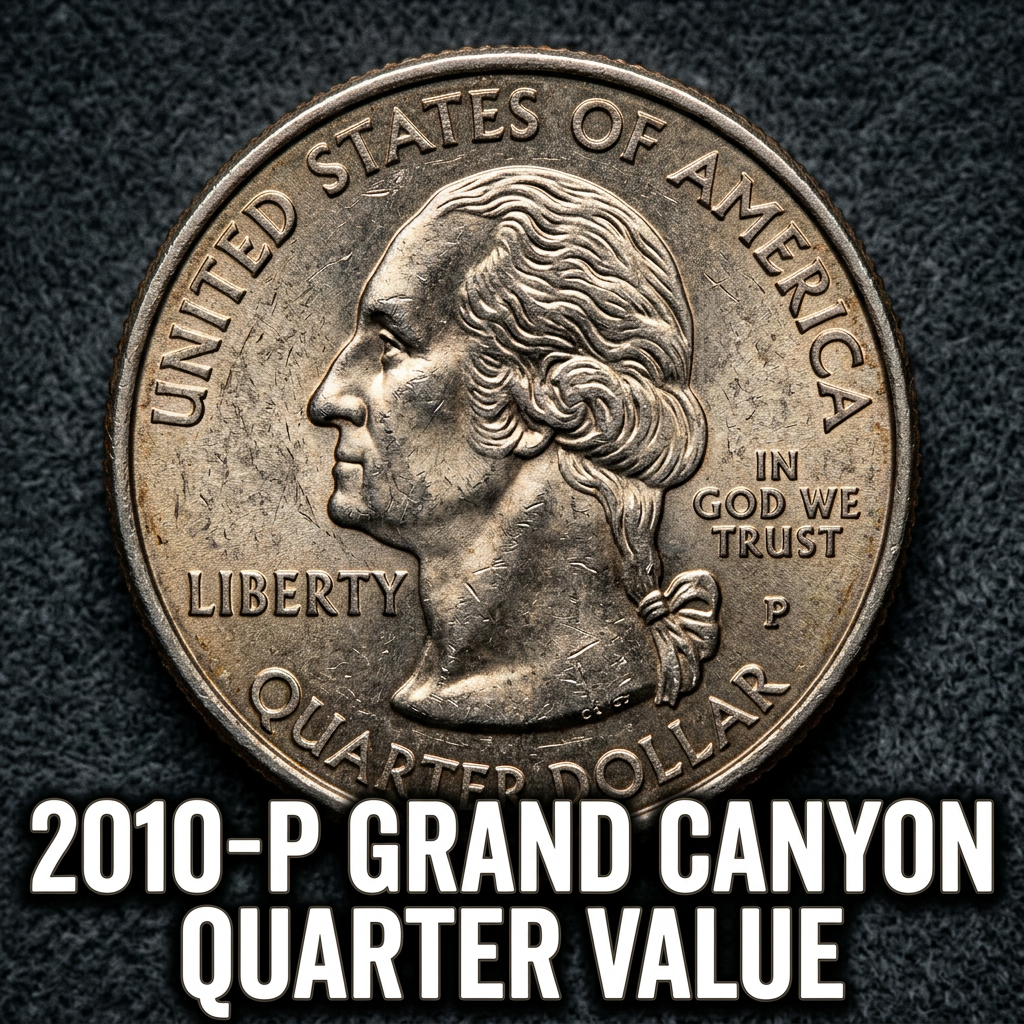
The obverse (front) shows the familiar portrait of George Washington, while the reverse (back) carries the Grand Canyon design by sculptor Phebe Hemphill. It’s one of the more visually striking quarters in the entire America the Beautiful series.
How Much Is the 2010-P Grand Canyon Quarter Worth Today?
For the average person who found this coin in circulation, the honest answer is: probably face value or just slightly above. Coins pulled from everyday use show wear, scratches, and contact marks that bring their grade down significantly.
Your Old Coin Could Be Valuable!
Identify It & Know Its Real Value — Free Download
That said, if you find a 2010-P Grand Canyon Quarter that looks clean, sharp, and virtually untouched, you could be holding a coin worth real money. Collectors and grading services like PCGS and NGC assign numerical grades from 1 to 70, and the higher grades carry meaningful premiums.
You can check up-to-date MS grade price data for 2010-P America the Beautiful quarters to compare your coin against recent sales and get a clearer picture of market value.
Your Old Coin Could Be Valuable!
Identify It & Know Its Real Value — Free Download
Here’s a general value breakdown based on condition:
| Grade / Condition | Description | Estimated Value |
|---|---|---|
| Circulated (G–VF) | Worn, details visible but flat | $0.25 – $1 |
| Extra Fine (EF–AU) | Light wear, most detail intact | $1 – $5 |
| Mint State (MS-63) | Uncirculated, minor contact marks | $5 – $10 |
| Mint State (MS-65) | Gem uncirculated, sharp details | $12 – $20 |
| Mint State (MS-67+) | Superb gem, near-perfect strike | $30 – $100+ |
Mintage Numbers and Why They Matter
The Philadelphia Mint produced approximately 35 million 2010-P Grand Canyon Quarters. That’s a large mintage, which generally keeps values modest for circulated examples. High mintage means the coin is not scarce, and scarcity is one of the biggest drivers of coin value.
However, high mintage doesn’t mean every coin is equal. Among those 35 million coins, only a small fraction survived in truly pristine, uncirculated condition. That’s why top-grade examples still carry real collector premiums.
Your Old Coin Could Be Valuable!
Identify It & Know Its Real Value — Free Download
If you’re curious about broader 2010 quarter values across different mint marks and designs, this breakdown of 2010 quarter values by type and condition gives you a helpful comparison across the whole year’s releases.
How to Check the Condition of Your Coin
Grading coins takes practice, but you can do a basic assessment at home. Hold your coin under good lighting and look at the high points — the condor’s wings, the canyon’s ridgeline, and the lettering. If those areas look flat and worn smooth, the coin has circulated heavily.
If the details still look crisp and the coin has a bit of luster or shine, it may be in extra fine or even mint state condition. Avoid cleaning your coin — even gentle polishing can remove original surface luster and actually reduce its value significantly.
Your Old Coin Could Be Valuable!
Identify It & Know Its Real Value — Free Download
For a faster and more accurate assessment, CoinKnow uses image recognition technology to analyze your coin’s condition and give you an instant value estimate. It’s a great starting point before you spend money on professional grading.
Is the 2010-P Grand Canyon Quarter Worth Grading?
Professional grading by PCGS or NGC typically costs $20 to $40 per coin at standard service levels. For most circulated 2010-P Grand Canyon Quarters, the grading fee will exceed the coin’s value — so it simply doesn’t make financial sense.
The exception is if you believe you have a gem uncirculated example, especially one that might grade MS-67 or higher. Those coins have sold at auction for significantly more than the grading cost, making submission worthwhile.
If you’re not sure whether your coin is worth grading, CoinKnow can give you a preliminary grade estimate so you don’t waste money submitting a coin that won’t return a profit. It’s a smart, low-cost first step.
Your Old Coin Could Be Valuable!
Identify It & Know Its Real Value — Free Download
Frequently Asked Questions
Q: How do I know if my 2010-P Grand Canyon Quarter is uncirculated?
A: Look for original luster — a cartwheel-like shine that moves across the coin as you tilt it under light. Uncirculated coins have no wear on the high points and were never used in everyday transactions. If your coin looks dull or flat in the high-relief areas, it has likely circulated.
Q: Are there any rare errors on the 2010-P Grand Canyon Quarter I should look for?
A: Yes, some error coins from this series have surfaced, including doubled die varieties and off-center strikes. These errors can increase value significantly — sometimes into the hundreds of dollars. Use CoinKnow or consult a specialist to identify potential errors on your coin before making any decisions.
Q: Can I sell my 2010-P Grand Canyon Quarter online?
A: Absolutely. Platforms like eBay, Etsy, and specialized coin forums are all viable options. For circulated coins worth face value, it may not be worth the effort. But if you have an uncirculated or high-grade example, listing it online with clear photos can attract serious buyers willing to pay a fair premium.