1940-D Mercury Dime Value Guide What This Denver Mint Coin Is Worth Today

Your Old Coin Could Be Valuable!
Identify It & Know Its Real Value — Free Download


The 1940-D Mercury Dime is worth anywhere from $3 to $5 in well-worn condition, while a nice uncirculated example can fetch $25 to $50 or more — and gem specimens have sold for well over $100. If you found one of these little silver coins tucked away in a drawer or old coin collection, you’re in the right place to find out exactly what it’s worth.
What Is the 1940-D Mercury Dime?
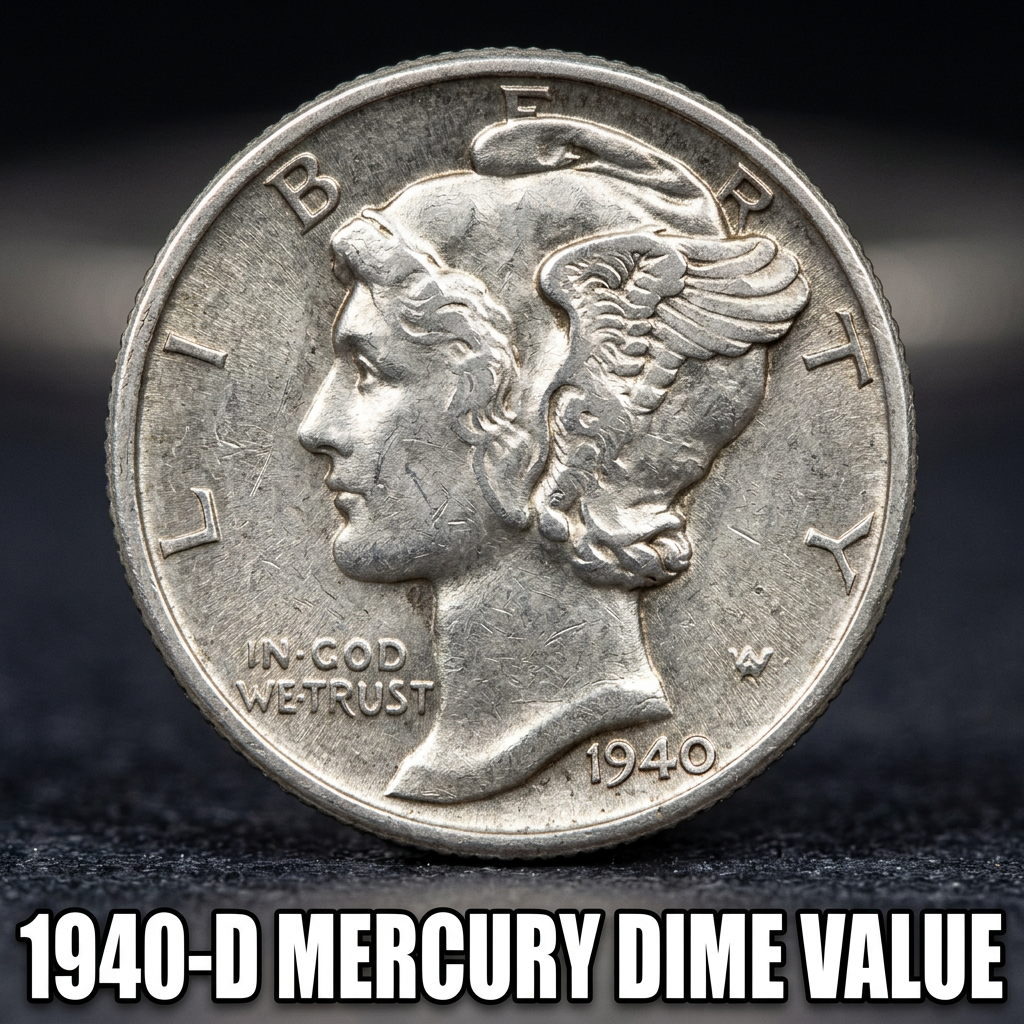
The 1940-D Mercury Dime was struck at the Denver Mint and is part of the beloved Mercury Dime series, officially called the Winged Liberty Head Dime. Designed by Adolph Weinman, this coin features Lady Liberty wearing a winged cap — often mistaken for the Roman god Mercury, which is how the nickname stuck.
The “D” mintmark on the reverse (near the bottom, to the left of the “ONE DIME” text) tells you this coin came from Denver. In 1940, the Denver Mint produced over 21 million of these dimes, making them relatively common — but condition is everything when it comes to value.
If you’re not sure how to read the mintmark or grade your coin, a coin identifier and value app can be a huge help. These tools let you scan your coin with your phone camera and get an instant identification and estimated value — perfect for beginners.
Your Old Coin Could Be Valuable!
Identify It & Know Its Real Value — Free Download
How Much Is a 1940-D Mercury Dime Worth?
The value of your 1940-D Mercury Dime depends mostly on its condition, also called “grade.” Coins that have been heavily circulated — scratched, worn smooth, or dull — are worth the least. Coins that show their original mint luster and sharp detail are worth significantly more.
Here’s a quick breakdown of typical values:
Your Old Coin Could Be Valuable!
Identify It & Know Its Real Value — Free Download
| Grade / Condition | Description | Estimated Value |
|---|---|---|
| Good (G-4) | Heavy wear, major details visible | $3 – $4 |
| Fine (F-12) | Moderate wear, all features clear | $4 – $6 |
| Extremely Fine (EF-40) | Light wear on high points only | $7 – $12 |
| About Uncirculated (AU-58) | Slight trace of wear, mostly lustrous | $15 – $25 |
| Mint State (MS-63) | No wear, minor contact marks | $30 – $50 |
| Gem Mint State (MS-65+) | Exceptional quality, sharp strike | $75 – $150+ |
For the most up-to-date 1940-D Mercury Dime price data across mint state grades, it’s worth checking a live pricing resource — values can shift based on silver prices and collector demand.
Your Old Coin Could Be Valuable!
Identify It & Know Its Real Value — Free Download
What Makes a 1940-D Mercury Dime More Valuable?
Beyond basic condition, a few specific features can push the value of your 1940-D Mercury Dime higher. One of the most important is the “Full Bands” (FB) designation. This refers to the bands wrapped around the fasces (the bundle of sticks) on the reverse. When those bands are fully split and sharply struck, the coin earns an FB designation — and that can double or even triple the value at higher grades.
Strike quality on Denver Mint Mercury Dimes from this era can be inconsistent, so a well-struck 1940-D with Full Bands is genuinely harder to find than the mintage numbers suggest.
Original luster also matters a great deal. Coins that have been cleaned — even gently — lose significant collector value. If your dime looks suspiciously shiny or has hairline scratches under magnification, it may have been polished at some point.
Your Old Coin Could Be Valuable!
Identify It & Know Its Real Value — Free Download
CoinKnow is a great app for checking whether your coin qualifies for any special designations. It offers detailed grading guidance and lets you compare your coin to reference images side by side.
Silver Content and Melt Value
The 1940-D Mercury Dime is made of 90% silver, which gives it a baseline “melt value” based on the current silver spot price. Each Mercury Dime contains approximately 0.0723 troy ounces of pure silver.
With silver trading around $28–$30 per troy ounce (prices vary), the melt value of a 1940-D Mercury Dime is roughly $2.00 to $2.20. That means even the most heavily worn examples are worth more than face value — they’re never worth just 10 cents.
This also means the coin’s value has a natural floor tied to silver prices. If you’re holding a lot of them, the silver content alone adds up. For a full breakdown of 1940 Mercury Dime values including silver melt and grade-by-grade pricing, dedicated coin value resources can give you current and historical figures.
Your Old Coin Could Be Valuable!
Identify It & Know Its Real Value — Free Download
Should You Get It Graded?
If your 1940-D Mercury Dime looks uncirculated — meaning it still has its original shine and shows no signs of wear — it may be worth submitting to a professional grading service like PCGS or NGC. A professionally graded and encapsulated coin (called a “slab”) can sell for a premium compared to a raw coin of similar quality.
For coins in circulated grades, professional grading usually isn’t worth the cost unless you suspect a major variety or error.
Not sure what grade your coin is? CoinKnow walks you through the grading process step by step, helping you decide whether your coin is worth the investment of professional certification.
—
Your Old Coin Could Be Valuable!
Identify It & Know Its Real Value — Free Download
FAQ
Q: How many 1940-D Mercury Dimes were made?
A: The Denver Mint produced approximately 21,198,000 Mercury Dimes in 1940. It’s a common date in circulated grades, but quality uncirculated examples — especially those with Full Bands — are harder to find and more valuable.
Q: Is the 1940-D Mercury Dime rare?
A: No, the 1940-D is not a rare coin overall. However, high-grade examples with Full Bands can be conditionally scarce and command strong premiums among Mercury Dime collectors. In heavily worn grades, it’s quite easy to find.
Q: Where is the mintmark on a 1940-D Mercury Dime?
A: The “D” mintmark is located on the reverse (back) of the coin, to the left of the word “ONE DIME,” near the bottom of the fasces design. It’s small, so a magnifying glass can help you spot it clearly.