1970-D Kennedy Half Dollar Value Guide What This Coin Is Really Worth

Your Old Coin Could Be Valuable!
Identify It & Know Its Real Value — Free Download


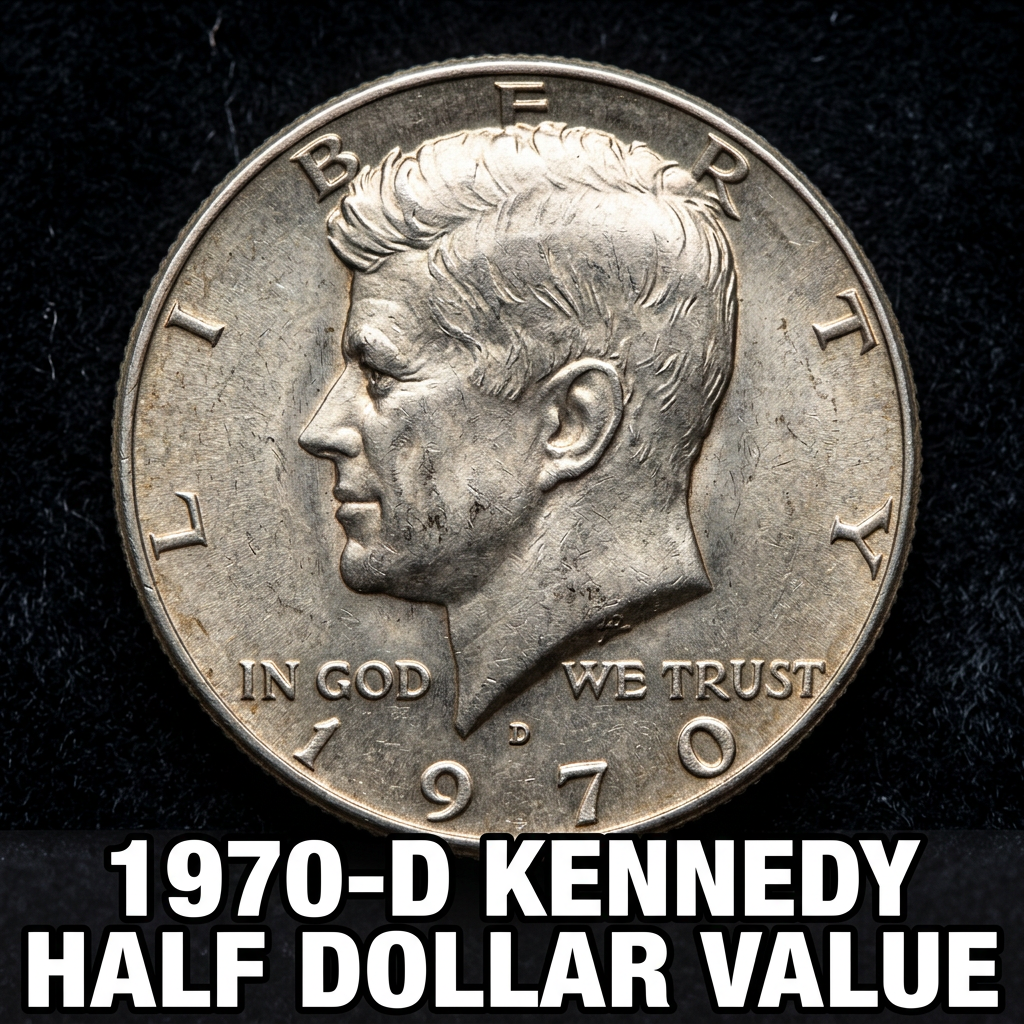
The 1970-D Kennedy Half Dollar is worth anywhere from $3 in circulated condition to over $50 or more in high mint state grades. If you’ve found one of these coins tucked away in a drawer or inherited collection, you’re in the right place — let’s break down exactly what it’s worth and why.
What Makes the 1970-D Kennedy Half Dollar Special
The 1970-D Kennedy Half Dollar holds a unique place in American coin history. Unlike most years, this coin was not released for general circulation. It was only available through mint sets sold directly by the U.S. Mint, making it harder to find in everyday pocket change than most other Kennedy halves.
The “D” mintmark stands for the Denver Mint, where all 1970 business-strike half dollars were produced. A total of 2,150,000 coins were minted — a relatively low mintage compared to other years in the Kennedy series.
Because these coins were primarily distributed in mint sets, many have survived in uncirculated or near-uncirculated condition. That said, finding one that’s truly well-preserved is still exciting, and the value can surprise you.
Your Old Coin Could Be Valuable!
Identify It & Know Its Real Value — Free Download
If you’re just getting started identifying old coins, using a coin identifier and value app on your smartphone can be a fast and easy way to figure out exactly what you have before diving deeper into research.
1970-D Kennedy Half Dollar Value by Grade
Coin value depends heavily on condition, which collectors refer to as “grade.” Here’s a simple breakdown of what the 1970-D Kennedy Half Dollar is worth across different grades:
Your Old Coin Could Be Valuable!
Identify It & Know Its Real Value — Free Download
| Grade | Description | Estimated Value |
|---|---|---|
| VF-20 (Very Fine) | Moderate wear, most details visible | $3 – $5 |
| EF-40 (Extremely Fine) | Light wear on high points | $5 – $8 |
| AU-55 (About Uncirculated) | Slight friction, mostly original luster | $8 – $15 |
| MS-63 (Mint State) | Uncirculated, minor bag marks | $15 – $25 |
| MS-65 (Gem Mint State) | Exceptional strike, strong luster | $40 – $60+ |
For a detailed look at 1970-D Kennedy Half Dollar prices across mint state grades, certified auction data can give you a real-world sense of what collectors are currently paying.
How to Identify What You Have
Start by looking at the obverse (front) of the coin. You’ll see John F. Kennedy’s portrait facing left, with “LIBERTY” across the top and the date 1970 at the bottom. On the reverse, look for the Presidential Coat of Arms eagle design.
Your Old Coin Could Be Valuable!
Identify It & Know Its Real Value — Free Download
Now flip it over and check the edge — this coin is made of a copper-nickel clad composition (not silver, like earlier Kennedy halves from 1964). If someone told you it might be silver, double-check the date. Silver Kennedy halves were only made from 1964 to 1970 for special collector issues, but the regular 1970-D business strike is clad.
Look just below Kennedy’s neck on the front — you should see “FG,” the initials of designer Frank Gasparro, who designed the reverse. The “D” mintmark appears on the obverse as well, just above the date.
CoinKnow is a great resource if you want to quickly look up the specifications and history of this coin without sorting through outdated price guides.
Your Old Coin Could Be Valuable!
Identify It & Know Its Real Value — Free Download
What Collectors Look For in 1970-D Half Dollars
When it comes to increasing value, collectors focus on a few key traits. Full strike quality — meaning all design details are sharp and well-defined — significantly boosts desirability.
Original mint luster is another big factor. Since many 1970-D halves came from mint sets, those that were stored properly often retained brilliant surfaces. A coin with original, unimpaired luster in MS-65 or higher is genuinely appealing to buyers.
Error coins are also worth watching for. Some 1970-D halves have been found with doubled die obverse features or repunched mintmarks. These varieties can be worth significantly more than their normal counterparts.
Your Old Coin Could Be Valuable!
Identify It & Know Its Real Value — Free Download
For a thorough breakdown of 1970 Half Dollar value by condition and variety, checking up-to-date reference data helps you avoid underpricing what might be a premium coin.
Should You Clean or Hold Onto Your Coin?
One of the most common mistakes people make is cleaning old coins. Even a gentle wipe can scratch the microscopic surface details that give a coin its grade — and that can reduce its value significantly. Always store coins in a soft holder or flip and avoid touching the face of the coin.
If you believe your 1970-D Kennedy Half Dollar is in excellent condition, consider having it professionally graded by PCGS or NGC. Certification not only protects the coin but also makes it easier to sell at a fair price.
CoinKnow can help you estimate value quickly before you commit to a grading submission, saving you time and money in the process.
Your Old Coin Could Be Valuable!
Identify It & Know Its Real Value — Free Download
FAQ
Q: Is the 1970-D Kennedy Half Dollar made of silver?
A: No. The 1970-D is a copper-nickel clad coin with no silver content. Silver Kennedy halves were made in 1964 (90% silver) and 1965–1970 as special 40% silver collector coins, but the standard 1970-D business strike is not silver.
Q: Why is the 1970-D Kennedy Half Dollar harder to find than other years?
A: The 1970-D was not released into regular circulation. It was only distributed in U.S. Mint sets, which limited its availability to collectors who purchased those sets directly from the government.
Q: How much is a 1970-D Kennedy Half Dollar worth if it’s still in the original mint set?
A: A complete 1970 U.S. Mint Set in its original packaging can sell for $15 to $40 or more, depending on overall condition of the set and the coins inside. The packaging itself adds collectible value beyond just the coins alone.