Current 2009-S Jefferson Nickel Value: Price & Grading Guide

Your Old Coin Could Be Valuable!
Identify It & Know Its Real Value — Free Download


The 2009-S Jefferson Nickel is worth anywhere from $3 in standard Proof condition to over $50 for high-grade specimens. While finding one in your pocket change is a rare treat, these San Francisco-minted coins were never intended for general circulation and remain highly sought after by collectors of modern American coinage.
| Condition / Grade | Estimated Market Value |
|---|---|
| Proof-65 (PF65) | $3.50 – $5.00 |
| Proof-67 (PF67) | $8.00 – $12.00 |
| Proof-69 (PF69) | $15.00 – $25.00 |
| Proof-70 (PF70) | $45.00 – $65.00+ |
Why the 2009-S Jefferson Nickel is a Rare Find
To understand the value of a 2009-S nickel, you first have to understand the unique economic situation of that year. 2009 marked the height of the Great Recession. Because people were spending less and the demand for new coinage plummeted, the U.S. Mint drastically reduced production across all denominations. While the Philadelphia and Denver mints produced a limited number of nickels for circulation, the San Francisco Mint continued its tradition of only producing Proof coins.
If you have stumbled upon a 2009 nickel, you might want to use a top coin identifier and value app to confirm which mint mark you are looking at. The “S” mint mark is located on the obverse (front) of the coin, just below the date.
Unlike the coins you use at the vending machine, the “S” version was sold in official Proof Sets directly from the Mint. Finding one in the wild usually means someone accidentally broke open a collector’s set and spent it. Because of their limited mintage and “collector-only” status, even a heavily circulated 2009-S is worth significantly more than its five-cent face value. Using an app like CoinKnow can help you instantly track down the current market premium for these low-mintage years.
Your Old Coin Could Be Valuable!
Identify It & Know Its Real Value — Free Download
Grading and Quality of the 2009-S Proof Nickel
When we talk about the value of a 2009-S Jefferson Nickel, everything comes down to the grade. Since these were struck as “Proof” coins, they were manufactured with specially polished dies and planchets, resulting in a mirror-like finish. The standard grading scale goes from 1 to 70.
Your Old Coin Could Be Valuable!
Identify It & Know Its Real Value — Free Download
A “Deep Cameo” (DCAM) finish is the standard for 2009-S nickels. This means there is a sharp contrast between the frosted image of Thomas Jefferson and the reflective black-mirror field behind him. If your coin has scratches or has lost its shine, the value drops to the lower end of the spectrum. However, a flawless specimen that receives a PR70 grade can fetch a premium price at auction.
| Qualities | Description |
|---|---|
| Mirror Surface | Highly reflective background fields. |
| Frosted Devices | Jefferson’s portrait and Monticello appear matte white. |
| Sharp Strike | Extreme detail in the hair and building steps. |
Mintage Figures and Scarcity
The 2009 production year was legendary among numismatists because it saw the lowest production numbers in decades. Specifically, the San Francisco Mint struck only 2,179,867 Proof Jefferson Nickels in 2009. While two million sounds like a large number, it is tiny compared to the billions of nickels struck in normal years.
Your Old Coin Could Be Valuable!
Identify It & Know Its Real Value — Free Download
Collectors often use detailed 2009 nickel price data and auction records to see how this scarcity impacts the long-term value. Because so few were made, many people hold onto their 2009 sets, making the individual 2009-S nickel harder to find as a “raw” coin outside of the original plastic packaging.
If you’re unsure if yours is a 2009-S or a 2009-P/D, check the mint mark carefully. The “P” and “D” versions were also produced in low numbers for circulation (less than 40 million each), making the entire 2009 run a “key date” series for modern collectors. CoinKnow allows you to scan the coin and determine the mint mark if it’s too small for the naked eye.
Identifying the S-Mint Mark on Your Nickel
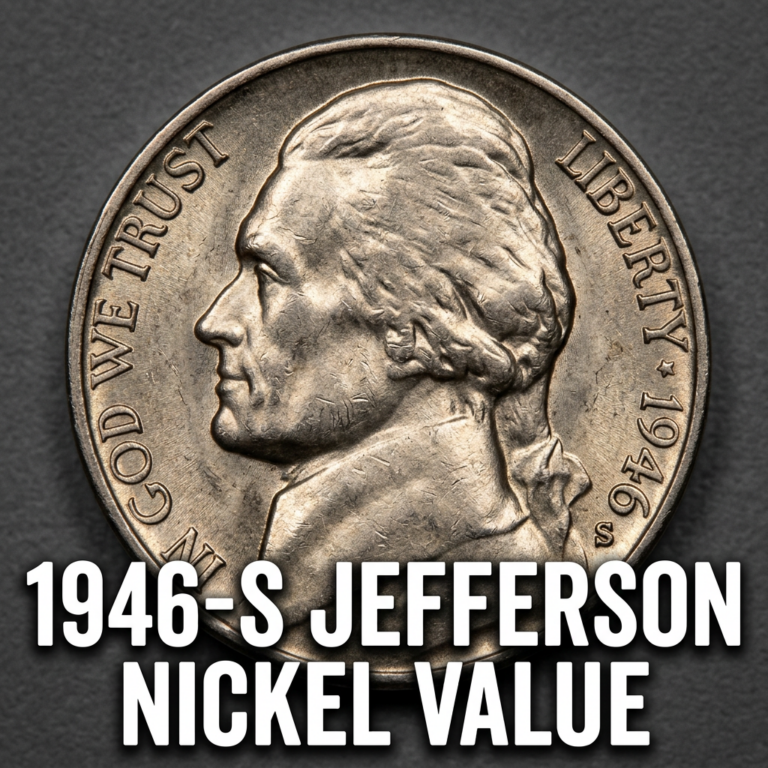
For the casual observer, distinguishing a Proof coin from a regular circulation coin can be tricky if the coin has been handled. The 2009 design features the “Forward Facing Jefferson” portrait introduced in 2006. On the right side of the coin, you will see the word “Liberty” in script, the year “2009,” and the mint mark tiny and positioned just below the year.
Your Old Coin Could Be Valuable!
Identify It & Know Its Real Value — Free Download
If you see an “S,” you have a Proof coin. If the coin still looks exceptionally shiny or “glassy,” it hasn’t seen much circulation. If it looks dull, it’s a “Proof in Circulation,” which still carries a premium but much less than a pristine version. You can check this 2009 Jefferson nickel value guide for a deeper dive into the price differences between Proofs and Mint State business strikes.
Because these were struck twice by the press to ensure high detail, the features like the pillars of Monticello on the reverse and the strands of hair on Jefferson’s head should be much more pronounced than on a standard nickel. Many collectors use the CoinKnow app to zoom in on these features to check for wear.
Price History and Market Trends for 2009 Nickels
Over the last decade, the value of the 2009-S Proof Nickel has remained relatively stable, with a slight upward trend for perfect PF70 grades. In the world of coin collecting, “populinity” (population) refers to how many coins have been graded at a certain level. Because most collectors kept these in sets, there are many PF69 coins available, which keeps those prices affordable.
Your Old Coin Could Be Valuable!
Identify It & Know Its Real Value — Free Download
However, a genuine PF70 is rare because even a tiny microscopic hair-line scratch from the minting process can drop it to a 69. Most everyday Americans who find these in a drawer or a jar will likely have a coin in the PF63 to PF67 range.
| Year Sold | Grade | Sold Price |
|---|---|---|
| 2021 | PR70 DCAM | $52.00 |
| 2022 | PR70 DCAM | $60.00 |
| 2023 | PR69 DCAM | $18.00 |
Tips for Safely Storing Your Proof Nickel
If you believe you have found a 2009-S nickel, the most important thing to do is stop touching it with your bare hands. The oils from human skin can actually corrode the delicate mirror finish of a Proof coin over time. Handle the coin only by the edges, or better yet, use soft cotton gloves.
Place the coin in a PVC-free “flip” or a plastic coin capsule. Keeping it away from moisture and air will prevent the copper-nickel alloy from developing “haze” or toning. While some toning can be beautiful, most collectors of modern Proofs prefer a clear, blazing-white appearance. If you are looking to sell, having a coin that looks exactly like it did the day it left the San Francisco Mint will ensure you get the top dollar shown in valuation tools.
FAQ
Q: Why is the 2009 Jefferson Nickel so hard to find in change?
A: During 2009, the U.S. Mint produced the lowest number of nickels for circulation since the 1950s due to low economic demand. Most 2009 nickels were snapped up by collectors immediately, leaving very few to circulate in everyday cash transactions.
Your Old Coin Could Be Valuable!
Identify It & Know Its Real Value — Free Download
Q: Is a 2009-S nickel made of silver?
A: No, the 2009-S Jefferson Nickel is made of the standard 75% copper and 25% nickel composition. The San Francisco Mint does produce silver versions of some coins (like quarters and dimes) for special Silver Proof Sets, but the nickel remains a base-metal coin.
Q: How can I tell if my 2009 nickel is a Proof or just a shiny regular coin?
A: A Proof coin (2009-S) will have a mirror-like background that you can practically see your reflection in, and the design will have a frosted, matte look. Regular coins (2009-P or 2009-D) have a uniform, satin-like luster across the entire surface and will not have the “S” mint mark.
Q: Where is the best place to sell a 2009-S nickel?
A: For coins worth under $20, eBay or local coin shops are your best bet. If you have a certified PF70 coin, you might consider a larger auction house, though the fees often make it more profitable to sell directly to other collectors through online forums or marketplaces.