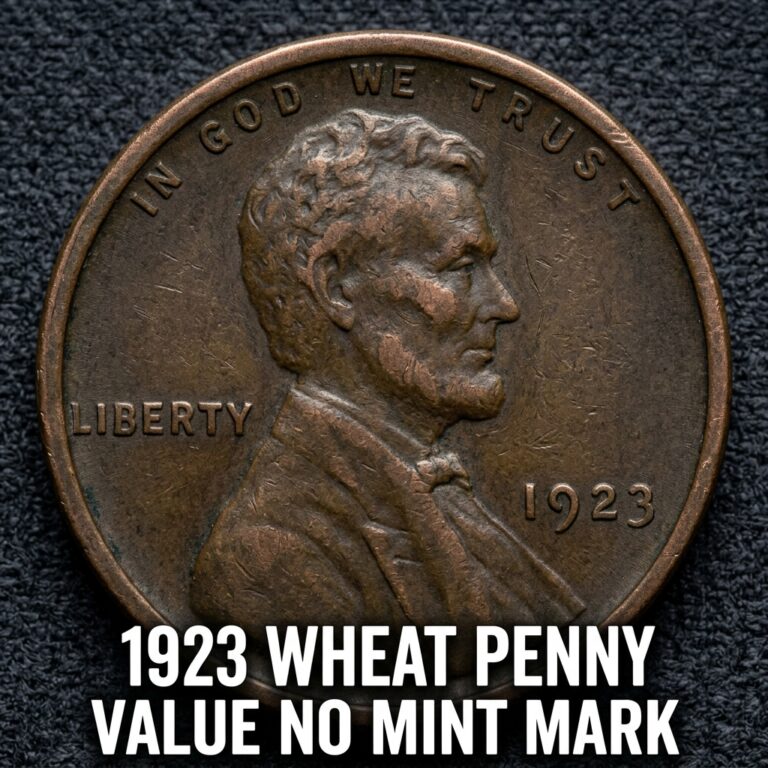
How Much Is the 1974 Lincoln Penny With No Mint Mark Worth?

Your Old Coin Could Be Valuable!
Identify It & Know Its Real Value — Free Download


The 1974 Lincoln Penny with no mint mark is worth anywhere from $0.02 in worn condition to over $1,500 for rare, high-grade specimens. While most found in pocket change are only worth their face value or copper melt price, certain errors and pristine conditions can fetch a significant premium.
| Condition / Grade | Estimated Value |
|---|---|
| Average Circulated (XF/AU) | $0.02 – $0.05 |
| Uncirculated (MS63) | $1.00 – $3.00 |
| Gems / High Grade (MS65+) | $15 – $100+ |
| Rare Errors & Die Variations | $50 – $1,500+ |
Understanding the 1974 Penny No Mint Mark
If you have a 1974 penny and you cannot find a small letter beneath the date, don’t worry—it isn’t a mistake. The absence of a mint mark simply means the coin was produced at the Philadelphia Mint. During this era, Philadelphia did not use a “P” mint mark on pennies. To get an instant estimate of what your specific coin might be worth, you can use a top coin identifier and value app to scan the details and check Recent auction sales.
In 1974, the Philadelphia Mint struck over 4 billion of these copper coins. Because the mintage was so high, the vast majority of these pennies remain very common. Most people who find them in their spare change will see a coin that has been circulated for decades, meaning it has scratches, brown coloring, and smoothed-out details.
However, collectors look for “Red” (RD) versions of these coins. A Red penny is one that still retains its original mint luster as it did the day it was struck. If you find a 1974 penny that looks shiny and orange-ish rather than dull brown, you might want to look closer at its potential value using tools like CoinKnow.
Your Old Coin Could Be Valuable!
Identify It & Know Its Real Value — Free Download
Grading and 1974 Lincoln Penny Value Tiers
The value of a 1974 penny is determined almost entirely by its grade. Professional grading scales run from 1 to 70. For a common coin like the 1974 Philadelphia cent, anything below a Mint State (MS) 60 is usually worth just its copper weight (currently about 2 cents).
Your Old Coin Could Be Valuable!
Identify It & Know Its Real Value — Free Download
For serious collectors, the 1974 penny price for high-grade Red specimens can reach triple digits. This is because copper reacts with the air and turns brown over time. Finding a 50-year-old coin that hasn’t oxidized is quite rare.
| Grade Designation | Appearance Descriptions | Market Price |
|---|---|---|
| Brown (BN) | Dull, dark brown, heavily circulated. | $0.02 |
| Red-Brown (RB) | Partial original luster remains. | $0.10 – $0.50 |
| Red (RD) MS66 | Full orange luster, very few marks. | $25 – $40 |
| Red (RD) MS67+ | Pristine, no visible flaws to naked eye. | $200 – $1,000+ |
Key 1974 Penny Errors to Look For
While standard pennies might not make you rich, error pennies are a different story. The 1974 production year saw several interesting minting errors that collectors pay premium prices for. One common error found on the No Mint Mark Philadelphia strike is the “Double Die.”
Your Old Coin Could Be Valuable!
Identify It & Know Its Real Value — Free Download
Double Die errors occur when the die used to strike the coin has a doubled image. On a 1974 penny, look closely at the words “IN GOD WE TRUST” and the LIBERTY inscription. If the letters look blurry or like they have a “shadow” or second edge, you may have found a valuable error.
Other errors include “Off-Center” strikes, where the design is shifted to one side, leaving a blank crescent on the coin. These can range in value from $10 to $200 depending on how much of the date is still visible. Checking your coins with CoinKnow can help you identify these subtle strike issues that the naked eye might miss.
The Myth of the 1974 Aluminum Penny
You cannot talk about 1974 penny value without mentioning the legendary aluminum cent. In 1974, the price of copper rose so high that it cost the U.S. Mint nearly a full cent to produce a single penny. As an experiment, they minted about 1.5 million pennies using aluminum.
Your Old Coin Could Be Valuable!
Identify It & Know Its Real Value — Free Download
Ultimately, the aluminum penny was rejected, and the Mint ordered them all destroyed. However, a few survived. Some were given to Congressmen as samples and never returned. Today, it is illegal for a private citizen to own an authentic 1974 aluminum penny, as they are considered government property.
If you find a “silver” colored 1974 penny in your change, it is more likely a common penny that was plated in zinc or chrome by a high school chemistry student. Detailed 1974 penny value information confirms that while the aluminum version is worth over $200,000, you are 99.9% likely to have a common copper cent.
The “No S” Proof Penny Confusion
Proof coins are specially made for collectors and usually feature a high-mirror finish. In 1974, all proof pennies were supposed to be minted in San Francisco and bear an “S” mint mark. There is a persistent rumor about a 1974 “No S” proof penny.
Your Old Coin Could Be Valuable!
Identify It & Know Its Real Value — Free Download
While there are famous “No S” proofs from other years (like 1968, 1970, and 1975), a 1974 Philadelphia proof is not a confirmed variety that is widely recognized. If you find a 1974 penny with no mint mark that looks exceptionally shiny, it is likely just a very well-preserved business strike from Philadelphia.
To determine if your coin is a high-grade business strike or a rare specimen, consider using the CoinKnow app. It uses AI to analyze the luster and strike quality, helping you decide if it is worth the cost of professional grading with the PCGS or NGC.
| Identification Tip | What to Check |
|---|---|
| Weight | Copper pennies should weigh 3.11 grams. |
| Color | Look for original orange-red luster for high value. |
| Magnification | Check for doubling on “LIBERTY” or “1974”. |
Frequently Asked Questions
Q: Why is there no mint mark on my 1974 penny?
A: In 1974, the Philadelphia Mint produced billions of pennies and did not use a “P” mint mark. The absence of a letter simply indicates the coin was minted in Philadelphia.
Q: Is a 1974 penny made of copper or zinc?
A: 1974 pennies are made of 95% copper and 5% zinc. It wasn’t until mid-1982 that the U.S. Mint switched to the primarily zinc composition used today. Because of this, 1974 pennies are currently worth about double their face value in raw metal.
Your Old Coin Could Be Valuable!
Identify It & Know Its Real Value — Free Download
Q: How can I tell if my 1974 penny is an aluminum error?
A: The easiest way is a weight test or a magnet test. An aluminum penny is much lighter than a copper one (about 0.93 grams vs 3.11 grams). If your coin is silvery but weighs more than a gram, it is likely just a copper penny that has been plated with another metal.
Q: Are there any 1974 double die pennies?
A: Yes, there are recognized 1974 Doubled Die Obverse (DDO) varieties. They are not as famous as the 1955 or 1972 versions, but they can still sell for $20 to $100 depending on the severity of the doubling and the condition of the coin.
Q: Should I clean my 1974 penny to make it more valuable?
A: No! Never clean your coins. Collectors prefer the natural patina or aging of a coin. Cleaning a coin with chemicals or abrasives creates micro-scratches that will drastically reduce its market value and make it impossible to get a high grade from professional services.