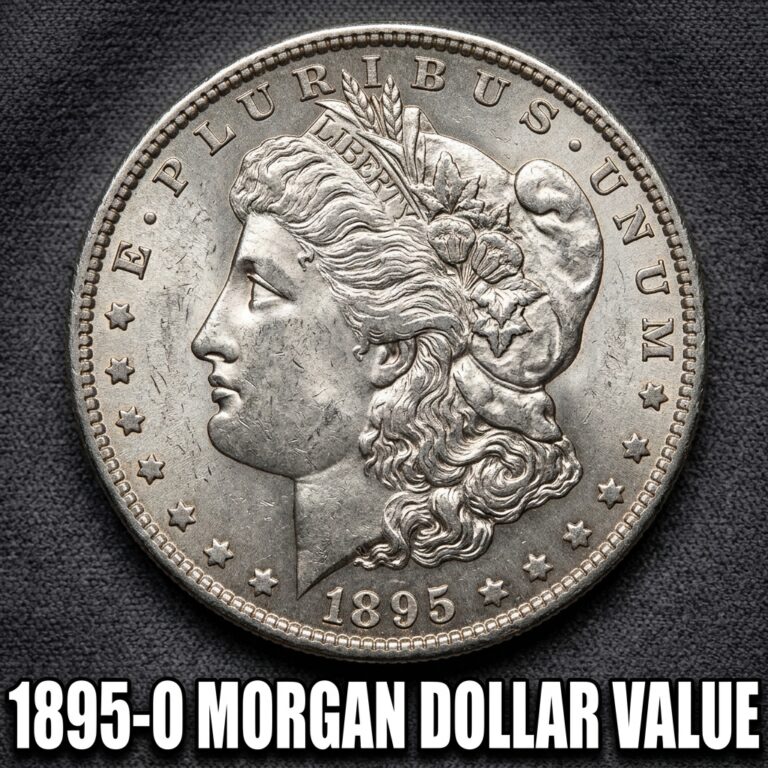
1889-CC Morgan Dollar Value — Rare Carson City Rarity Guide

Your Old Coin Could Be Valuable!
Identify It & Know Its Real Value — Free Download


The 1889-CC Morgan Dollar is worth anywhere from $600 in heavily worn condition to over $350,000 in pristine mint state. This legendary silver dollar is widely considered the “King” of the Carson City series, representing the ultimate prize for everyday Americans and serious numismatists alike.
| Condition / Grade | Estimated Market Value |
|---|---|
| Good (G-4) | $550 – $650 |
| Fine (F-12) | $1,100 – $1,350 |
| Extremely Fine (XF-45) | $3,200 – $4,000 |
| Uncirculated (MS-60) | $18,000 – $22,000 |
| Choice Uncirculated (MS-63) | $55,000 – $70,000 |
| Gem Uncirculated (MS-65) | $250,000+ |
Why the 1889-CC Morgan Silver Dollar Is So Valuable
Finding an 1889-CC Morgan Dollar in your family’s old collection is like winning the lottery. This specific coin was struck at the Carson City Mint in Nevada, a facility famous for its “wild west” history and lower production numbers.
To determine if you have a treasure, many people use the top coin identifier and value app to get an instant reading on their finds. Unlike common silver dollars from Philadelphia, the 1889-CC had a very small mintage of only 350,000 pieces.
Even more importantly, a large portion of these coins were melted down under the Pittman Act of 1918. Today, it is estimated that only about 25,000 to 30,000 survive in all grades combined. This scarcity, combined with the “CC” mint mark prestige, creates a massive demand that keeps the CoinKnow app alerts constantly buzzing with price updates.
The 1889-CC is the rarest Carson City Morgan Dollar of all. While some other dates have higher mintages, they survived in large numbers in bank vaults. The 1889-CC did not, making it the “blue chip” investment of the silver dollar world.
Your Old Coin Could Be Valuable!
Identify It & Know Its Real Value — Free Download
Identifying the CC Mint Mark on Your 1889 Dollar
Before you get too excited, you must verify that your coin was actually minted in Carson City. Flip the coin over to the reverse (the side with the eagle). Look just above the letters “D” and “O” in the word “DOLLAR.”
If you see two tiny “C”s stacked horizontally, you have a Carson City coin. If the area is blank, it was made in Philadelphia and is worth significantly less—usually around $30 to $50. Using CoinKnow can help you distinguish between these marks if they are worn down by time.
Your Old Coin Could Be Valuable!
Identify It & Know Its Real Value — Free Download
The “CC” mark is what transforms a standard piece of silver into a historical artifact worth thousands. Because of this high value, counterfeiters often try to glue fake “CC” marks onto Philadelphia coins.
Always look for the specific shape of the mint mark. On a genuine 1889-CC, the mint mark is usually well-defined. If the coin looks suspicious, professional authentication is a must to confirm its true status.
Grading and the 1889-CC Morgan Dollar Price Guide
In the world of coin collecting, “grade” refers to the amount of wear on the coin’s surface. A coin that looks like it just came from the mint is worth nearly twenty times more than one that spent years in a cowboy’s pocket.
The 1889-CC Morgan Dollar price guide for mint state grades shows a massive jump once you reach the MS-60 level. For example, a coin with moderate wear (VF-20) might sell for $1,800, but a flawless specimen can exceed $300,000.
Your Old Coin Could Be Valuable!
Identify It & Know Its Real Value — Free Download
| Technical Grade | Description of Details | Estimated Value |
|---|---|---|
| VG-8 (Very Good) | Heavily worn, Liberty’s hair lines gone. | $850 |
| VF-20 (Very Fine) | Hair around ear is visible but smooth. | $1,850 |
| AU-50 (About Uncirculated) | Slight wear on high points; some luster. | $7,500 |
| AU-58 (Choice AU) | Almost perfect, just a trace of friction. | $14,000 |
When checking the 1889 silver dollar value and rarity info, remember that cleaning a coin will instantly destroy its value. A cleaned 1889-CC may sell for 50% less than an original, uncleaned one.
The “CC” GSA Hoard Exception
During the 1960s and 70s, the U.S. government discovered a massive hoard of Carson City silver dollars in Treasury vaults. These were sold to the public in special “GSA” plastic holders.
While thousands of 1878-CC through 1893-CC coins were found, the 1889-CC was almost entirely absent. Only 1 (yes, just one!) 1889-CC was found in the official GSA Hoard. This makes an 1889-CC in a GSA holder a “unicorn” of the hobby.
Your Old Coin Could Be Valuable!
Identify It & Know Its Real Value — Free Download
If you ever see one, it is likely a fake or the single most famous coin in the series. This complete absence from the Treasury vaults is why the 1889-CC is so much more expensive than the 1882-CC or 1884-CC, which were found by the hundreds of thousands.
Using CoinKnow allows you to track these unique pedigree records. Because most 1889-CC dollars were circulated and used as actual currency in the Western U.S., finding one in high grade is a statistical miracle.
Common Counterfeits: How to Spot a Fake 1889-CC
Because this coin is so expensive, it is one of the most counterfeited coins in existence. Many modern fakes come from overseas and are made of base metals instead of 90% silver.
First, use a magnet; a real silver dollar will not stick to a magnet. Second, use a digital scale. A genuine Morgan Dollar should weigh 26.73 grams. If it weighs significantly less, it is a fake.
| Feature | Genuine Characteristic |
|---|---|
| Weight | 26.73g (approx) |
| Diameter | 38.1 mm |
| Composition | 90% Silver, 10% Copper |
| Edge | Reeded (ridged) |
Another common trick is the “added mint mark,” where a “CC” is glued onto a Philadelphia coin. Experts look for a “seam” around the letters under a microscope. If you have a coin that looks too good to be true, it likely needs to be sent to a service like PCGS or NGC for certification.
Your Old Coin Could Be Valuable!
Identify It & Know Its Real Value — Free Download
Should You Sell or Hold Your 1889-CC Silver Dollar?
The market for high-end Morgan Dollars has remained incredibly stable over the decades. Unlike modern bullion, the 1889-CC is a collectible whose value is driven by historical significance rather than just silver prices.
If the coin is in Mint State, it is generally considered a “hold” asset as it appreciates faster than inflation. However, even if your coin is in “Well Loved” condition, it is still a significant heirloom.
Before selling to a local pawn shop, do your homework. Pawn shops often offer only a fraction of the actual collector value. Using a tool like CoinKnow can give you the confidence to negotiate with dealers or describe your coin accurately for an online auction.
Whether you decide to keep it in the family or cash in on its high value, the 1889-CC remains one of the most exciting finds anyone can discover in an old jar of coins.
Your Old Coin Could Be Valuable!
Identify It & Know Its Real Value — Free Download
FAQ
Q: Why is the 1889-CC worth more than other 1889 silver dollars?
A: The Carson City (“CC”) version had a tiny mintage of 350,000, and most were melted. The Philadelphia (“No Mint Mark”) version had a mintage of over 21 million, making it very common.
Q: Does my 1889-CC have to be in perfect condition to be valuable?
A: No! Unlike many coins where wear makes them worthless, even a heavily worn 1889-CC is worth at least $500 to $600 because the “CC” mark is so Rare.
Q: Where can I get my 1889-CC Morgan Dollar graded?
A: The most trusted services are PCGS (Professional Coin Grading Service) and NGC (Numismatic Guaranty Company). These services will verify the coin is real and assign it a numeric grade.
Q: How can I tell if the “CC” mint mark was added later?
A: This requires a high-power loupe or microscope. Look for a circular line or “discoloration” around the mint mark, which suggests it was soldered on. Using a coin app or seeing a professional is highly recommended.