State Quarters Worth Money The Most Valuable Ones That Could Be Hiding in Your Change

Your Old Coin Could Be Valuable!
Identify It & Know Its Real Value — Free Download


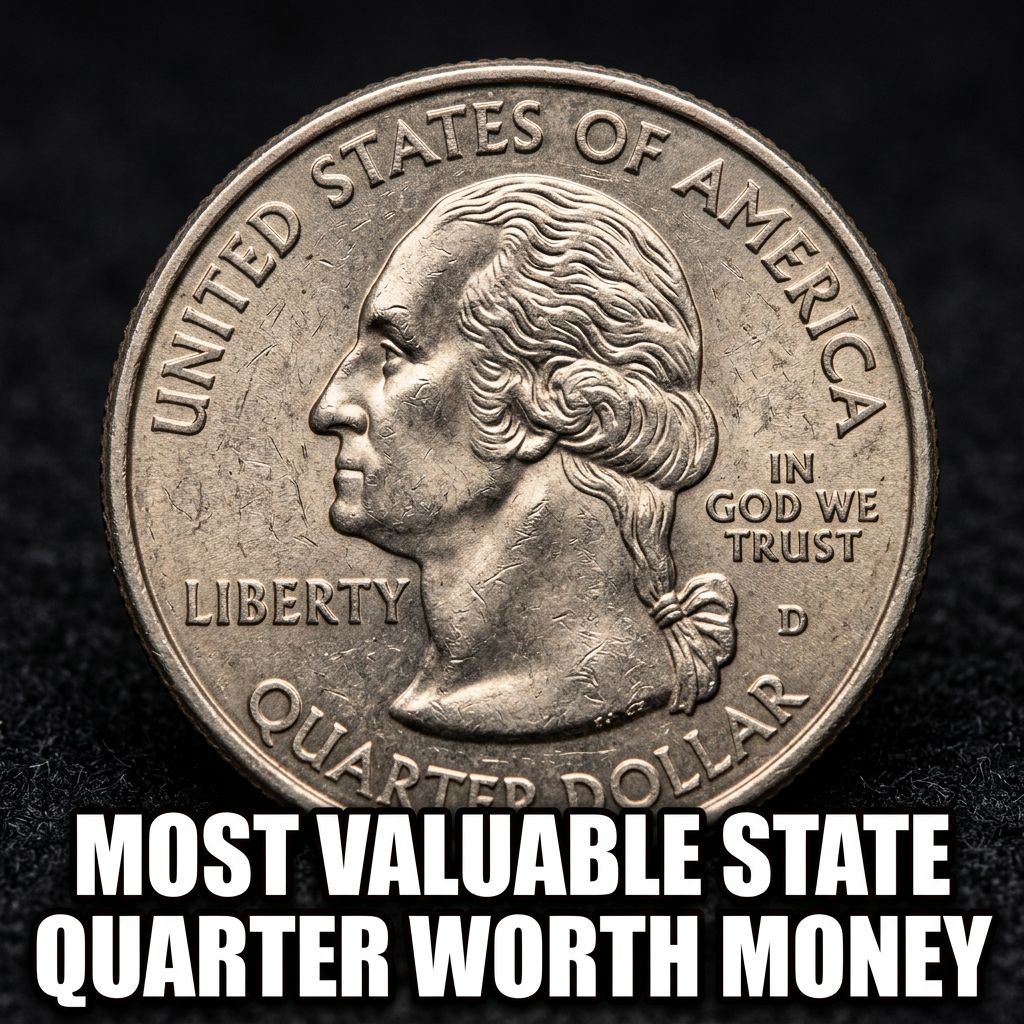
If you’ve been sitting on a collection of state quarters, you might be surprised to learn that some of the most valuable state quarters worth money can fetch anywhere from a few dollars in circulated condition to well over $500 or even $1,000 or more in pristine mint state — and a few rare error coins have sold for thousands at auction.
State quarters were released between 1999 and 2008 as part of the U.S. Mint’s 50 State Quarters Program, honoring each state with its own unique design. Most of them are worth just 25 cents in pocket change. But a handful of specific dates, mint marks, and error varieties have made collectors — and lucky everyday people — very happy indeed. If you’ve ever wondered whether that old quarter you found is worth something, a coin identifier and value app can give you a fast, accurate answer right from your phone.
Why Some State Quarters Are Worth Far More Than Face Value
Not every state quarter was created equal. The difference between a coin worth 25 cents and one worth $200 often comes down to three things: mint mark, condition, and errors during production.
Quarters struck at the Philadelphia Mint carry a “P” mint mark, while those from Denver carry a “D.” San Francisco produced special proof coins with an “S” mint mark, and these are generally more collectible. A coin graded MS-65 or higher by professional services like PCGS or NGC can command serious premiums.
Your Old Coin Could Be Valuable!
Identify It & Know Its Real Value — Free Download
Error coins are where things get really exciting. A misprint, double die strike, or off-center design can transform an ordinary quarter into a coin worth hundreds or even thousands of dollars.
The Most Valuable State Quarters Worth Money You Should Know About
Several state quarters have consistently stood out among collectors and dealers. Here’s a look at the ones that matter most:
Your Old Coin Could Be Valuable!
Identify It & Know Its Real Value — Free Download
| Quarter | Mint Mark | Notable Variety | Estimated Value Range |
|---|---|---|---|
| 1999-P Delaware | P | Spitting Horse Error | $10 – $500+ |
| 2004-D Wisconsin | D | Extra Leaf High / Low | $50 – $1,500+ |
| 2005-P Minnesota | P | Extra Tree Error | $25 – $300+ |
| 1999-P Connecticut | P | High Grade MS-67+ | $100 – $700+ |
| 2000-P New Hampshire | P | High Grade MS-67+ | $75 – $400+ |
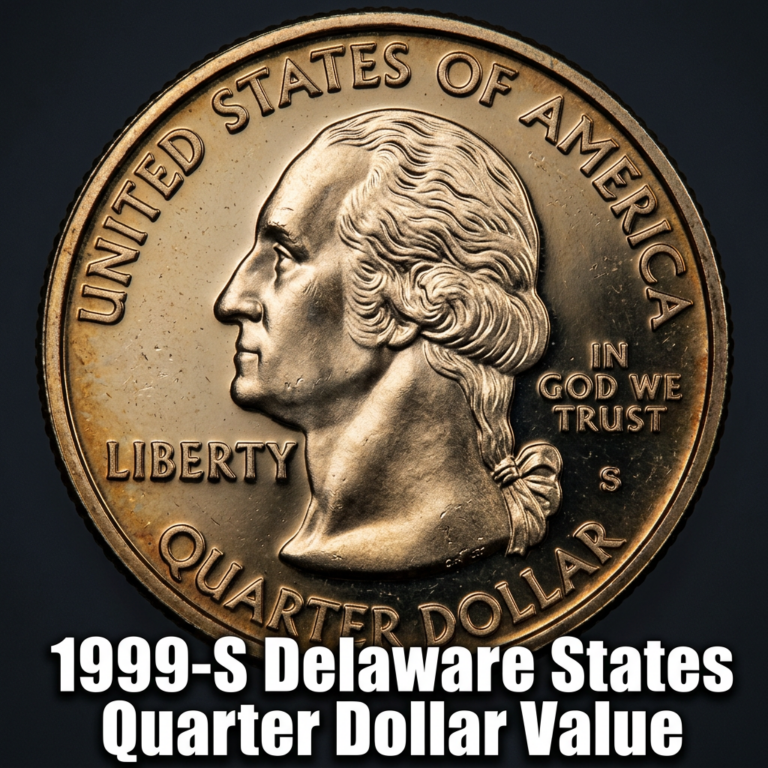
The 1999-P Delaware quarter is one of the most talked-about in the series. In standard circulated condition it’s barely worth more than face value, but the “Spitting Horse” error variety — caused by a die gouge near the horse’s mouth — has sold for significant sums. You can find detailed 1999-P Delaware quarter price data across all grade levels to get a sense of what yours might be worth.
The Wisconsin Extra Leaf Quarter — A True Collector’s Prize
Among all the most valuable state quarters worth money, the 2004-D Wisconsin Extra Leaf is arguably the biggest star. During production at the Denver Mint, an extra leaf appeared on the corn stalk in the design — either pointing high or low depending on the die. These are believed to be intentional die gouges made by a mint employee, and they slipped into circulation before anyone caught the mistake.
Your Old Coin Could Be Valuable!
Identify It & Know Its Real Value — Free Download
Examples in circulated condition regularly sell for $50 to $150. In mint state MS-63 to MS-65 grades, prices jump to several hundred dollars. True gem examples graded MS-66 or better by PCGS or NGC have sold at auction for over $1,000.
If you think you might have one, check the left side of the corn stalk on the reverse. An extra curved leaf extending downward — or upward — is your tell-tale sign.
CoinKnow is a great tool for spotting these varieties quickly. Just snap a photo and the app will help you identify the design details and compare your coin to known examples in its database.
Your Old Coin Could Be Valuable!
Identify It & Know Its Real Value — Free Download
How Condition Affects the Value of Your State Quarter
Condition is everything in the coin world. A state quarter that looks perfect to the naked eye might only grade MS-62 under professional evaluation, while a truly pristine example could hit MS-67 or MS-68 — a grade so rare it can mean the difference between a $5 coin and a $500 coin.
Here’s a simple breakdown:
– Circulated (G-VF): Usually worth face value to $2 unless it’s an error coin
– About Uncirculated (AU-50 to AU-58): $1 to $10 for most dates
– Mint State (MS-60 to MS-64): $3 to $30 depending on date
– Gem Mint State (MS-65+): $20 to $500+ for key dates
– Superb Gem (MS-67+): Potentially $200 to over $1,000 for rare dates
Cleaning a coin — even gently — can destroy its value. Never clean a coin you think might be rare. Let a professional evaluate it first.
Your Old Coin Could Be Valuable!
Identify It & Know Its Real Value — Free Download
For a broader look at which quarters worth money are still turning up in everyday circulation, there are excellent resources that track current market values updated regularly.
How to Find Out If Your State Quarter Is Worth Money
Start by checking the date and mint mark on the obverse (front) of the coin. Then examine the reverse carefully under good lighting — ideally with a magnifying loupe — for any design anomalies, doubling, or unusual marks.
If you suspect you have something special, CoinKnow makes the identification process simple. Upload a photo directly in the app and it will match your coin against a comprehensive database of known varieties and error coins, giving you an instant value estimate based on current market data.
From there, consider getting a professional grade from PCGS or NGC if the coin appears to be in high mint state condition. The grading fee is well worth it for a coin that could be worth hundreds of dollars.
—
Your Old Coin Could Be Valuable!
Identify It & Know Its Real Value — Free Download
FAQ
Q: What is the most valuable state quarter ever sold?
A: The 2004-D Wisconsin Extra Leaf High quarter holds some of the most impressive auction records in the series, with superb gem examples graded MS-66 and higher selling for over $1,000. However, top-graded examples of more common dates like the 1999-P Connecticut have also surprised collectors with strong auction results.
Q: Are state quarters from the 1990s worth more than later ones?
A: Generally, the 1999 quarters — Delaware, Pennsylvania, New Jersey, Georgia, and Connecticut — tend to command higher premiums in top mint state grades simply because they were the first released and early production runs sometimes show more quality control variation. However, errors like the 2004-D Wisconsin Extra Leaf prove that later dates can be just as valuable.
Q: Should I get my state quarter professionally graded?
A: If you have a coin that appears to be in brilliant uncirculated condition with no visible marks or wear, and it’s a key date or known error variety, professional grading from PCGS or NGC is absolutely worth the investment. For average circulated coins, it’s generally not necessary — but tools like CoinKnow can help you quickly decide whether a coin is worth submitting before you spend money on grading fees.