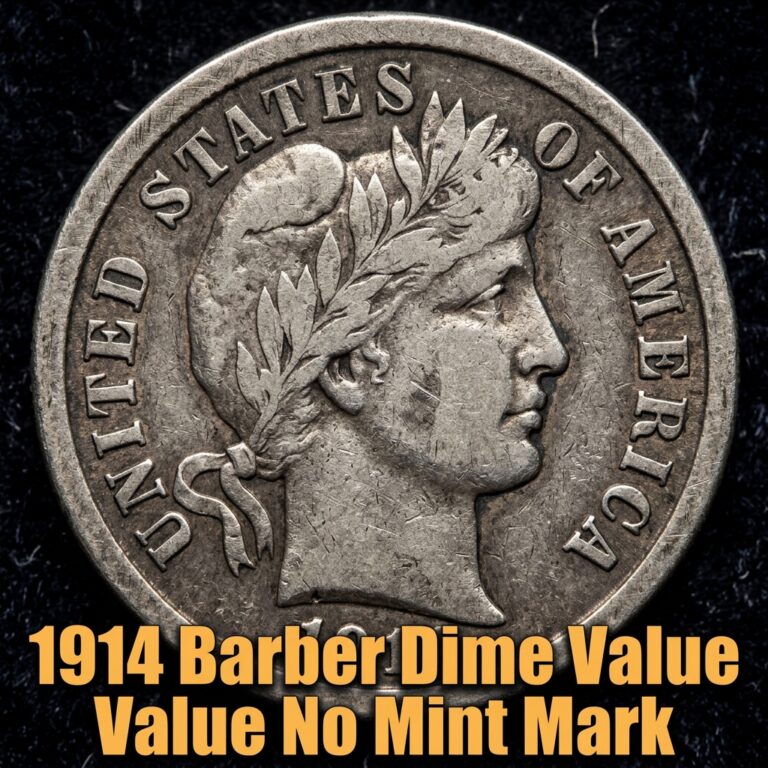
1894-O Barber Dime Value Guide: How Much Is It Worth Today?

Your Old Coin Could Be Valuable!
Identify It & Know Its Real Value — Free Download


The 1894-O Barber Dime is worth anywhere from $10 in heavily worn condition to over $600 in uncirculated state. While this “O” mint mark coin is not as famous as its legendary San Francisco cousin, it remains a highly coveted piece of American history for casual finders and serious collectors alike.
| Condition / Grade | Estimated Market Value |
|---|---|
| Good (G-4) | $10 – $15 |
| Fine (F-12) | $45 – $60 |
| Extremely Fine (XF-45) | $140 – $185 |
| Uncirculated (MS-60) | $350 – $450 |
| Choice Mint State (MS-65+) | $1,200+ |
Why the 1894-O Barber Dime is a Significant Find
Finding an 1894-O Barber Dime in a jar of old family coins is a moment of pure excitement. This coin, designed by Charles E. Barber, features Liberty wearing a Phrygian cap and a laurel wreath, a classic symbol of American numismatic heritage from the late 19th century.
The “O” mint mark on the reverse indicates that this silver dime was struck at the historic New Orleans Mint. This facility is legendary among collectors for producing coins with unique character, often during times of economic transition in the Southern United States.
If you aren’t sure if your coin is authentic, using a top coin identifier and value app can help you confirm the date and mint mark in seconds. The 1894-O is part of the early years of the Barber series, which ran from 1892 to 1916.
Because many of these dimes circulated heavily during the Gilded Age, finding one with visible details is a rare treat. While millions were minted, only a fraction survive today in collectible condition, making the CoinKnow app a vital tool for determining if your specific coin carries a premium.
Your Old Coin Could Be Valuable!
Identify It & Know Its Real Value — Free Download
How to Identify the 1894-O Mint Mark and Design
Identification is the first step in determining the 1894-O Barber Dime market price. You need to look at the reverse (the back) of the coin to find the “O” mark.
On the back of the dime, you will see a large wreath of corn, wheat, maple, and oak leaves. This wreath surrounds the words “ONE DIME.” Look closely at the bottom of the coin, just below the bow that ties the wreath together.
If you see a small, round “O,” you have found a New Orleans Mint product. If the space is blank, it was minted in Philadelphia. The presence of the “O” makes this coin significantly more valuable than the Philadelphia version in almost every grade.
Your Old Coin Could Be Valuable!
Identify It & Know Its Real Value — Free Download
Using the CoinKnow app can help you zoom in on these tiny details without needing a professional jeweler’s loupe. The sharp photography features of the app ensure you aren’t mistaking a smudge for a rare mint mark.
The Grading Scale and Its Impact on Price
The value of an 1894-O Barber Dime is determined primarily by its “grade,” or its state of preservation. Collectors use a 70-point scale to describe how much wear a coin has endured over the last 130 years.
Most 1894-O dimes found today are in “Good” or “Very Good” condition. This means the design is mostly flat, though Liberty’s head is still visible. In these lower grades, the coin is valued mostly for its silver content and its status as a 19th-century artifact.
Your Old Coin Could Be Valuable!
Identify It & Know Its Real Value — Free Download
However, if you can see the word “LIBERTY” clearly on the headband of the portrait, the value jumps significantly. A coin where all letters of “LIBERTY” are visible is usually graded “Fine” or better, and these are the pieces that serious investors hunt for.
| Grade Detail | Visual Description | Est. Value |
|---|---|---|
| Good (G) | Heavily worn; outlines visible but no letters in “LIBERTY”. | $10 |
| Fine (F) | “LIBERTY” is mostly visible; hair details are soft. | $55 |
| Very Fine (VF) | “LIBERTY” is sharp; laurel wreath shows distinct leaves. | $90 |
| About Uncirculated (AU) | Nearly perfect with just a hint of wear on the high points. | $250 |
Mintage Numbers and Scarcity of the 1894 New Orleans Mint
In 1894, the New Orleans Mint produced exactly 720,000 Barber Dimes. While that might sound like a large number, in the world of coin collecting, it is considered a relatively low mintage for a circulation-strike dime.
Compare this to the Philadelphia Mint, which produced over 1.3 million dimes that same year. Because the New Orleans production was smaller, and because these coins were used extensively in local Southern commerce, they are much harder to find today in top-tier condition.
Economic conditions in the 1890s meant that people spent their money rather than saving it. Dimes were a workhorse of the economy, used for daily groceries and transit. Very few people thought to set aside an 1894-O dime as a “collectible” at the time.
Your Old Coin Could Be Valuable!
Identify It & Know Its Real Value — Free Download
This lack of foresight by 19th-century citizens is what drives the high prices for “Mint State” examples today. If you have a specimen with its original “mint luster” (the shiny, satin-like finish), you are looking at a coin that could be worth thousands.
Common Errors and Varieties to Watch For
While the 1894-O is not known for massive “doubled die” errors, collectors still keep a keen eye out for small variations. Sometimes, the mint mark might be slightly shifted or tilted, known as a “repunched mint mark” or a “misplaced date.”
Even if your coin isn’t a rare error, its silver content is a guaranteed floor for its value. All Barber Dimes were struck in 90% silver and 10% copper. With silver prices fluctuating, your old dime will always be worth at least its weight in precious metal.
Before you sell your coin to a pawn shop for silver value, please check its numismatic (collector) value first. Many people make the mistake of melting down coins that are actually worth 10 times their silver weight.
Your Old Coin Could Be Valuable!
Identify It & Know Its Real Value — Free Download
You can use CoinKnow to track the current “melt value” versus “market value” to ensure you are getting the best deal. A knowledgeable seller is a successful seller in the hobby of coin collecting.
How to Store and Protect Your 1894-O Barber Dime
If you find that your 1894-O Barber Dime is in high-grade condition, the last thing you want to do is handle it with bare fingers. The oils from your skin can cause corrosion over time, damaging the delicate silver surface.
Never “clean” your coin. This is the golden rule of coin collecting. Scrubbing a coin with baking soda, vinegar, or even a soft cloth can leave micro-scratches that destroy its value. A “cleaned” coin often loses 50-80% of its market price.
Instead, place the coin in a PVC-free plastic flip or a cardboard “2×2” holder. This protects it from the air and physical scratches while allowing you to display it to friends and family.
For high-value coins, consider professional grading services like PCGS or NGC. A slabbed, certified 1894-O dime is much easier to sell at a premium price than a raw coin, as it guarantees the authenticity and the grade to the buyer.
Your Old Coin Could Be Valuable!
Identify It & Know Its Real Value — Free Download
| Storage Method | Pros | Cons |
|---|---|---|
| Cardboard 2x2s | Cheap, easy to label. | Not airtight. |
| Plastic Flips | Great for viewing both sides. | Must be PVC-free to avoid “green slime.” |
| Professional Slabs | Permanent protection and valuation. | Expensive to get done. |
1894-O Barber Dime Value FAQ
Q: Is the 1894-O Barber Dime the same as the 1894-S?
A: No, and the difference is worth millions! Only 24 of the 1894-S (San Francisco) dimes were minted, and they are worth over $1 million each. The 1894-O (New Orleans) is much more common, though still very valuable compared to a normal dime.
Q: What is the silver content of an 1894-O dime?
A: Like all dimes minted before 1965, the 1894-O is made of 90% silver. It contains approximately 0.0723 ounces of pure silver.
Q: Should I clean my 1894-O dime to make it look better?
A: No! Do not clean it. Collectors prefer “original skin” (natural patina/tarnish) over a shiny, cleaned surface. Cleaning a coin will almost always lower its collector value.
Q: Where can I sell my 1894-O Barber Dime?
A: You can sell it to local coin shops, through online auctions like eBay, or to specialized numismatic auction houses if the coin is in high grade. Always check the CoinKnow app first to get a baseline price before accepting any offers.