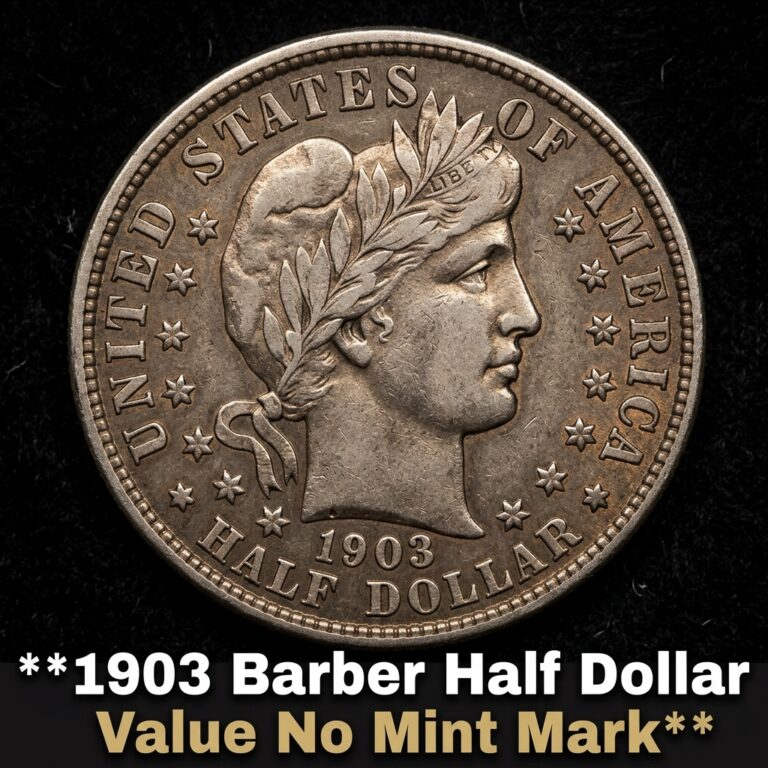
1911-S Barber Quarter Value: Price Guide for Collectors

Your Old Coin Could Be Valuable!
Identify It & Know Its Real Value — Free Download


The 1911-S Barber Quarter is worth anywhere from $40 in heavily worn condition to over $1,500 in pristine mint state. This San Francisco-minted coin is a significant find for any casual treasure hunter or serious numismatist, representing a year with a relatively low production run compared to other dates in the series.
| Condition Grade | Estimated Value |
|---|---|
| Good (G-4) | $40 – $50 |
| Fine (F-12) | $115 – $135 |
| Extremely Fine (XF-45) | $375 – $450 |
| Uncirculated (MS-63) | $1,100 – $1,400 |
Understanding the History of the 1911-S Barber Quarter
The 1911-S Barber Quarter belongs to a beloved series of United States silver coinage designed by Charles E. Barber. First introduced in 1892, these quarters were a staple of American commerce during the early 20th century. By 1911, the San Francisco Mint was producing coins at a steady pace, but the “S” mint mark quarters from this specific year are much scarcer than those from the main Philadelphia mint.
If you have stumbled upon one of these in an old cigar box or passed down through a family collection, you are holding a piece of history that predates World War I. Because these coins were made of 90% silver, many were melted down or heavily worn out through decades of use. Finding one today is a treat, especially if the details on Liberty’s head are still sharp. To help you identify if your find is a true treasure, you might consider using the top coin identifier and value app to get an instant appraisal from your smartphone.
Interestingly, the 1911 series across different denominations carries varying levels of collector interest. For instance, while you analyze your quarters, you might also be curious about the 1911 Barber Dime value guide to see how the smaller silver siblings compare. Often, collectors try to build “year sets,” making the 1911-S a sought-after piece for completing a San Francisco run.
Your Old Coin Could Be Valuable!
Identify It & Know Its Real Value — Free Download
Identifying the S Mint Mark and Mintage Figures
The most critical factor in determining the 1911-S Barber Quarter value is the “S” mint mark. Without this small letter, the coin was minted in Philadelphia and is generally worth significantly less in circulated grades. You can find the mint mark on the reverse (back) of the coin, located directly below the eagle’s tail and just above the “R” and “D” in the word “QUARTER.”
The San Francisco Mint produced only 984,000 of these quarters in 1911. While that sounds like a large number, in the world of coin collecting, any mintage figure under one million is considered relatively low. This “sub-million” status is exactly why the 1911-S commands a premium price even in lower, “filler” grades.
Your Old Coin Could Be Valuable!
Identify It & Know Its Real Value — Free Download
For everyday Americans, distinguish between a common 1911 and the 1911-S is the difference between a $10 coin and a $40 coin. By using tools like CoinKnow, you can take a high-resolution photo of the reverse to ensure that the mint mark hasn’t been worn away or altered. Many beginner collectors overlook the mint mark, potentially missing out on a significant profit.
| Mint Location | Mintage Total | Rarity Level |
|---|---|---|
| Philadelphia (No Mint Mark) | 3,720,000 | Common |
| Denver (D) | 933,600 | Scarce |
| San Francisco (S) | 984,000 | Scarce/Key Date |
Grading Your 1911-S Barber Quarter Dollar
Condition is everything when it comes to silver quarters. Collectors use a 70-point scale to grade coins, but for most people, the categories range from “Good” to “Uncirculated.” A “Good” condition 1911-S will show a clear silhouette of Liberty, but the word “LIBERTY” in her headband will be missing or barely visible. This level of wear is expected for a coin that circulated for years.
Your Old Coin Could Be Valuable!
Identify It & Know Its Real Value — Free Download
In “Fine” condition, the word “LIBERTY” becomes readable. This is a massive jump in value because it indicates the coin didn’t see as much heavy use. If you are lucky enough to find a 1911-S where the fine lines in the eagle’s feathers are still visible, you likely have an “Extremely Fine” or “About Uncirculated” specimen.
Determining grade by eye can be difficult for beginners. The CoinKnow app uses advanced image recognition to help you estimate the grade of your 1911-S Barber Quarter. This is vital because a single jump in grade—say from Very Fine to Extremely Fine—can represent a price swing of over $100. Always handle your coins by the edges and never attempt to clean them, as cleaning can permanently destroy their numismatic value.
The Impact of Silver Prices on Value
While the 1911-S Barber Quarter is valued primarily for its rarity and age, it also has “intrinsic value” because of its metal content. Each Barber Quarter is composed of 90% silver and 10% copper. When silver prices rise globally, the “melt value” of these coins acts as a price floor. However, since the 11-S is a semi-key date, its collector value will always far exceed its silver melt value.
Your Old Coin Could Be Valuable!
Identify It & Know Its Real Value — Free Download
For example, if silver is at $25 an ounce, the raw silver in a quarter is worth roughly $4.50. Yet, as we’ve seen, even a beat-up 1911-S sells for ten times that amount. This is why it is so important to check the date and mint mark before selling your old coins to a silver refinery or “we buy gold” shop. You never want to sell a rare date for only its weight in silver.
If you have a collection of silver quarters, keep track of them with CoinKnow. The app allows you to log your inventory and see how the market value fluctuates based on both silver spot prices and recent auction results. This ensures you always know the real-time worth of your 1911-S Barber Quarter.
| Feature | Specification |
|---|---|
| Silver Content | 90% Silver (.1808 oz) |
| Diameter | 24.3 mm |
| Weight | 6.25 grams |
Collecting the 1911-S Barber Quarter Today
Today, the market for Barber Quarters is very active. Because these coins were workhorses of the American economy, finding high-grade examples is extremely difficult. Most 1911-S quarters found in estates are in G-4 or VG-8 condition. If you are looking to buy one, expect to pay a premium for any piece that hasn’t been cleaned or scratched.
Your Old Coin Could Be Valuable!
Identify It & Know Its Real Value — Free Download
Collectors often look for “natural toning.” This is the colorful patina that forms on silver over decades of storage. High-grade 1911-S quarters with original luster (the “shine” a coin has when it’s new) are the gems of the market. Auctions for these specimens can reach into the thousands of dollars, making them a solid investment for those who understand the market.
Whether you are a casual hobbyist or a dedicated investor, the 1911-S remains a staple of the “Classic Silver” era. It represents a time when American money was made of precious metals and featured intricate, classical artwork. Owning one is like holding a piece of the San Francisco Mint’s heritage during the transition into the modern industrial age.
FAQ
Q: Where is the mint mark on a 1911-S Barber Quarter?
A: The “S” mint mark is located on the reverse side of the coin. Look at the bottom, just above the words “QUARTER DOLLAR.” Specifically, it sits right above the space between the ‘R’ and ‘D’. If there is no letter there, it was minted in Philadelphia.
Q: Why is the 1911-S worth more than other 1911 quarters?
A: The 1911-S has a much lower mintage than the Philadelphia version. While Philly minted over 3.7 million quarters, San Francisco minted only 984,000. This lower supply, combined with high demand from collectors, drives the price up.
Your Old Coin Could Be Valuable!
Identify It & Know Its Real Value — Free Download
Q: Should I clean my 1911-S Barber Quarter to make it look “new”?
A: No! Never clean your coins. Collectors prefer “original” surfaces. Cleaning creates microscopic scratches that graders can detect, and it can reduce the value of a rare coin by 50% or more instantly.
Q: Is a 1911-S Barber Quarter made of real silver?
A: Yes, it is made of 90% silver and 10% copper. This was the standard for all U.S. quarters, dimes, and half dollars minted before 1965.
Q: How can I tell if my coin is a fake?
A: While fakes of the 1911-S are less common than the ultra-rare 1901-S, they do exist. Real coins will weigh exactly 6.25 grams (when new) and have a distinct silver ring when gently tapped. Using a professional grading service or an app like CoinKnow can help verify authenticity through visual analysis.