1914 Barber Quarter Dollar Value No Mint Mark and What It’s Worth Today

Your Old Coin Could Be Valuable!
Identify It & Know Its Real Value — Free Download


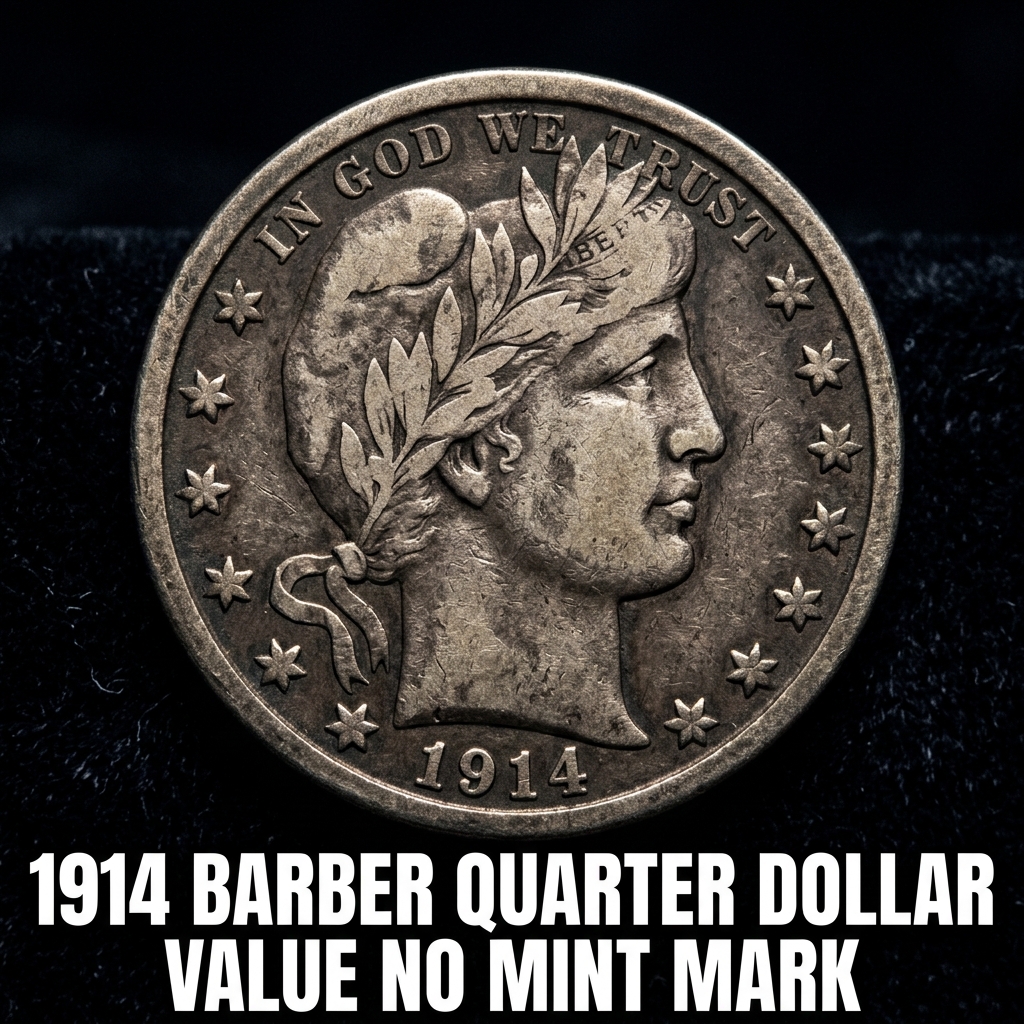
The 1914 Barber Quarter Dollar (no mint mark) is worth anywhere from $6 in heavily worn condition to over $400 in well-preserved mint state grades, making it a genuinely exciting find for anyone sorting through old coins.
What Makes the 1914 Barber Quarter Special
The Barber Quarter series, designed by Charles E. Barber and minted from 1892 to 1916, is one of the most recognized coin series in American numismatic history. The 1914 Philadelphia Mint issue — identified by the absence of a mint mark on the reverse — is considered a relatively common date within the series, but that doesn’t mean it’s without value.
If you’ve come across one of these coins and want to get a quick read on its worth, using a coin identifier and value app is one of the easiest ways to start your research. Just snap a photo and you’ll get useful information in seconds.
The coin features Lady Liberty on the obverse and a heraldic eagle on the reverse — a classic design that collectors still love today. The Philadelphia Mint produced 6,244,610 quarters in 1914, which is a respectable mintage that keeps prices more accessible than some of the series’ rarer dates.
Your Old Coin Could Be Valuable!
Identify It & Know Its Real Value — Free Download
How Condition Affects the 1914 Barber Quarter Value
Condition — or “grade” in collector language — is the single biggest factor in determining what your 1914 Barber Quarter no mint mark is worth. Coins that saw heavy circulation for decades will show significant wear on Liberty’s head, the hair details, and the eagle’s breast feathers.
Here’s a general value breakdown based on grade:
Your Old Coin Could Be Valuable!
Identify It & Know Its Real Value — Free Download
| Grade | Description | Estimated Value |
|---|---|---|
| Good (G-4) | Heavy wear, major details visible | $6 – $10 |
| Very Good (VG-8) | Moderate wear, some hair detail | $12 – $18 |
| Fine (F-12) | Even wear, clear lettering | $22 – $35 |
| Very Fine (VF-20) | Light wear on high points | $45 – $70 |
| Extremely Fine (EF-40) | Slight wear, strong detail | $90 – $130 |
| About Uncirculated (AU-50) | Minimal wear, near full luster | $150 – $200 |
| Mint State (MS-63+) | No wear, original mint luster | $300 – $425+ |
Even a circulated example in Fine condition is worth a solid amount in silver melt value alone, since Barber Quarters contain 90% silver.
Silver Content and Melt Value
One important thing to understand about the 1914 Barber Quarter is its intrinsic silver value. Every Barber Quarter — regardless of date or mint mark — is made of 90% silver and contains approximately 0.1808 troy ounces of pure silver.
Your Old Coin Could Be Valuable!
Identify It & Know Its Real Value — Free Download
That means even if your coin is too worn to grade, it still carries real metal value. With silver trading around $27–$30 per troy ounce (prices fluctuate), the raw melt value of a 1914 Barber Quarter sits around $4.90 to $5.40 at minimum.
Collector value, of course, adds considerably more on top of that. If you want to track current silver prices alongside coin values, CoinKnow is a great app that keeps both updated in real time so you always know what you’re holding.
How to Identify the No Mint Mark Version
Not all 1914 Barber Quarters came from the same mint. That year, quarters were struck at Philadelphia (no mint mark), Denver (D), and San Francisco (S). The mint mark — when present — appears on the reverse of the coin, just below the eagle.
Your Old Coin Could Be Valuable!
Identify It & Know Its Real Value — Free Download
If you flip your coin over and see no letter beneath the eagle, you have the Philadelphia issue. The 1914 Philadelphia quarter had the highest mintage of the three, making it the most commonly found variety.
The 1914-S and 1914-D are both worth more than the no mint mark version, so it’s worth taking a careful look. A magnifying glass helps a lot here. If you’re unsure, CoinKnow lets you scan the coin and identify which mint produced it automatically.
For a related silver coin from the same era, you might also find it helpful to check out detailed value information on other 1914 coins including the 1914 nickel, which can help give you a fuller picture of what coins from this period are worth.
Your Old Coin Could Be Valuable!
Identify It & Know Its Real Value — Free Download
Tips for Selling Your 1914 Barber Quarter
If you’ve decided you’d rather turn your coin into cash than keep it in a collection, you have a few solid options. Local coin dealers are the most straightforward — bring it in, they’ll make an offer on the spot. Just know that dealers typically pay 60–80% of retail value since they need room to resell.
Online platforms like eBay and Heritage Auctions can get you closer to full retail, especially for coins in better grades. Raw (ungraded) coins can sell well, but certified coins from PCGS or NGC almost always command a premium.
Before you sell, get a realistic sense of value by using CoinKnow to compare recent sales and see what similar coins have actually sold for — not just listed for. Knowledge is leverage when you’re negotiating with a dealer.
—
Your Old Coin Could Be Valuable!
Identify It & Know Its Real Value — Free Download
Frequently Asked Questions
Q: How do I know if my 1914 Barber Quarter is real?
A: Genuine examples weigh 6.25 grams and are made of 90% silver with a reeded edge. A magnet test is a quick first check — real silver is not magnetic. For full authentication, submitting to PCGS or NGC is the safest route.
Q: Is a worn 1914 Barber Quarter with no mint mark worth anything?
A: Yes, absolutely. Even a heavily circulated example is worth at least its silver melt value, which hovers around $5 or more depending on current silver prices. In grades like Good or Very Good, collector value pushes that up to $6–$18.
Q: What’s the most valuable 1914 quarter?
A: Among 1914 quarters, the San Francisco (S) issue in top mint state grades tends to bring the highest prices due to its lower surviving population in pristine condition. However, all three mint locations produced coins that are genuinely collectible and worth holding onto.