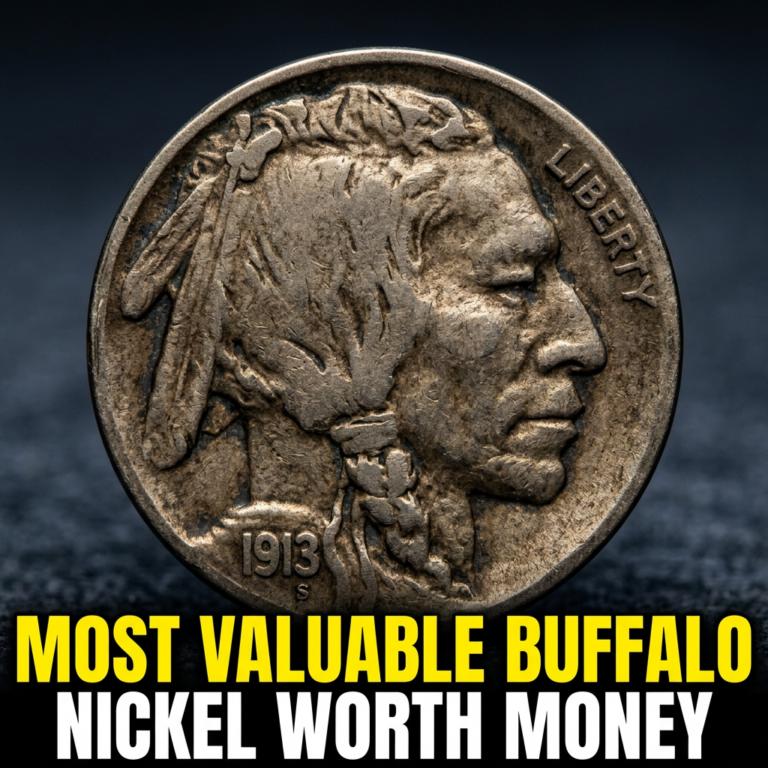
1927 Buffalo Nickel Value — What Is Your Old Coin Worth?

Your Old Coin Could Be Valuable!
Identify It & Know Its Real Value — Free Download


The 1927 Buffalo Nickel is worth anywhere from $1.50 in worn condition to over $150 in mint state, with rare proofs reaching several thousand dollars. Whether you found one in a jar of old change or inherited a small collection, understanding the nuances of this iconic American coin is the first step to realizing its true market value.
| Condition / Grade | Estimated Value (Philadelphia) | Estimated Value (Denver ‘D’) | Estimated Value (San Francisco ‘S’) |
|---|---|---|---|
| Good (G-4) | $1.50 – $2.00 | $3.00 – $5.00 | $4.00 – $7.00 |
| Fine (F-12) | $4.00 – $6.00 | $15.00 – $25.00 | $20.00 – $35.00 |
| Extra Fine (EF-40) | $12.00 – $20.00 | $60.00 – $85.00 | $120.00 – $180.00 |
| Uncirculated (MS-65) | $130.00+ | $650.00+ | $3,500.00+ |
History and Significance of the 1927 Indian Head Nickel
The 1927 Buffalo Nickel, also known as the Indian Head Nickel, represents a fascinating era in American numismatics. Designed by James Earle Fraser, this coin was part of the “Renaissance of American Coinage,” a movement pushed by President Theodore Roosevelt to make US currency more artistic and representative of the American spirit.
When you hold a 1927 nickel, you are holding a piece of history from the Roaring Twenties. By this time, the design had been in circulation for 14 years, and the United States Mint had refined the striking process. However, because the date and the word “Five Cents” were placed on raised surfaces, they often wore away quickly in circulation.
If you are unsure about the specifics of your coin, using a top coin identifier and value app can help you distinguish between the different mint marks and varieties. Many collectors use the CoinKnow app to get instant feedback on their finds, as it uses advanced image recognition to determine if a coin is a common 1927 issue or something rarer.
The 1927 year is particularly popular among collectors because it was produced in relatively high numbers at the Philadelphia mint, making it accessible for beginners, while the branch mint issues (D and S) remain challenging to find in high grades.
Your Old Coin Could Be Valuable!
Identify It & Know Its Real Value — Free Download
Determining the Mint Mark on a 1927 Buffalo Nickel
To know the true value of your 1927 Buffalo Nickel, you must first look for the mint mark. This small letter indicates which U.S. Mint facility produced the coin. In 1927, there were three locations: Philadelphia, Denver, and San Francisco.
Philadelphia coins have no mint mark. If the space under the words “FIVE CENTS” on the reverse (the buffalo side) is blank, your coin was made in Philly. These are the most common and generally carry the lowest premium in circulated grades.
The Denver Mint produced coins with a “D” mint mark, and the San Francisco Mint used an “S”. Both are significantly rarer than the Philadelphia version. These marks are located on the reverse side, just below the buffalo’s back legs and the denomination.
Your Old Coin Could Be Valuable!
Identify It & Know Its Real Value — Free Download
Collectors often use tools like CoinKnow to zoom in on these marks, as years of wear can make them difficult to see with the naked eye. Identifying an “S” instead of a blank space can increase the value of your coin by ten times or more, depending on its condition.
Identifying the Condition and Grade of Your 1927 Nickel
Condition is everything in coin collecting. Professional graders use a 70-point scale to determine a coin’s state. For the everyday person, “grading” usually involves looking at how much of the detail remains on the Indian’s hair and the buffalo’s fur.
A “Good” grade means the coin is heavily worn, but the date and main outlines are visible. A “Fine” grade shows some detail in the hair braids and the buffalo’s tail. “Extra Fine” coins look almost new but have some light wear on the highest points of the design.
Your Old Coin Could Be Valuable!
Identify It & Know Its Real Value — Free Download
If your coin looks like it never spent a day in someone’s pocket, it might be in “Mint State” or “Uncirculated” condition. These are the coins that fetch the high prices you see in auction records. You can check the latest 1927 buffalo nickel uncirculated values to see how much of a premium these pristine examples command in today’s market.
| Grade Key Features | Visual Indicators |
|---|---|
| Good (G) | Date is readable but flat; rims may blend with fields. |
| Fine (F) | Hair braid is visible; buffalo’s horn is partially worn. |
| Very Fine (VF) | Tips of the buffalo’s horn are clear; hair details are sharp. |
| About Uncirculated (AU) | Original mint luster remains; very slight wear on the hip. |
Why the 1927-S Buffalo Nickel Is So Valuable
Among the three mints, the 1927-S is the legendary “key date” of the year. While Philadelphia produced over 38 million nickels, San Francisco produced only 3.4 million. This scarcity makes the 1927-S a prize for serious collectors.
The difficulty with the 1927-S is that many were poorly struck. Finding one with sharp details on the buffalo’s horn or the Indian’s cheekbone is quite rare. Because of this, even coins in moderately good condition can sell for hundreds of dollars.
If you believe you have found an “S” mint mark, it is highly recommended to have it verified. Most people start by checking the 1927 buffalo nickel price guide to see current auction trends. If the coin is in high grade, it might be worth sending to a professional grading service like PCGS or NGC.
Your Old Coin Could Be Valuable!
Identify It & Know Its Real Value — Free Download
Before spending money on grading fees, you can use CoinKnow to get a ballpark estimate. This helps you decide if the coin is worth the $30-$50 investment required for professional authentication.
Rare Varieties and Mint Errors to Watch For
While most 1927 nickels are standard issues, there are always minor “errors” or “varieties” that can send prices skyrocketing. Errors happen during the minting process and can result in unique appearances that collectors love.
Common errors for this era include “Clipped Planchets,” where the coin looks like a bite was taken out of the edge, or “Off-Center Strikes,” where the design is pushed to one side. There are also “Die Cracks,” which look like raised jagged lines across the surface of the coin.
| Error Type | Description | Added Value |
|---|---|---|
| Double Die Obverse | Doubling visible in the date or lettering. | $50 – $200+ |
| Lamination Error | Metal peeling or cracking on the surface. | $10 – $30 |
| Off-Center Strike | Design not centered on the coin blank. | $20 – $100+ |
Double dies are particularly sought after. Look closely at the “1927” date. If you see what looks like a faint shadow or a second set of numbers overlapping the first, you may have a variety that is much more valuable than a standard coin.
Your Old Coin Could Be Valuable!
Identify It & Know Its Real Value — Free Download
Tips for Selling and Preserving Your Coin Collection
If you discover that your 1927 Buffalo Nickel is worth a significant amount of money, the next step is knowing how to handle it. The most important rule in coin collecting is: Never clean your coins.
Cleaning a coin with polish, vinegar, or even a soft cloth can leave microscopic scratches that ruin its numismatic value. A coin that was worth $100 can instantly drop to $10 if it has been cleaned. Collectors prefer the natural “patina” or toning that comes with age.
To preserve the value, store your nickel in a PVC-free plastic holder or a cardboard “2×2” flip. This protects it from oils on your fingers and moisture in the air.
When you are ready to sell, you can take your coin to a local coin shop, list it on an auction site like eBay, or contact a specialized auction house for high-value items. Always check multiple sources to ensure you are getting a fair price based on the current market demand.
FAQ
Q: Where is the mint mark on a 1927 Buffalo Nickel?
A: The mint mark (a small ‘D’ or ‘S’) is located on the back of the coin. Look directly under the words “FIVE CENTS,” below the ground the buffalo is standing on. If you see no letter, it was minted in Philadelphia.
Your Old Coin Could Be Valuable!
Identify It & Know Its Real Value — Free Download
Q: Is a 1927 Buffalo Nickel with no date worth anything?
A: Generally, no-date Buffalo Nickels are worth very little, usually around 10 to 25 cents. However, since 1927 is a common year, most collectors look for clear dates. Some people use “Nic-A-Date” chemicals to reveal the date, but this damages the coin and it will only be worth a small amount to people making jewelry.
Q: Why is my nickel yellow or dark?
A: This is called toning. Over decades, the copper-nickel alloy reacts with the environment. Sometimes this results in beautiful rainbow colors (which can increase value), but often it just turns a dark grey or brownish-yellow. As long as it hasn’t been cleaned, this natural aging is fine.
Q: How many 1927 Buffalo Nickels were made?
A: Total production for 1927 was quite high. Philadelphia minted 38,091,000, Denver minted 5,730,000, and San Francisco minted 3,420,000. This is why the “S” and “D” mint marks are much harder to find today.
Q: Should I get my 1927 Buffalo Nickel professionally graded?
A: You should only grade the coin if its estimated value is significantly higher than the cost of grading (about $30-$50). Usually, this only applies to 1927-D or 1927-S coins in “About Uncirculated” condition or better, or a 1927-P in high-end “Mint State.”