1930 Buffalo Nickel Value No Mint Mark What It’s Worth Today

Your Old Coin Could Be Valuable!
Identify It & Know Its Real Value — Free Download


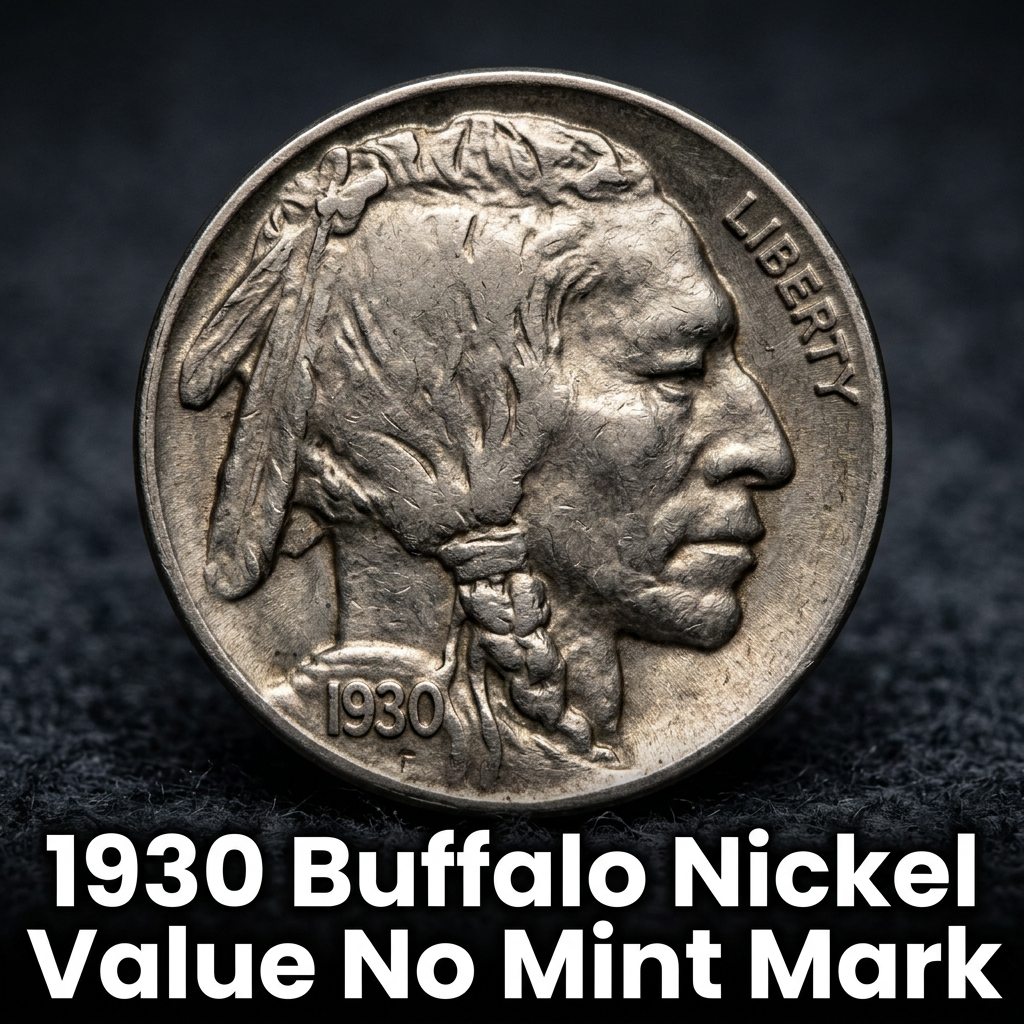
The 1930 Buffalo Nickel with no mint mark is worth anywhere from $1 to $2 in heavily worn condition, up to $100 or more in higher circulated grades, and potentially several hundred dollars in true mint state — making it a coin worth paying close attention to if you’ve found one in an old collection.
What the 1930 No Mint Mark Buffalo Nickel Actually Is
The 1930 Buffalo Nickel was struck at the Philadelphia Mint, which is why it carries no mint mark. Philadelphia was the main U.S. Mint at the time, and it was standard practice not to include a “P” on coins produced there.
That year, the Philadelphia Mint struck over 5.4 million Buffalo Nickels — a relatively modest mintage compared to earlier years in the series. That lower production number is one reason why these coins tend to hold decent value even in worn grades.
If you’re not sure whether your coin has a mint mark or not, flip it to the reverse side and look just below the words “FIVE CENTS.” A “D” means it was made in Denver, and no letter at all means Philadelphia. Using a coin identifier and value app can make this process much easier, especially if you’re new to collecting and not sure what you’re looking at.
Your Old Coin Could Be Valuable!
Identify It & Know Its Real Value — Free Download
How Much Is the 1930 Buffalo Nickel Worth by Grade
Coin value is directly tied to condition, or “grade.” The better the coin looks, the more it’s worth. Here’s a simple breakdown of what the 1930 Buffalo Nickel with no mint mark is typically worth across different grades:
Your Old Coin Could Be Valuable!
Identify It & Know Its Real Value — Free Download
| Grade | Description | Estimated Value |
|---|---|---|
| Good (G-4) | Heavy wear, design visible | $1 – $2 |
| Fine (F-12) | Moderate wear, details clearer | $5 – $10 |
| Extremely Fine (EF-40) | Light wear on high points | $25 – $45 |
| About Uncirculated (AU-55) | Slight wear, mostly sharp | $60 – $90 |
| Mint State (MS-63) | No wear, some bag marks | $150 – $250 |
| Mint State (MS-65) | Gem quality, minimal marks | $400+ |
For the most up-to-date pricing on certified examples, you can check recent 1930 Buffalo Nickel mint state auction prices and dealer values to see where the market stands right now.
Key Details That Can Affect the Value of Your 1930 Buffalo Nickel
Beyond grade, a few other factors can push the value of your 1930 no mint mark Buffalo Nickel higher — or lower.
Your Old Coin Could Be Valuable!
Identify It & Know Its Real Value — Free Download
Strike quality matters a lot with Buffalo Nickels. This series is notorious for weak strikes, particularly on the bison’s horn and the Native American’s hair above the ear. A coin with a full, sharp strike is significantly more desirable to collectors, even if the overall grade is the same as a weakly struck example.
Original skin is another consideration. Uncirculated Buffalo Nickels that still have original mint luster — that faint, flowing sheen across the surface — are much more valuable than coins that have been cleaned or polished. A cleaned coin, even in otherwise excellent condition, can lose 50% or more of its potential value.
Your Old Coin Could Be Valuable!
Identify It & Know Its Real Value — Free Download
Finally, certification from a grading service like PCGS or NGC can dramatically increase buyer confidence and realized prices, especially for higher-grade examples.
Where the 1930 Buffalo Nickel Fits in the Series
The Buffalo Nickel series ran from 1913 to 1938, and the 1930 Philadelphia issue is considered a mid-range coin in terms of rarity. It’s not the toughest date to find, but it’s far from common in high grades.
Compared to the key dates like the 1913-S Type 2 or the 1916 Doubled Die, the 1930 no mint mark is accessible for beginning collectors while still having enough scarcity in gem condition to interest advanced hobbyists.
If you want a complete picture of the full 1930 nickel value across all mint marks and grades, it’s worth looking at the entire year’s production including the Denver issue, which tends to command higher premiums in most grades.
Your Old Coin Could Be Valuable!
Identify It & Know Its Real Value — Free Download
How to Check Your 1930 Buffalo Nickel Value Quickly
If you’ve found a 1930 Buffalo Nickel and want to know what it’s worth without spending hours researching, CoinKnow is a great place to start. CoinKnow lets you scan your coin using your phone’s camera and instantly identifies the date, mint mark, and estimated value based on current market data — no coin expertise required.
For everyday people who stumble across old coins in drawer boxes, estate sales, or inherited collections, having a tool like CoinKnow in your pocket saves a lot of guesswork and helps you make smart decisions about whether to sell, hold, or get a coin professionally graded.
—
Your Old Coin Could Be Valuable!
Identify It & Know Its Real Value — Free Download
FAQ
Q: What makes a 1930 Buffalo Nickel valuable?
A: The main factors are condition (grade), strike sharpness, and whether the coin has original surfaces. Higher-grade examples with strong strikes and no cleaning are the most valuable. Certification from PCGS or NGC also adds credibility and can increase sale prices.
Q: How can I tell if my 1930 Buffalo Nickel has been cleaned?
A: Cleaned coins often look unnaturally shiny or have fine hairline scratches visible under magnification. Original uncirculated coins have a softer, flowing luster rather than a harsh bright shine. If you’re unsure, a coin dealer or grading service can help you evaluate it.
Q: Is a worn 1930 Buffalo Nickel worth saving?
A: Even a heavily worn example is worth a dollar or two, which is still above face value. If the date and design are clearly visible and the coin shows no damage, it’s worth holding onto — especially as interest in classic American coinage continues to grow among collectors.