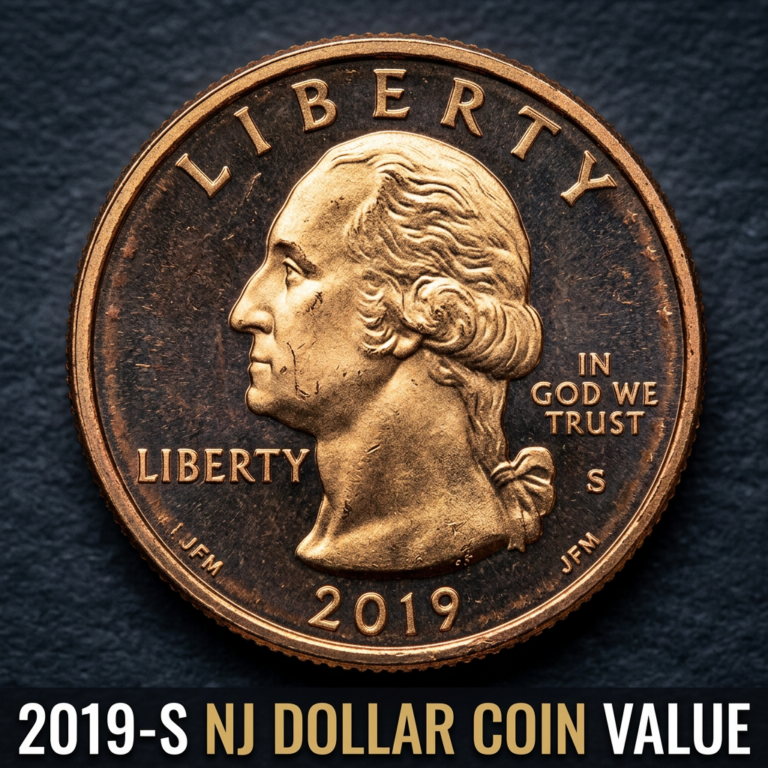
1932-D Washington Quarter Value: Is Your Rare Coin a Fortune?

Your Old Coin Could Be Valuable!
Identify It & Know Its Real Value — Free Download


The 1932-D Washington Quarter is worth anywhere from $150 in worn condition to over $35,000 in pristine mint state. As one of the two “King of Washington Quarters,” this specific coin from the Denver Mint is a true treasure for any casual collector or lucky treasure hunter.
| Condition | Approximate Market Value |
|---|---|
| Good (G-4) | $150 – $180 |
| Very Fine (VF-20) | $250 – $350 |
| Extremely Fine (EF-40) | $550 – $700 |
| About Uncirculated (AU-50) | $1,000 – $1,500 |
| Mint State (MS-60+) | $2,500 – $35,000+ |
Why the 1932-D Washington Quarter Is So Special
If you’ve recently inherited a coin collection or found a silver quarter that looks a bit older than the rest, you might be holding a “key date.” In the world of numismatics, a key date is a coin that is significantly harder to find due to low production numbers. The 1932-D Washington Quarter is the ultimate example of this. 1932 was the first year of the Washington Quarter series, intended to commemorate the 200th anniversary of George Washington’s birth.
While billions of quarters are made every year today, the Denver Mint only struck 436,800 of these coins in 1932. To put that in perspective, many modern quarters have mintages exceeding 500 million! Because it was the middle of the Great Depression, people weren’t saving coins; they were spending every cent to survive. This led to most 1932-D quarters being heavily circulated and worn down. Finding one in high quality is like finding a needle in a haystack.
To ensure you are correctly identifying this rarity among your loose change, you can use a top coin identifier and value app to get an instant digital appraisal. Using tools like CoinKnow helps everyday Americans avoid the mistake of spending a coin worth hundreds of dollars at the grocery store. It is always better to verify the mint mark before letting go of a silver coin from the 1930s.
Your Old Coin Could Be Valuable!
Identify It & Know Its Real Value — Free Download
How to Identify the Rare Denver Mint Mark
The most important step in determining the 1932-D Washington Quarter value is locating the mint mark. In 1932, the mint mark was placed on the reverse (the back) of the coin. Look at the bottom of the coin, directly below the center of the eagle’s perched wreath. You are looking for a small letter “D.” If you see a “D,” you have the rare Denver strike. If there is an “S,” it is also very valuable (the San Francisco mint). If there is no letter at all, it was minted in Philadelphia and is worth significantly less, though still valuable compared to a standard quarter.
Because these coins are so valuable, many counterfeits exist. Some scammers take a common 1932 Philadelphia quarter and “glue” a fake letter D onto the back. Professional collectors look for specific die marks and the quality of the “D” to ensure authenticity. If you are unsure about the legitimacy of your find, the CoinKnow app can help you zoom in on these fine details to compare your coin against genuine specimens.
Your Old Coin Could Be Valuable!
Identify It & Know Its Real Value — Free Download
It is also worth noting that all 1032 quarters are composed of 90% silver and 10% copper. Even in the worst possible condition—bent, scratched, or completely worn smooth—the silver content alone gives it a “melt value.” However, the 1932-D Washington Quarter value is almost always driven by its collector rarity rather than just its silver weight.
Grading Your 1932-D Quarter for Maximum Value
The difference between a $200 coin and a $20,000 coin often comes down to “grading.” Grading is the process of evaluating how much wear and tear a coin has suffered. For the 1932-D, even a tiny amount of detail on Washington’s hair or the eagle’s feathers can add hundreds of dollars to the price tag. Numismatists use a 70-point scale, where 1 is barely recognizable and 70 is a perfect, flawless coin.
For a 1932-D, most coins found by the public will fall into the “Good” to “Fine” categories. In “Good” condition, the eagle on the back is visible but lacks feather detail, and Washington’s rim is mostly flat. In “Extremely Fine,” the feathers on the eagle’s breast are starting to show clearly, and the lines in Washington’s hair are distinct. High-end collectors are specifically looking for “Mint State” (MS) coins, which look exactly as they did the day they left the Denver Mint.
Your Old Coin Could Be Valuable!
Identify It & Know Its Real Value — Free Download
The 1932-D Washington Quarter MS auction prices prove just how much condition matters. An MS-65 grade coin can sell for tens of thousands of dollars because only a handful are known to exist in that condition. Understanding the fair market value of a 1932 quarter is essential before selling to a dealer or listing it on an auction site.
| Grade Label | Key Visual Characteristics | Estimated Price |
|---|---|---|
| Good (G) | Heavy wear, rims are flat, letters faint. | $150+ |
| Fine (F) | Moderate wear, eagle’s wings show lines. | $210+ |
| Extremely Fine (XF) | Light wear on high points only. | $600+ |
| Mint State (MS-63) | No wear, original mint luster remains. | $5,000+ |
Comparing the 1932-D, 1932-S, and 1932-P
Not all 1932 quarters are created equal. While 1932 was the first year of the series and makes any quarter from that year interesting, the mint mark determines if you have a “nice” coin or a “life-changing” coin. The Denver (D) and San Francisco (S) mints produced the lowest numbers. The Philadelphia mint (no mint mark) produced over 5 million coins, which was still low for the time, but much higher than the others.
The 1932-D is generally considered the “king” because it is rarer in uncirculated grades than the 1932-S. If you find a 1932-P (Plain), it might be worth $10 to $40 in average condition. While that is still 40 to 160 times its face value, it pales in comparison to the 1932-D value. This is why checking for that small letter “D” is the first thing any coin hunter does.
Your Old Coin Could Be Valuable!
Identify It & Know Its Real Value — Free Download
If you have a collection of silver quarters, utilizing an app like CoinKnow allows you to quickly scan through them. The AI recognition can distinguish between the different mint marks and dates, saving you the eye strain of using a magnifying glass on dozens of coins. It’s a great way to filter out the common silver quarters to find the high-value rarities like the 1932-D.
| Mint Mark | Mintage Quantity | Rarity Level |
|---|---|---|
| 1932 (P) – Philadelphia | 5,404,000 | Common (relatively) |
| 1932-S – San Francisco | 408,000 | Very Rare |
| 1932-D – Denver | 436,800 | Key Date / Extremely Rare |
Beware of Altered and Counterfeit Quarters
Because the 1932-D is one of the most counterfeited coins in American history, you must be extremely careful when buying or selling one. High-quality fakes have been circulating for decades. Some are “added mint mark” coins where a ‘D’ is taken from a common later year and soldered onto a 1932 Philadelphia quarter. Others are complete cast fakes made from base metals that are simply silver-plated.
Authentic 1932-D coins have a specific “mint mark style.” The ‘D’ should look slightly rectangular and be positioned precisely. If the mint mark looks crooked or has a “seam” around its base, it’s likely a fake. Genuine coins will also weigh exactly 6.25 grams (when new). If your coin weighs significantly less, it is either heavily worn or made of the wrong metal.
Professional certification is the only way to be 100% sure. Companies like PCGS or NGC will examine the coin under microscopes and seal it in a plastic “slab” that guarantees its grade and authenticity. Before you spend money on professional grading, using the CoinKnow app can give you a preliminary opinion. This can help you decide if your coin is worth the $50-$100 fee that professional grading services typically charge.
Your Old Coin Could Be Valuable!
Identify It & Know Its Real Value — Free Download
Tips for Selling Your 1932-D Washington Quarter
If you are certain you have a genuine 1932-D, don’t rush to the nearest pawn shop. Pawn shops usually pay much less than market value because they need to turn a quick profit. Instead, consider specialized coin dealers or major auction houses if the coin is in Mint State. For coins in “Good” or “Fine” condition, online platforms like eBay can be effective, but you should look at “Sold” listings to see what people are actually paying.
Always photograph your coin in high resolution under natural light. Avoid using a flash, as it can hide the wear or create fake “shine” that misleads buyers. Honesty about the coin’s condition will prevent returns and disputes. If your coin is worth more than $500, it is almost always better to have it professionally graded first. A “slabbed” coin sells much faster and for a higher price than a “raw” coin because the buyer has peace of mind.
Lastly, remember that the market for rare coins fluctuates. While the 1932-D Washington Quarter value has remained remarkably stable over the years due to its status as a key date, prices can change based on the price of silver and the number of active collectors. Keeping an eye on recent sales and using a reliable price guide will ensure you get a fair deal for your piece of American history.
FAQ
Q: Why is the 1932-D quarter so much more expensive than other years?
A: It is expensive because of its extremely low mintage (only 436,800 made) and the fact that few were saved in high-grade condition during the Great Depression. It is a “key date” that every collector needs to finish a Washington Quarter set.
Your Old Coin Could Be Valuable!
Identify It & Know Its Real Value — Free Download
Q: Can I find a 1932-D quarter in my pocket change today?
A: While it is theoretically possible, it is extremely unlikely. Most silver quarters were pulled from circulation in the mid-1960s when the U.S. switched to copper-nickel “sandwich” coins. However, people sometimes accidentally spend old collections, so it’s always worth checking your change!
Q: Does cleaning the coin increase its value?
A: No! Never clean your coins. Cleaning a rare coin with chemicals or cloth creates tiny scratches that ruin its numismatic value. A dirty, original 1932-D is worth much more than one that has been polished.
Q: What is the highest price ever paid for a 1932-D Washington Quarter?
A: In high Mint State grades (MS-66), these coins have sold for over $100,000 at major auctions. For most people, however, a nice uncirculated version will bring in between $3,000 and $10,000.