1936 Wheat Penny Value No Mint Mark What It’s Worth Today

Your Old Coin Could Be Valuable!
Identify It & Know Its Real Value — Free Download


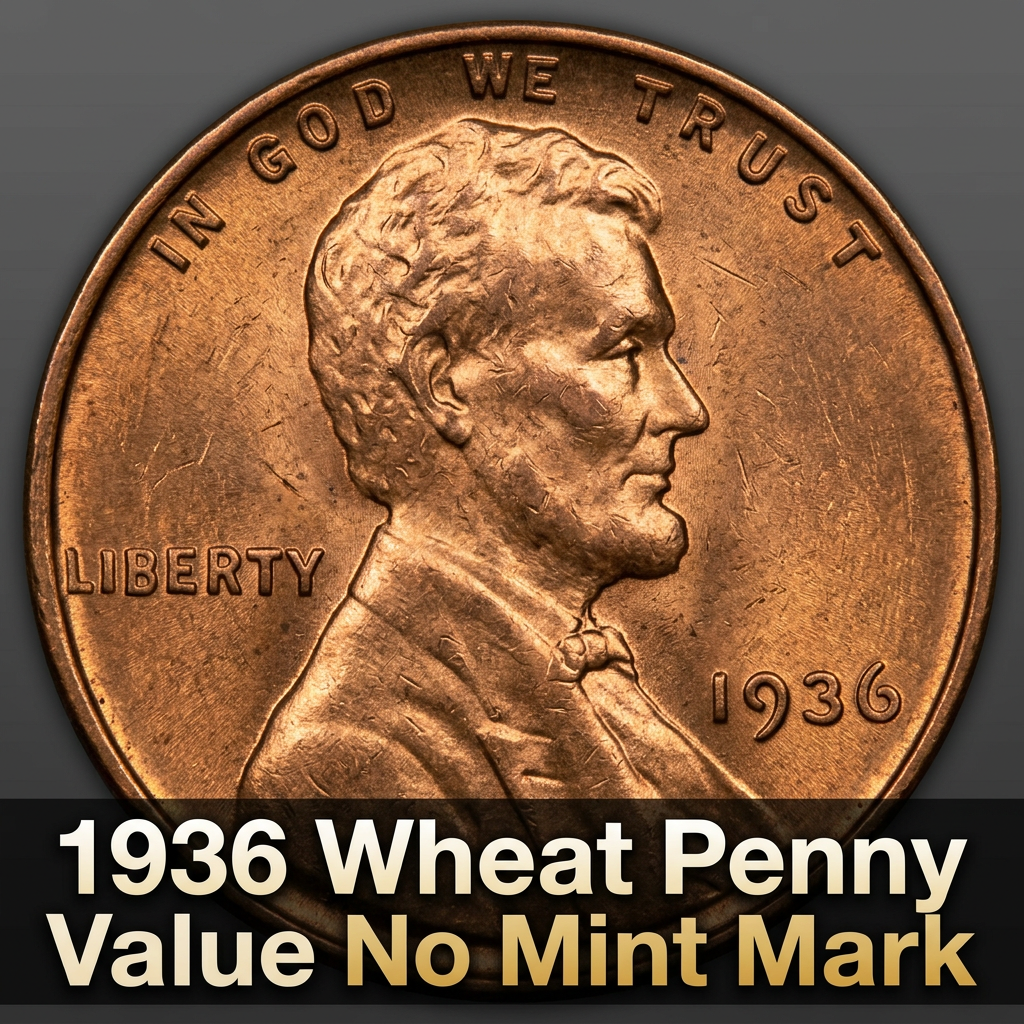
The 1936 Wheat Penny with no mint mark is worth anywhere from $0.10 in heavily worn condition to over $10 in average circulated grades — and top mint state examples can fetch $50 or more at auction. If you’ve found one of these little copper coins tucked away in a jar or old drawer, you’re in the right place to find out exactly what it’s worth.
What Is the 1936 Wheat Penny No Mint Mark?
The 1936 Lincoln Wheat Penny without a mint mark was struck at the Philadelphia Mint, which was the main U.S. coin production facility and did not use a mint mark during this era. In 1936 alone, Philadelphia produced over 309 million of these cents, making them one of the more common dates in the Lincoln Wheat series.
That said, “common” doesn’t always mean “worthless.” Condition is everything when it comes to coin collecting, and a 1936 no mint mark penny in crisp, uncirculated condition can still turn heads among collectors.
If you’re not sure how to grade your coin or want a quick value estimate on the go, using a coin identifier and value app can help you figure out what you’ve got in just a few seconds. Tools like CoinKnow are especially handy for everyday folks who don’t have a coin dealer nearby.
Your Old Coin Could Be Valuable!
Identify It & Know Its Real Value — Free Download
How Much Is a 1936 Wheat Penny Worth by Grade?
The value of a 1936 Wheat Penny no mint mark depends almost entirely on its grade — which is just a fancy word for condition. Coins are graded on a scale from Poor (P-1) all the way up to Perfect Mint State (MS-70).
Your Old Coin Could Be Valuable!
Identify It & Know Its Real Value — Free Download
Here’s a general value guide to help you understand where your coin might fall:
| Grade | Condition | Estimated Value |
|---|---|---|
| G-4 (Good) | Heavily worn, outline visible | $0.10 – $0.25 |
| VF-20 (Very Fine) | Moderate wear, details clear | $0.50 – $1.50 |
| EF-40 (Extremely Fine) | Light wear on high points | $2 – $4 |
| MS-63 (Mint State) | Uncirculated, minor blemishes | $8 – $15 |
| MS-65 (Gem Mint State) | Excellent luster, sharp strike | $25 – $60+ |
For a deeper breakdown of 1936 Wheat Penny MS-RD auction prices and certified coin values, you can explore recent sales data to see what real buyers are paying right now.
Your Old Coin Could Be Valuable!
Identify It & Know Its Real Value — Free Download
What Makes a 1936 No Mint Mark Penny More Valuable?
Beyond the standard grade, a few special factors can push the value of a 1936 Wheat Penny significantly higher. Color designation is one of the biggest. Mint state wheat pennies are categorized as Brown (BN), Red-Brown (RB), or Red (RD). A full Red example — meaning it still has 95% or more of its original copper luster — is worth considerably more than a brown one of the same grade.
Strike quality also matters. A coin struck with crisp, well-defined details in Lincoln’s hair and the wheat stalks on the reverse will always attract more collector interest than a weakly struck example.
Your Old Coin Could Be Valuable!
Identify It & Know Its Real Value — Free Download
Finally, look out for error coins. Some 1936 pennies have been found with doubled die features or off-center strikes, which can multiply their value several times over. If something looks “off” about your coin, it might actually be a good thing.
How to Check Your 1936 Wheat Penny Value at Home
You don’t need to be a professional numismatist to get a ballpark on your coin’s worth. Start by examining the coin under good lighting and a simple magnifying glass. Look for sharpness of detail, original color, and any scratches or cleaning marks — cleaned coins are worth much less to collectors.
Once you’ve done a basic visual check, you can look up detailed 1936 Penny value information including circulated and uncirculated grades to compare your coin against known price benchmarks.
Better yet, download CoinKnow on your phone. It’s a fast and easy way to identify coins, estimate values, and even track your collection — all from the palm of your hand. Whether you’re a total beginner or a casual collector, CoinKnow makes the whole process feel approachable and fun.
Your Old Coin Could Be Valuable!
Identify It & Know Its Real Value — Free Download
Is the 1936 Wheat Penny Worth Keeping?
For most people who find a 1936 Lincoln Wheat Penny in circulated condition, the monetary value will be modest — usually under a dollar or two. But that doesn’t mean you should toss it in a change jar and forget about it.
Wheat pennies are no longer made, and any coin that’s nearly 90 years old carries a certain historical charm. If yours happens to be uncirculated, red, or shows any unusual features, it could be worth a professional look. Local coin shows, certified dealers, and online auction platforms like eBay can all give you a realistic picture of what the market will bear.
At the very minimum, a 1936 no mint mark penny is a piece of American history worth hanging onto.
Your Old Coin Could Be Valuable!
Identify It & Know Its Real Value — Free Download
FAQ
Q: How do I know if my 1936 penny has no mint mark?
A: Look on the obverse (front) of the coin, just below the date. If there’s no letter there, it was made in Philadelphia — no mint mark needed. A “D” means Denver, and an “S” means San Francisco.
Q: Can a circulated 1936 Wheat Penny be worth more than face value?
A: Yes, almost always. Even a heavily worn example is worth at least 10 to 25 cents to collectors or dealers, and nicer circulated examples regularly sell for $1 to $4 or more.
Q: What’s the most valuable 1936 Lincoln Wheat Penny ever sold?
A: High-grade examples graded MS-67 Red by PCGS or NGC have sold for several hundred dollars at major coin auctions. The combination of perfect strike, full red color, and near-flawless surfaces makes these coins exceptional and rare even though the date itself is common.