1937 Walking Liberty Half Dollar Value Guide What Is This Coin Worth Today

Your Old Coin Could Be Valuable!
Identify It & Know Its Real Value — Free Download


The 1937 Walking Liberty Half Dollar is worth anywhere from $12 in heavily worn condition to well over $500 or more in high-grade mint state — and certified examples can climb even higher. If you found one of these beautiful coins in a drawer, a jar, or an old collection, you’re holding something genuinely special.
What Makes the 1937 Walking Liberty Half Dollar So Collectible
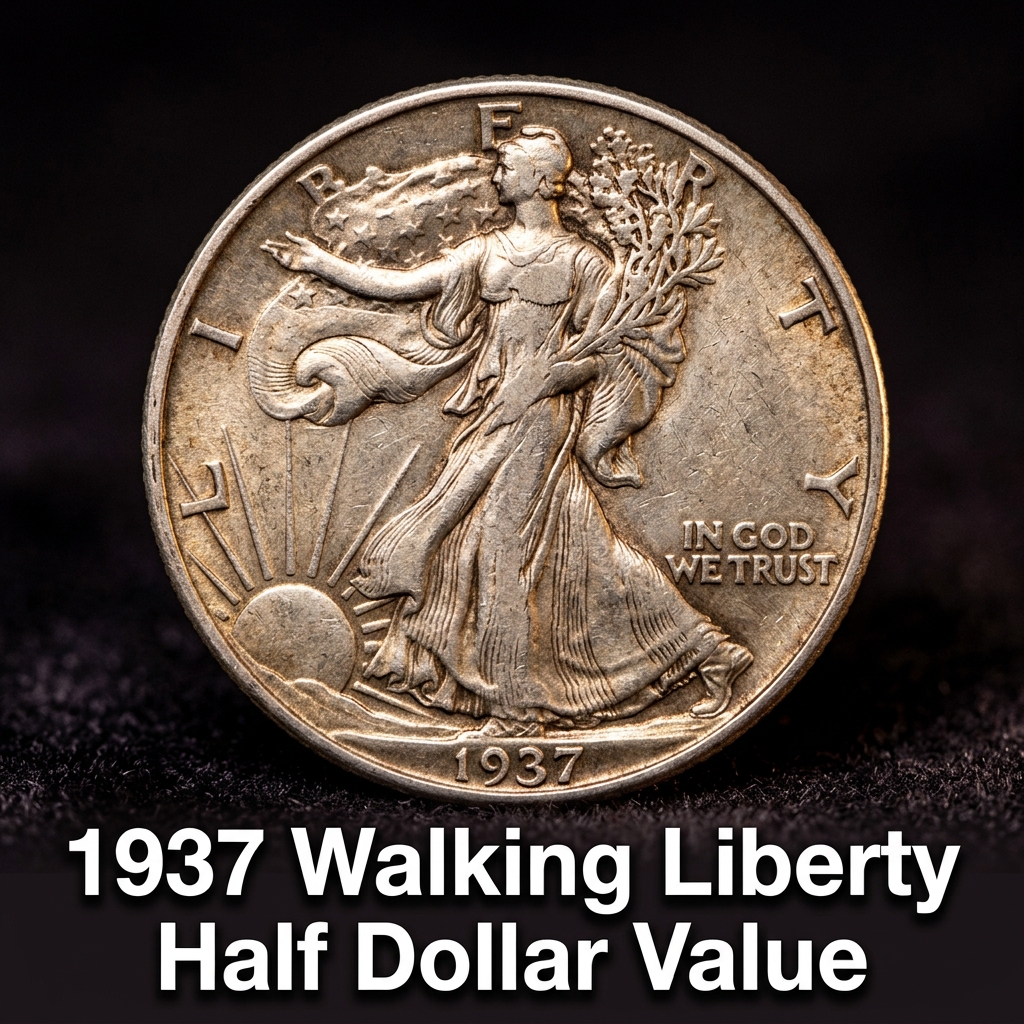
The Walking Liberty Half Dollar is widely considered one of the most beautiful coins ever struck by the U.S. Mint. Designed by Adolph A. Weinman, the obverse features Lady Liberty draped in the American flag, striding confidently toward the rising sun. The reverse shows a proud bald eagle perched on a mountain crag.
First introduced in 1916, the series ran through 1947, and the 1937 issue is a popular date among collectors. It was struck at three mint facilities: Philadelphia (no mint mark), Denver (D), and San Francisco (S).
If you want a quick way to identify your coin and check its current market value, a coin identifier and value app can save you a lot of time and guesswork right from your phone.
Your Old Coin Could Be Valuable!
Identify It & Know Its Real Value — Free Download
1937 Walking Liberty Half Dollar Value by Mint Mark and Grade
The value of your 1937 Walking Liberty Half Dollar depends heavily on two things: where it was minted and what condition it’s in. Coins with less wear are always worth more, and coins from certain mints are scarcer than others.
Here’s a quick breakdown of typical market values:
Your Old Coin Could Be Valuable!
Identify It & Know Its Real Value — Free Download
| Mint Mark | Good (G-4) | Fine (F-12) | Extremely Fine (EF-40) | MS-63 | MS-65 |
|---|---|---|---|---|---|
| 1937 (Philadelphia) | $12 | $15 | $22 | $75 | $250+ |
| 1937-D (Denver) | $12 | $16 | $28 | $100 | $400+ |
| 1937-S (San Francisco) | $12 | $16 | $30 | $120 | $550+ |
For the most up-to-date 1937 Walking Liberty Half Dollar MS grade price data, auction records and certified population reports can help you track the latest market movements.
How to Find the Mint Mark on Your 1937 Half Dollar
Locating the mint mark is simple once you know where to look. On 1937 issues, the mint mark appears on the reverse of the coin, just below the “IN GOD WE TRUST” motto near the eagle’s tail feathers and pine branch.
A “D” means Denver, an “S” means San Francisco, and no letter at all means it came from Philadelphia.
Your Old Coin Could Be Valuable!
Identify It & Know Its Real Value — Free Download
The San Francisco coins from 1937 are slightly scarcer in higher grades, which is why they command a premium in mint state. Even so, all three issues had relatively healthy mintages — Philadelphia struck about 9.5 million pieces, Denver around 1.7 million, and San Francisco roughly 2.1 million.
Condition is everything. A coin that looks shiny and sharp under magnification is worth far more than a well-circulated piece. CoinKnow is a great tool for helping you understand where your coin falls on the grading scale.
Silver Content and Melt Value
One thing every owner of a 1937 Walking Liberty Half Dollar should know: these coins are made of 90% silver. Each coin contains approximately 0.3617 troy ounces of pure silver.
Your Old Coin Could Be Valuable!
Identify It & Know Its Real Value — Free Download
That means even a heavily worn example has real silver melt value backing it up. With silver prices fluctuating around $28–$30 per troy ounce in recent times, the base melt value of any 1937 half dollar hovers around $10 to $11 or more depending on the spot price.
Collectible value almost always exceeds melt value for problem-free coins, but it’s reassuring to know there’s a silver floor underneath. You can check a full breakdown of 1937 half dollar value including silver content and grade-based pricing to understand exactly what your coin is worth today.
Tips for Getting the Best Price for Your Coin
If you’re thinking about selling, a few simple steps can make a big difference in what you receive.
First, don’t clean the coin. It’s one of the most common mistakes people make. Cleaning removes original surfaces and dramatically lowers collector value — even if the coin looks shinier afterward. Leave it exactly as you found it.
Your Old Coin Could Be Valuable!
Identify It & Know Its Real Value — Free Download
Second, consider having high-grade coins professionally certified by PCGS or NGC. A certified MS-64 or MS-65 coin will fetch a much higher price at auction or from a dealer than a raw, ungraded example.
Third, use CoinKnow to scan your coin, get an instant estimate, and compare it against recent sales before you commit to any offer. Knowledge is leverage when it comes to selling.
Finally, shop around. Coin shows, reputable online dealers, and major auction houses like Heritage Auctions or Stack’s Bowers are all solid options depending on the grade and value of your coin.
—
Your Old Coin Could Be Valuable!
Identify It & Know Its Real Value — Free Download
Frequently Asked Questions
Q: How do I know if my 1937 Walking Liberty Half Dollar is worth getting graded?
A: Generally, if your coin appears to be in uncirculated or nearly uncirculated condition — meaning the high points show little to no wear — professional grading is worth the cost. Coins grading MS-63 and above can be worth hundreds of dollars, making the $30–$50 grading fee a smart investment.
Q: Is a 1937-D Walking Liberty Half Dollar rare?
A: The 1937-D is not rare in circulated grades, but in higher mint state grades (MS-65 and above) it becomes noticeably scarcer and more valuable than the Philadelphia issue. It’s a desirable coin for collectors building a complete Walking Liberty set.
Q: Can I use an app to identify and value my 1937 half dollar?
A: Absolutely. CoinKnow and similar coin apps let you photograph your coin and get an instant identification and estimated value. It’s a convenient starting point before consulting a professional dealer or submitting for grading.