1960-D Washington Quarter Value How Much Is It Worth Today

Your Old Coin Could Be Valuable!
Identify It & Know Its Real Value — Free Download


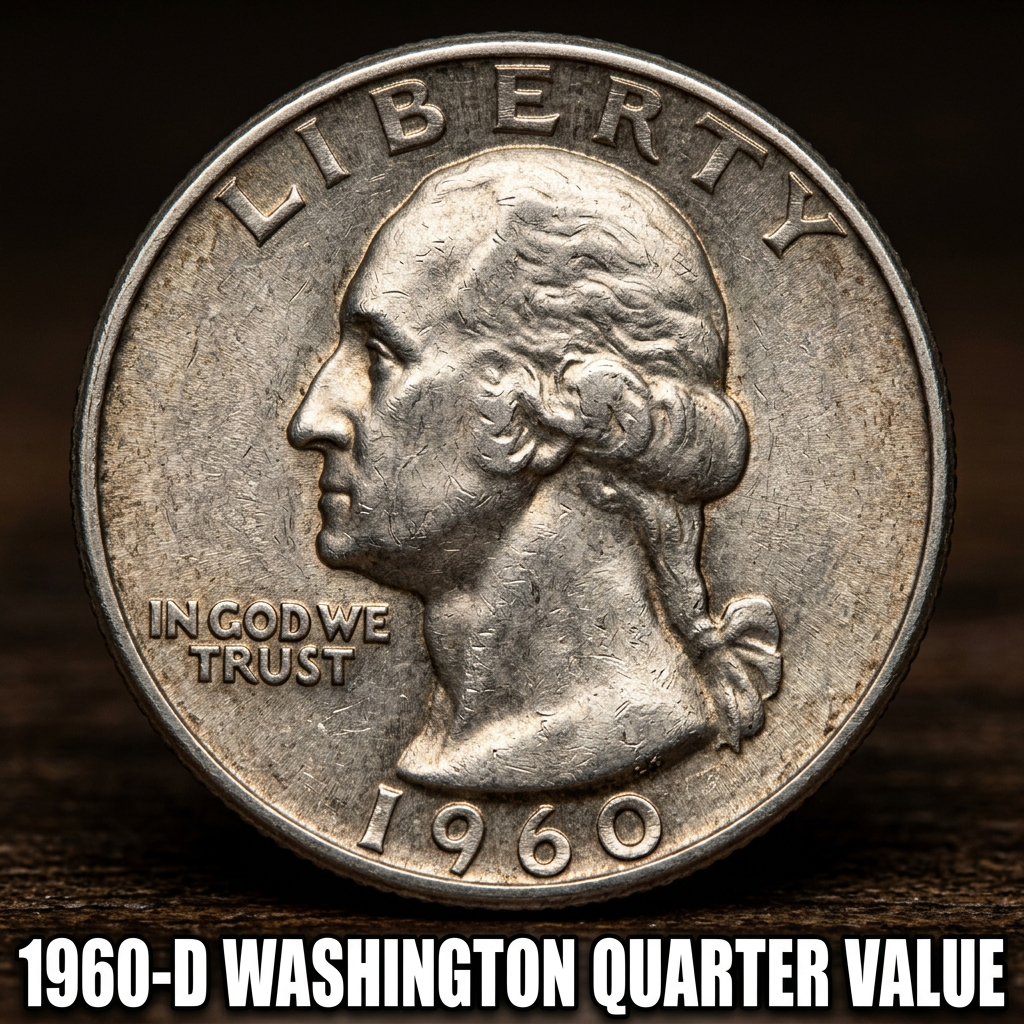
The 1960-D Washington Quarter is worth anywhere from $6 in heavily circulated condition to over $100 or more in pristine mint state grades. If you stumbled across one of these coins in an old jar or inherited collection, you’re in the right place — let’s break down exactly what it’s worth and what makes it special.
What Is the 1960-D Washington Quarter?
The 1960-D Washington Quarter was struck at the Denver Mint, indicated by the small “D” mintmark found on the reverse of the coin, just to the right of the bow in the eagle’s ribbon. That year, the Denver facility produced over 63 million of these quarters, making them relatively common in circulation.
Despite the high mintage, well-preserved examples are harder to find than you might expect. Most of these coins passed through millions of hands over the decades, picking up wear and losing their original luster along the way.
The coin is composed of 90% silver and 10% copper — which means even a worn example carries some melt value based on the current silver spot price. That alone makes the 1960-D worth more than its face value of 25 cents.
Your Old Coin Could Be Valuable!
Identify It & Know Its Real Value — Free Download
If you’re not sure what you have, a coin identifier and value app can help you scan and identify your coin in seconds using your smartphone camera. Tools like these take the guesswork out of the process, especially if you’re new to coin collecting.
How Much Silver Is in a 1960-D Washington Quarter?
Each 1960-D Washington Quarter contains approximately 0.1808 troy ounces of pure silver. This is the same silver content found in all Washington quarters minted from 1932 through 1964, before the U.S. transitioned to clad coinage in 1965.
Your Old Coin Could Be Valuable!
Identify It & Know Its Real Value — Free Download
When silver trades around $28–$30 per troy ounce, the base silver melt value of a 1960-D quarter comes out to roughly $5.00–$5.40. That’s your absolute floor — even a heavily worn coin with little numismatic appeal still retains this intrinsic value.
Collectors and dealers always factor in silver value first, then add a premium based on the coin’s condition and eye appeal. So understanding the silver content is your starting point when evaluating any pre-1965 Washington quarter.
Your Old Coin Could Be Valuable!
Identify It & Know Its Real Value — Free Download
1960-D Washington Quarter Value by Grade
Coin values vary significantly depending on condition. Here’s a quick reference chart to give you a clear picture:
| Grade | Description | Estimated Value |
|---|---|---|
| Good (G-4) | Heavy wear, design visible | $5 – $6 |
| Very Fine (VF-20) | Moderate wear, clear details | $7 – $9 |
| Extremely Fine (EF-40) | Light wear on high points | $9 – $12 |
| About Uncirculated (AU-55) | Slight friction, near full luster | $13 – $18 |
| Mint State (MS-63) | Uncirculated, minor marks | $25 – $40 |
| Mint State (MS-65) | Gem uncirculated, strong luster | $75 – $120+ |
For a deeper look at certified auction results and up-to-date 1960-D Washington Quarter price data by MS grade, checking a dedicated numismatic price database is always a smart move.
What Makes a 1960-D Quarter More Valuable?
Not all 1960-D quarters are created equal. While most are common coins, certain characteristics can push the value significantly higher.
Your Old Coin Could Be Valuable!
Identify It & Know Its Real Value — Free Download
Strike quality matters a lot. A coin struck with sharp, full details — especially in Washington’s hair above the ear and the eagle’s breast feathers — commands a premium over a weakly struck example.
Original luster and toning can also add value. Some collectors actively seek coins with attractive original rainbow toning, which develops naturally over decades when a coin is stored in certain environments. Artificial toning, however, is frowned upon and can actually hurt a coin’s value.
Eye appeal is sometimes subjective but very real in the marketplace. Two coins graded MS-63 can sell for very different prices depending on their visual presentation. CoinKnow is a great resource for understanding these nuances — the app helps everyday collectors evaluate their coins more accurately before buying or selling.
Where to Sell Your 1960-D Washington Quarter
If you’ve decided you want to sell, you have several solid options. Online marketplaces like eBay allow you to reach the widest audience, while local coin dealers offer quick and convenient cash transactions.
Your Old Coin Could Be Valuable!
Identify It & Know Its Real Value — Free Download
For coins in higher mint state grades (MS-65 and above), professional grading through PCGS or NGC can dramatically increase buyer confidence and resale value. The cost of grading is usually worth it for coins valued above $75.
You can also use CoinKnow to research comparable sales before walking into a dealer’s shop. Having that data on hand puts you in a much stronger negotiating position.
For a full breakdown of 1960 Washington Quarter values across all mint marks and conditions, dedicated coin value resources can give you the clearest picture before you make any decisions.
—
Your Old Coin Could Be Valuable!
Identify It & Know Its Real Value — Free Download
Frequently Asked Questions
Q: Is the 1960-D Washington Quarter made of silver?
A: Yes. The 1960-D Washington Quarter is composed of 90% silver and 10% copper. It contains approximately 0.1808 troy ounces of pure silver, giving it a base melt value tied directly to the current silver spot price.
Q: How do I tell if my 1960 quarter is from Denver or Philadelphia?
A: Look at the reverse side of the coin. If you see a small “D” mintmark to the right of the ribbon below the eagle, it was minted in Denver. No mintmark means it came from the Philadelphia Mint, which did not use a “P” mintmark on quarters until 1980.
Q: Is a 1960-D Washington Quarter worth getting professionally graded?
A: Generally, professional grading makes the most financial sense if your coin appears to be in uncirculated condition — especially MS-64 or higher. For circulated examples, the grading fee may outweigh the added value. Use CoinKnow or an online value guide to estimate your coin’s grade before deciding whether to submit it.