1976-S Clad Type 1 Eisenhower Dollar Value and What Collectors Are Paying Today

Your Old Coin Could Be Valuable!
Identify It & Know Its Real Value — Free Download


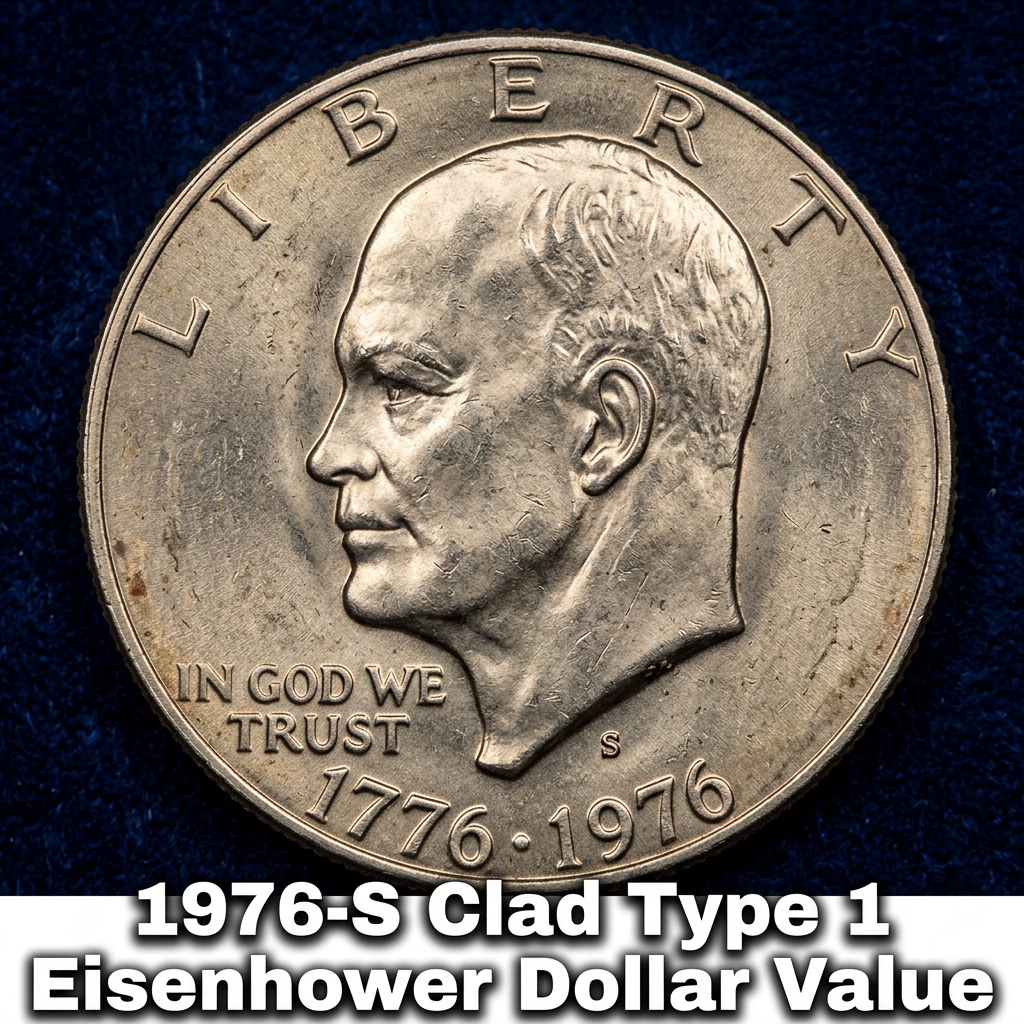
The 1976-S Clad Type 1 Eisenhower Dollar is worth anywhere from $1.50 in circulated condition to over $15 or more in pristine mint state — and certain high-grade examples have sold for significantly higher at auction. If you found one of these coins tucked away in a drawer or old collection, you’re in the right place to learn exactly what it’s worth.
Getting started is easier than ever. Using a coin identifier and value app on your phone can help you quickly scan and identify your coin before diving deeper into its value.
What Is the 1976-S Clad Type 1 Eisenhower Dollar?
The 1976-S Eisenhower Dollar was minted at the San Francisco Mint and is part of the special Bicentennial series, celebrating America’s 200th birthday. The obverse features Eisenhower’s portrait, while the reverse displays the Liberty Bell with the Moon — a design created by Dennis R. Williams. The “S” mintmark means it was struck in San Francisco.
The “Type 1” distinction refers to the reverse design detail. On Type 1 coins, the lettering on the reverse is noticeably bolder and thicker compared to the later Type 2 version. This subtle difference actually matters quite a bit to collectors, especially for high-grade specimens.
Your Old Coin Could Be Valuable!
Identify It & Know Its Real Value — Free Download
These coins were struck in a clad composition — a copper core sandwiched between two layers of 40% nickel-clad copper — rather than silver. The San Francisco Mint also produced a 40% silver proof version separately, so it’s important to know which one you have before assessing value.
1976-S Clad Type 1 Eisenhower Dollar Value by Grade
The grade of your coin is the single biggest factor in its value. Circulated coins that show heavy wear are generally worth face value or slightly above it, while coins in mint state condition command a real premium.
Your Old Coin Could Be Valuable!
Identify It & Know Its Real Value — Free Download
Here’s a general value guide based on condition:
| Grade | Condition Description | Estimated Value |
|---|---|---|
| Good (G-4) | Heavy wear, major features visible | $1.50 – $2.00 |
| Fine (F-12) | Moderate wear, details clearer | $2.00 – $3.00 |
| Extremely Fine (EF-40) | Light wear on high points | $3.00 – $5.00 |
| Mint State (MS-63) | Uncirculated, minor contact marks | $8.00 – $12.00 |
| Mint State (MS-65) | Gem uncirculated, sharp strike | $15.00 – $25.00+ |
For the most up-to-date auction results and certified coin sales, you can check out recent market prices for the 1976-S Type 1 Eisenhower Dollar in mint state grades — this gives you a real-time picture of what buyers are actually paying.
Your Old Coin Could Be Valuable!
Identify It & Know Its Real Value — Free Download
How Rarity and Demand Affect the Price
The 1976-S Clad Type 1 Eisenhower Dollar was produced in fairly large numbers, which keeps values moderate for average-grade examples. However, finding a well-struck, fully lustrous gem-quality specimen is harder than you’d think. Many of these coins were casually stored and developed bag marks or light surface abrasions over the decades.
Collector demand for high-grade Bicentennial coinage has grown steadily in recent years, particularly as more Americans rediscover coins from the 1970s. The Bicentennial design is iconic and emotionally resonant for many people who were alive in 1976, adding a sentimental premium.
CoinKnow is a great resource if you want instant help identifying whether your coin is Type 1 or Type 2 — a distinction that can actually change the value in higher grades. The app makes it easy for beginners and experienced collectors alike.
Your Old Coin Could Be Valuable!
Identify It & Know Its Real Value — Free Download
Tips for Getting the Most From Your 1976-S Eisenhower Dollar
Before you do anything, resist the urge to clean your coin. Cleaning destroys the original surface luster and can reduce value by 50% or more — even for common coins like this one. Collectors and dealers strongly prefer original, uncleaned surfaces.
If your coin appears to be in uncirculated or near-perfect condition, consider having it professionally graded by PCGS or NGC. A graded and slabbed MS-65 example is far more marketable and commands a better price than a raw coin.
You can also explore a full breakdown of Bicentennial dollar values including the 1776–1976 series to see how your specific coin compares to other Bicentennial issues. Understanding the broader series helps you assess whether your coin is common or a standout example.
CoinKnow also lets you track coin values over time, so you’ll know the best moment to sell or hold onto your piece.
Your Old Coin Could Be Valuable!
Identify It & Know Its Real Value — Free Download
Where to Sell Your 1976-S Clad Type 1 Eisenhower Dollar
If you decide to sell, you have several good options. Online marketplaces like eBay let you reach the widest audience of collectors, especially for higher-grade examples. Local coin shops are convenient for a quick, in-person offer, though you may get slightly less than retail.
For certified coins in MS-65 or above, auction houses that specialize in coins — like Heritage Auctions or Stack’s Bowers — can help you get true market value. For everyday examples, eBay’s completed sales are your best benchmark for setting a realistic asking price.
CoinKnow can help you compare all your options and give you a ballpark value before you walk into any shop or list anything online.
—
Your Old Coin Could Be Valuable!
Identify It & Know Its Real Value — Free Download
FAQ
Q: How do I tell if my 1976-S Eisenhower Dollar is Type 1 or Type 2?
A: Look at the lettering on the reverse of the coin. Type 1 has thicker, bolder lettering, while Type 2 features thinner, more delicate lettering. A magnifying glass helps, and apps like CoinKnow can assist with the identification visually.
Q: Is the 1976-S Clad Eisenhower Dollar made of silver?
A: No. The clad version is made of a copper-nickel composition and contains no silver. The San Francisco Mint did produce a 40% silver collector version in 1976, but that coin is sold differently and carries a higher value.
Q: Is it worth getting my 1976-S Type 1 Eisenhower Dollar graded?
A: It depends on the condition. For circulated coins in Good to Fine grades, professional grading fees usually outweigh the value gained. But if your coin appears uncirculated and well-struck — especially in the MS-65 range or above — grading by PCGS or NGC can meaningfully increase its marketability and selling price.