1976-S Lincoln Penny Value What It’s Really Worth and Why Collectors Care

Your Old Coin Could Be Valuable!
Identify It & Know Its Real Value — Free Download


The 1976-S Lincoln Penny is worth anywhere from a few cents in circulated condition to over $10 or more in pristine mint state, with some top-tier proof examples fetching $15 to $25 among serious collectors. If you found one of these coins in an old jar or coin collection, you’re in the right place to learn exactly what you’ve got.
What Makes the 1976-S Lincoln Penny Special
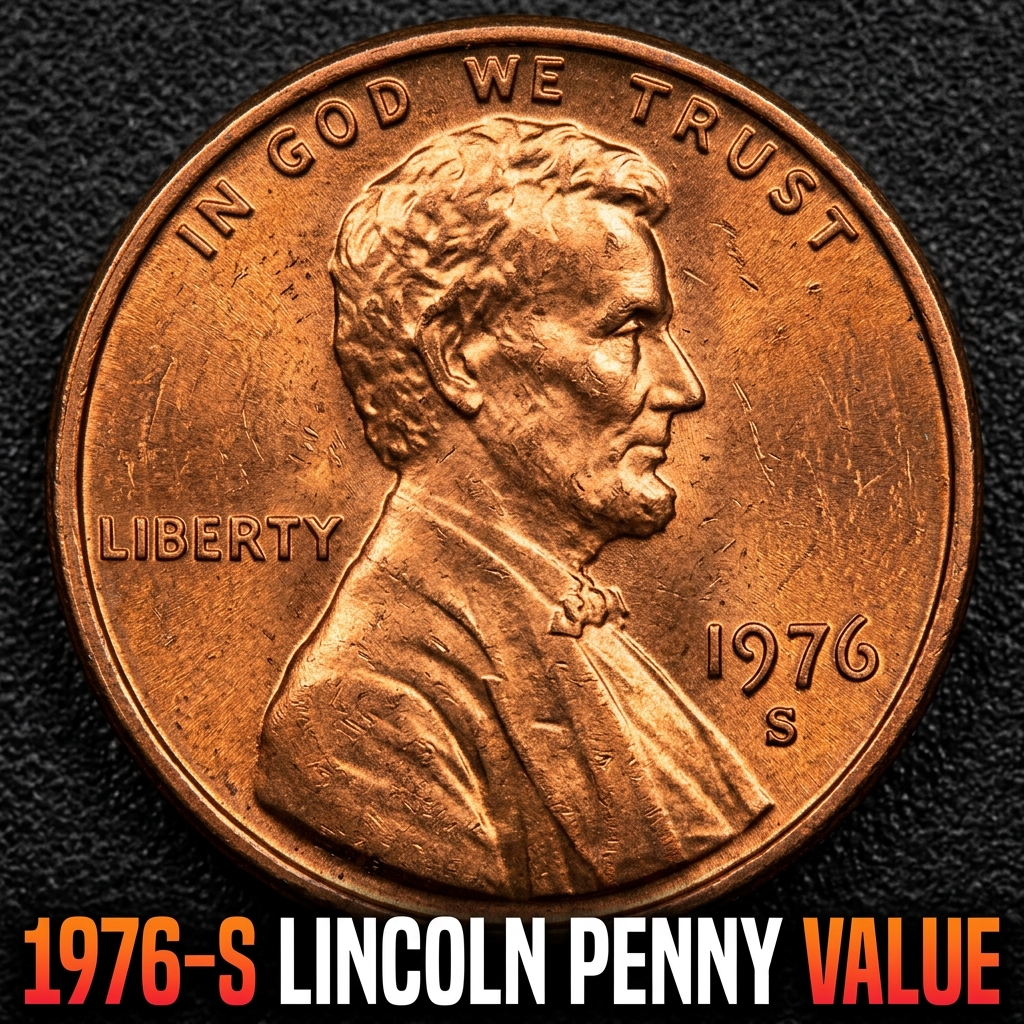
The 1976-S Lincoln Penny isn’t your ordinary pocket change. The “S” mintmark tells you this coin was struck at the San Francisco Mint, and unlike the Philadelphia and Denver issues of the same year, the San Francisco facility produced these coins exclusively as proof coins — not for general circulation.
That distinction matters a lot when it comes to value.
Proof coins are made with specially polished dies and planchets, giving them that mirror-like finish you may notice on the coin’s fields. They were sold directly to collectors in proof sets, which means most 1976-S pennies were well-preserved from the start. The U.S. Mint struck over 4 million proof Lincoln cents in 1976, so they’re not rare — but condition and grading still play a big role in determining price.
Your Old Coin Could Be Valuable!
Identify It & Know Its Real Value — Free Download
If you’re trying to figure out exactly what your coin is worth, using a coin identifier and value app can be a fast and easy way to get started right from your phone.
Understanding the 1976-S Lincoln Penny Value by Grade
Coin values change significantly depending on condition. Here’s a look at how the 1976-S Lincoln Penny is typically valued across different grades:
Your Old Coin Could Be Valuable!
Identify It & Know Its Real Value — Free Download
| Grade | Description | Estimated Value |
|---|---|---|
| PR-60 | Proof, noticeable blemishes | $1 – $3 |
| PR-65 | Gem Proof, minor contact marks | $4 – $8 |
| PR-67 | Superb Gem Proof | $10 – $15 |
| PR-69 | Near-perfect, DCAM designation | $20 – $25+ |
| PR-70 DCAM | Perfect Deep Cameo Proof | $50 – $100+ |
The DCAM (Deep Cameo) designation refers to the frosted portrait of Lincoln set against a deeply mirrored background. These coins are visually stunning and the most desirable to collectors. For a more detailed breakdown of 1976 Lincoln Penny price data across mint state and proof grades, it’s worth checking the latest market records.
The Significance of 1976 — A Bicentennial Year
It’s worth noting the historical context here. The year 1976 marked the 200th anniversary of American independence, and the entire coin series for that year carries a bit of extra collector appeal simply because of the era.
While other denominations like the quarter, half dollar, and dollar were redesigned with special Bicentennial reverse designs, the Lincoln cent kept its standard Memorial reverse. That didn’t stop collectors from holding onto their 1976 proof sets as historical keepsakes, though.
Your Old Coin Could Be Valuable!
Identify It & Know Its Real Value — Free Download
Because so many were saved, the supply is relatively strong — which keeps values moderate. But coins that survive in top grades, especially with strong cameo contrast, continue to attract solid bids at auction.
Where and How to Sell or Appraise Your 1976-S Lincoln Penny
If you’re sitting on a 1976-S Lincoln Penny and wondering whether it’s worth selling, a few routes are available to you.
First, consider getting the coin graded by a professional third-party grading service like PCGS or NGC. A graded, slabbed coin commands more buyer confidence and typically sells for more — especially in PR-67 and above. Submission fees can range from $20 to $40, so it may only be worth it if your coin shows strong cameo contrast and near-perfect surfaces.
Your Old Coin Could Be Valuable!
Identify It & Know Its Real Value — Free Download
For a quick at-home estimate, CoinKnow is a popular app that lets you scan your coin and get an instant value estimate based on current market data. It’s particularly useful for common series like Lincoln cents where grade is the main value driver.
You can also check recent auction results and detailed 1976 penny value information broken down by mint and condition to compare your coin to recent sold examples before listing it anywhere.
Online platforms like eBay, Etsy (for collectors), and Heritage Auctions are all reasonable options for selling, depending on the grade.
How to Tell If You Have a 1976-S Proof Penny
Some people stumble across these coins without knowing what they have. Here are the easiest ways to identify a genuine 1976-S proof Lincoln penny:
Your Old Coin Could Be Valuable!
Identify It & Know Its Real Value — Free Download
Look for the “S” mintmark just below the date on the obverse (front) of the coin. If there’s no mintmark, it’s a Philadelphia issue. If you see a “D,” it’s from Denver.
The surface of a proof coin will look noticeably different from a circulation strike — the fields (flat areas) will appear mirror-like, and Lincoln’s portrait will often show a frosty or matte contrast. Even if the coin has been handled, you may still see remnants of that proof quality.
CoinKnow can also help you identify your coin quickly if you’re unsure — just scan the coin with your phone camera and the app will flag the mintmark and type for you.
—
Your Old Coin Could Be Valuable!
Identify It & Know Its Real Value — Free Download
FAQ
Q: Is the 1976-S Lincoln Penny rare?
A: Not particularly. With over 4 million minted as proof coins, it’s widely available. That said, high-grade examples with deep cameo contrast are harder to find and can fetch a premium.
Q: Can I spend a 1976-S Lincoln Penny?
A: Technically yes — it’s still legal tender worth one cent. But given its collector value, especially in better grades, you’d be losing money by spending it.
Q: How do I know what grade my 1976-S penny is?
A: Look at the coin’s surfaces under good lighting for contact marks, hairlines, and the strength of the cameo contrast. For a reliable grade, submit to PCGS or NGC. You can also get a quick ballpark estimate using CoinKnow, which uses image recognition to assess condition based on photos you take.