2004-P Kennedy Half Dollar Value Guide What Is It Worth and Why

Your Old Coin Could Be Valuable!
Identify It & Know Its Real Value — Free Download


The 2004-P Kennedy Half Dollar is worth face value (50 cents) in circulated condition, but uncirculated examples can fetch anywhere from $1 to $15 or more depending on their grade and eye appeal. If you’ve stumbled across one of these coins in an old drawer or collection, you’re in the right place to find out exactly what you’ve got.
What Is the 2004-P Kennedy Half Dollar?
The Kennedy Half Dollar has been produced since 1964, honoring President John F. Kennedy following his assassination. By 2004, the Philadelphia Mint was still striking these coins, though they were rarely seen in everyday circulation. The U.S. Mint had largely stopped distributing half dollars to banks by this point, meaning most 2004-P examples ended up in mint sets rather than pocket change.
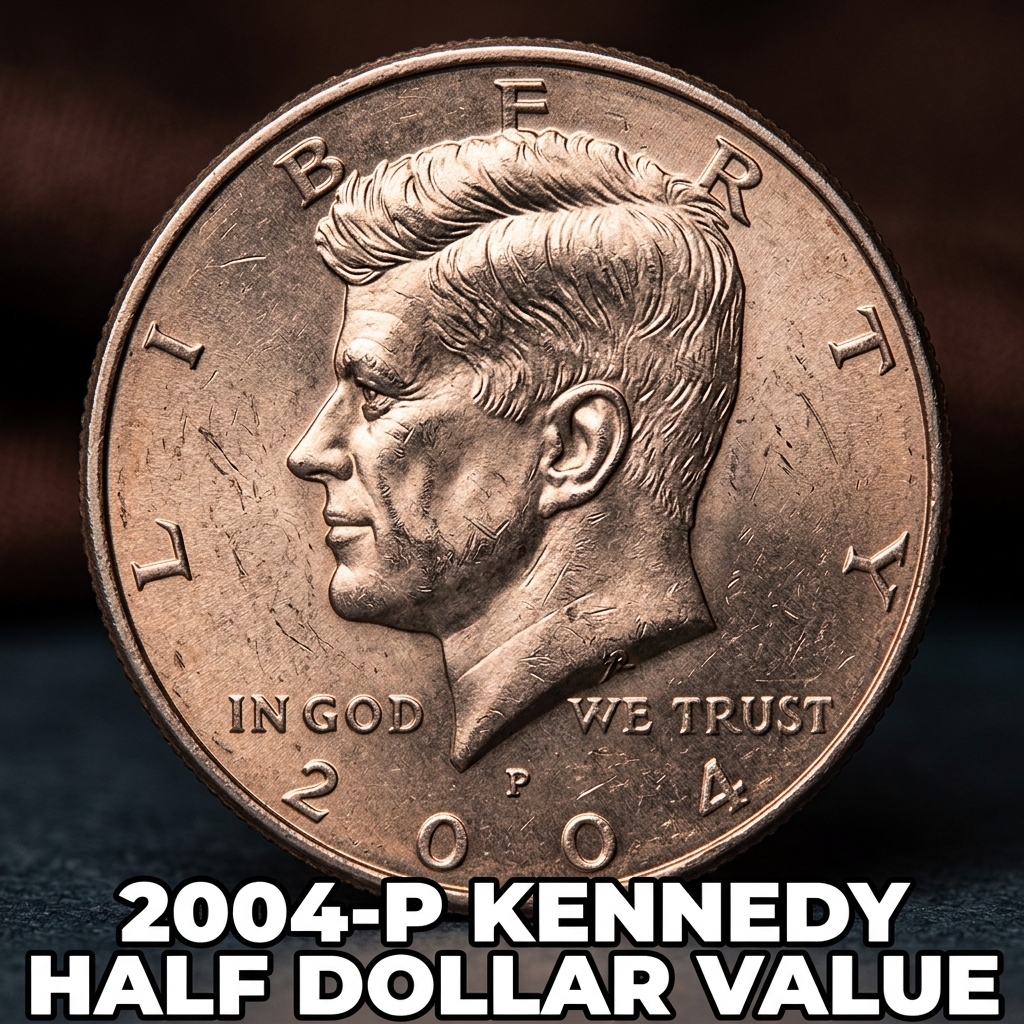
The obverse features the familiar left-facing portrait of JFK designed by Gilroy Roberts, while the reverse displays the Presidential Coat of Arms, designed by Frank Gasparro. The coin is composed of a clad sandwich — 91.67% copper with an outer layer of copper-nickel — and weighs 11.34 grams with a diameter of 30.6 mm.
If you’re not sure whether your coin is from Philadelphia or Denver, look for the “P” mint mark just below Kennedy’s neck on the obverse. No mint mark means Philadelphia on older issues, but since 1980, the “P” has been clearly stamped.
Your Old Coin Could Be Valuable!
Identify It & Know Its Real Value — Free Download
Using a coin identifier and value app is a great way to quickly confirm your coin’s mint mark, date, and estimated worth right from your phone — no coin expertise required.
How Much Is the 2004-P Kennedy Half Dollar Worth Today?
For most people who find a 2004-P Kennedy Half Dollar, the honest answer is: it’s worth 50 cents in circulated grades. These coins are common. The Philadelphia Mint produced over 283 million of them in 2004, making them far from rare.
Your Old Coin Could Be Valuable!
Identify It & Know Its Real Value — Free Download
That said, condition matters — a lot. Coins that were never circulated and show full mint luster can command a small premium above face value. High-grade examples certified by PCGS or NGC in MS-65 or better can sell for $5 to $15, and the finest known specimens (MS-68 or MS-69) occasionally bring prices well above that at auction.
Here’s a quick value breakdown by condition:
Your Old Coin Could Be Valuable!
Identify It & Know Its Real Value — Free Download
| Grade / Condition | Description | Estimated Value |
|---|---|---|
| Circulated (Good–Fine) | Visible wear, detail loss | $0.50 (face value) |
| Extremely Fine (EF-45) | Light wear, sharp details | $0.75–$1.00 |
| Mint State (MS-63) | Uncirculated, some marks | $2–$4 |
| Mint State (MS-65) | Choice uncirculated, nice luster | $5–$10 |
| Mint State (MS-67+) | Superb gem, virtually perfect | $15–$50+ |
For a more detailed look at certified auction results and current market prices, check out this up-to-date price guide for the 2004-P Kennedy Half Dollar in mint state grades — it pulls real auction data so you know what buyers are actually paying.
Mint Sets and Satin Finish Coins
Here’s where things get a little more interesting. In 2004, the U.S. Mint also sold Annual Mint Sets, which included specially struck versions of the Kennedy Half Dollar with a satin finish rather than the standard brilliant uncirculated surface. These satin finish coins are slightly different in appearance and are generally considered more desirable by collectors.
If your 2004-P half dollar came in an original sealed Mint Set packaging, it may carry a small premium — typically $2 to $5 above a loose uncirculated example. The packaging itself adds credibility and preservation value.
Your Old Coin Could Be Valuable!
Identify It & Know Its Real Value — Free Download
Collectors who specialize in modern coinage often focus on these satin finish specimens because they’re a bit harder to find in top condition. CoinKnow can help you identify whether your coin has a satin finish by analyzing the surface under a photo — a surprisingly useful trick for modern coin collectors.
Should You Get It Graded?
For most 2004-P Kennedy Half Dollars, professional grading isn’t cost-effective. PCGS and NGC both charge submission fees that can easily exceed the coin’s market value unless you have a coin that you believe grades MS-67 or higher.
If you’ve got a truly stunning example — no bag marks, brilliant luster, razor-sharp strike — it might be worth submitting. A certified MS-67 example can sell for $20 to $35, and MS-68 coins have gone for $50 or more at auction.
Before spending money on grading, use CoinKnow to get an initial assessment. The app lets you photograph your coin and compare it against graded examples, giving you a realistic sense of whether professional certification makes financial sense.
Your Old Coin Could Be Valuable!
Identify It & Know Its Real Value — Free Download
You can also read a thorough breakdown of what your 2004 half dollar is worth based on condition and mint mark to help you decide your next step.
Where to Sell a 2004-P Kennedy Half Dollar
If you’ve decided to sell, your best options depend on the coin’s condition. For circulated examples, spend them or trade them in at face value — no dealer will pay more. For uncirculated coins, eBay is often your best bet, as it connects you with collectors willing to pay a small premium.
For certified high-grade examples (MS-66 and up), consider submitting to auction through Heritage Auctions or Stack’s Bowers. These venues attract serious collectors and can generate competitive bidding on top-condition modern coins.
CoinKnow also maintains a community marketplace where you can connect with other collectors and get fair offers without the hassle of online auctions.
Your Old Coin Could Be Valuable!
Identify It & Know Its Real Value — Free Download
FAQ About the 2004-P Kennedy Half Dollar
Q: Is the 2004-P Kennedy Half Dollar rare?
A: No, it is not rare. Over 283 million were minted at the Philadelphia facility alone in 2004, making it one of the more common modern half dollars. Only top-grade certified examples carry meaningful collector value above face value.
Q: Can I still spend a 2004-P Kennedy Half Dollar?
A: Absolutely. It is still legal tender worth 50 cents. Most cashiers will accept it, though you may get a puzzled look since half dollars are uncommon in daily transactions these days.
Q: What makes a 2004-P Kennedy Half Dollar more valuable?
A: The biggest factors are condition and surface quality. Coins that are fully uncirculated with strong luster and minimal contact marks grade higher and sell for more. A coin that grades MS-67 or above by PCGS or NGC is significantly more valuable than an average uncirculated example.