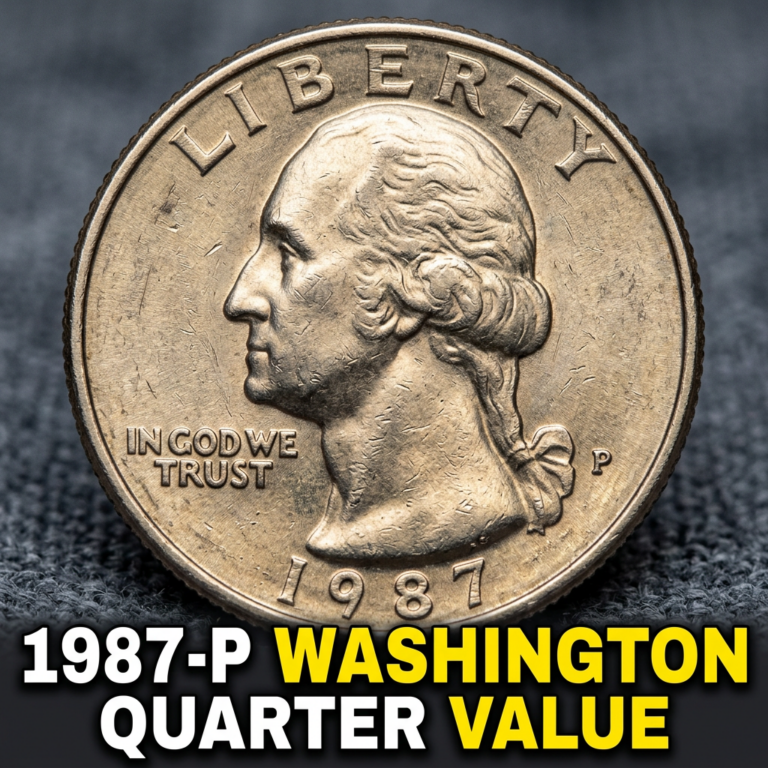
1979-S Washington Quarter Value: Price Guide for Collectors

Your Old Coin Could Be Valuable!
Identify It & Know Its Real Value — Free Download


The 1979-S Washington Quarter is worth anywhere from $3 in typical Proof condition to over $1,000 for rare high-grade Deep Cameo specimens. Finding one of these shiny coins in your drawer might feel like hitting a small jackpot, but the final value depends heavily on the specific “Type” of mint mark it carries.
| Condition/Type | Estimated Value |
|---|---|
| 1979-S Proof (Type 1 – Filled S) | $3 – $8 |
| 1979-S Proof (Type 2 – Clear S) | $15 – $40 |
| PR70 Deep Cameo (High Grade) | $200 – $1,200+ |
Identifying Your 1979-S Washington Quarter
If you’ve recently sorted through a collection and found a 1979 quarter with an “S” mint mark, you’re looking at a Proof coin minted in San Francisco. Unlike the quarters you use at the vending machine, these were specifically struck for collectors using polished dies and planchets. Because they weren’t intended for circulation, many remain in excellent condition today. However, simply having an “S” doesn’t make it a fortune; the magic lies in the clarity of that tiny letter. To get an instant estimate of your coin’s condition, you can use a top coin identifier and value app to scan the surface details.
The 1979-S is famous in the numismatic world for its “Two Types” of mint marks. During production that year, the San Francisco Mint replaced a worn-out mint mark punch mid-way through the year. This created two distinct varieties: the “Filled S” (Type 1) and the “Clear S” (Type 2). Most casual observers won’t notice the difference without a magnifying glass, but to a serious collector, that tiny “S” can represent a significant difference in price. Using a tool like CoinKnow can help you distinguish these subtle features by comparing your coin to high-resolution reference photos.
Your Old Coin Could Be Valuable!
Identify It & Know Its Real Value — Free Download
Understanding the Type 1 vs. Type 2 Variety
The Type 1 “Filled S” is the most common version. By 1979, the punch used to create the “S” mark on the dies had become worn down, resulting in an “S” that looks like a blurry blob or a filled-in rectangle. While it is still a beautiful proof coin, millions were produced, making it relatively affordable for hobbyists. You can often pick these up for the price of a cup of coffee.
Your Old Coin Could Be Valuable!
Identify It & Know Its Real Value — Free Download
The Type 2 “Clear S” is where the real interest begins. This version used a brand-new punch, resulting in a crisp, clear “S” with distinct loops and bulbous ends. It is much rarer than its filled counterpart. If you are looking for current market data, the 1979 Washington Quarter auction records show that Type 2 coins in high grades consistently fetch higher premiums. Identifying a Type 2 in your pocket change is a rare win for any amateur hunter.
| Feature | Type 1 (Filled S) | Type 2 (Clear S) |
|---|---|---|
| Visual Appearance | Indistinct, blurred “S” | Sharp, well-defined “S” |
| Rarity | Common | Scarce |
| Typical Value | $3 – $5 | $15 – $25+ |
The Role of Deep Cameo Grading in Value
When we talk about the value of proof coins, the term “Cameo” or “Deep Cameo” (DCAM) comes up frequently. This refers to the contrast between the frosted design (George Washington’s portrait) and the mirror-like background fields. A 1979-S Washington Quarter with a heavy frost and deep black mirrors is highly sought after. Most modern 1979 Proof sets were well-made, but as the dies wore down, that contrast began to fade.
Your Old Coin Could Be Valuable!
Identify It & Know Its Real Value — Free Download
A coin graded PR70 Deep Cameo—representing a perfect coin with no visible flaws under 5x magnification—can be worth hundreds of dollars. Even a PR69 specimen is a great find. If you believe your quarter has this exceptional contrast, it might be worth sending to a professional grading service like PCGS or NGC. Before spending money on grading fees, check the 1979-S Washington Quarter pricing trends to ensure the potential value outweighs the cost of authentication. For many, a quick scan with CoinKnow is the first step in deciding if a coin is “grading material.”
Why Some 1979 Quarters Are Found in Circulation
Technically, 1979-S quarters shouldn’t be in your spare change. They were originally sold in protective plastic cases as part of a 6-coin “Proof Set” from the US Mint. However, over the decades, many of these sets were broken open. Sometimes children spend them, or heirs who don’t know their value use them at the grocery store. When a proof coin enters circulation, it loses its mirror finish and develops scratches, known as “impaired proof” status.
Your Old Coin Could Be Valuable!
Identify It & Know Its Real Value — Free Download
Even an impaired 1979-S quarter is worth more than its 25-cent face value, usually around $1 to $2. However, if it’s a Type 2 Clear S that has been slightly circulated, it might still hold a value of $5 to $10. If you find one while doing laundry, keep it! It’s a piece of numismatic history that wasn’t meant to be spent. Digital tools like CoinKnow are excellent for tracking these “found” treasures and maintaining a digital inventory of your collection.
| Grade Detail | Approximate Price (USD) |
|---|---|
| Impaired Proof (Circulated) | $0.50 – $2.00 |
| PR65 (Average Proof) | $5.00 |
| PR69 Deep Cameo (Near Perfect) | $25.00 |
| PR70 Deep Cameo (Perfect) | $200.00 – $1,100.00 |
Common Errors and Variations to Look For
While the Type 1 and Type 2 varieties are the main focus for 1979-S collectors, keep an eye out for mint errors. Though rare in proof coins due to strict quality control, errors such as double dies, off-center strikes, or “struck through” errors (where a bit of debris gets caught between the die and the coin) can skyrocket the value. A documented major error on a 1979-S quarter could easily sell for over $500 at a specialty auction.
Another thing to look for is “Toning.” Over time, some 1979 quarters develop colorful oxidation, ranging from gold and blue to vibrant rainbows. While some collectors prefer the clean silver look, “Monster Toned” proof quarters are a niche market where buyers might pay a massive premium for a coin with exceptional eye appeal. Always handle your coins by the edges to avoid leaving fingerprints, which can damage the delicate proof surface and lower the coin’s future value.
Your Old Coin Could Be Valuable!
Identify It & Know Its Real Value — Free Download
How to Sell Your 1979-S Washington Quarter
If you’ve identified that you have a valuable Type 2 or a high-grade specimen, your next step is selling it. For coins worth under $20, eBay is often the best platform, as it reaches a wide audience of casual collectors. Be sure to take high-quality, clear photos of the mint mark, as that is what buyers are specifically looking for in 1979-S listings.
For coins that you suspect are worth hundreds of dollars, such as a perfect PR70, you should consider professional grading first. Once slabbed and certified by a service like PCGS, you can sell through major auction houses or high-end coin dealers. Having a “certified” grade removes the guesswork for the buyer and ensures you get the maximum market price for your rare find.
FAQ
Q: Is the 1979-S Washington Quarter made of silver?
A: No, the 1979-S Proof Quarter is made of a copper-nickel clad composition (75% copper, 25% nickel over a pure copper core). The U.S. Mint did not produce silver quarters in 1979.
Your Old Coin Could Be Valuable!
Identify It & Know Its Real Value — Free Download
Q: How can I tell Type 1 from Type 2 without a microscope?
A: Look at the “S” mint mark. If it looks like a solid blob with no clear holes in the loops, it’s a Type 1. If the “S” has clear, open loops and looks very sharp and well-defined, it’s likely a Type 2.
Q: Can I find a 1979-S in my pocket change?
A: It is possible, but rare. These were only issued in Proof Sets, meaning someone had to break the set and spend the coin for it to end up in circulation. These are called “Impaired Proofs.”
Q: What is the highest price ever paid for a 1979-S Quarter?
A: In some auctions, perfect PR70 Deep Cameo Type 2 specimens have sold for upwards of $1,000, though most high-grade examples sell in the $100 to $300 range depending on the current market demand.