1999-P Connecticut State Quarter Value Guide What Is It Worth Today

Your Old Coin Could Be Valuable!
Identify It & Know Its Real Value — Free Download


The 1999-P Connecticut State Quarter is worth anywhere from 25 cents in heavily circulated condition to over $15 or more in gem mint state — and certain error coins can fetch far higher prices at auction. If you’ve found one of these coins rattling around in a drawer or tucked inside an old collection, you’re in the right place to find out exactly what you’ve got.
What Is the 1999-P Connecticut State Quarter?
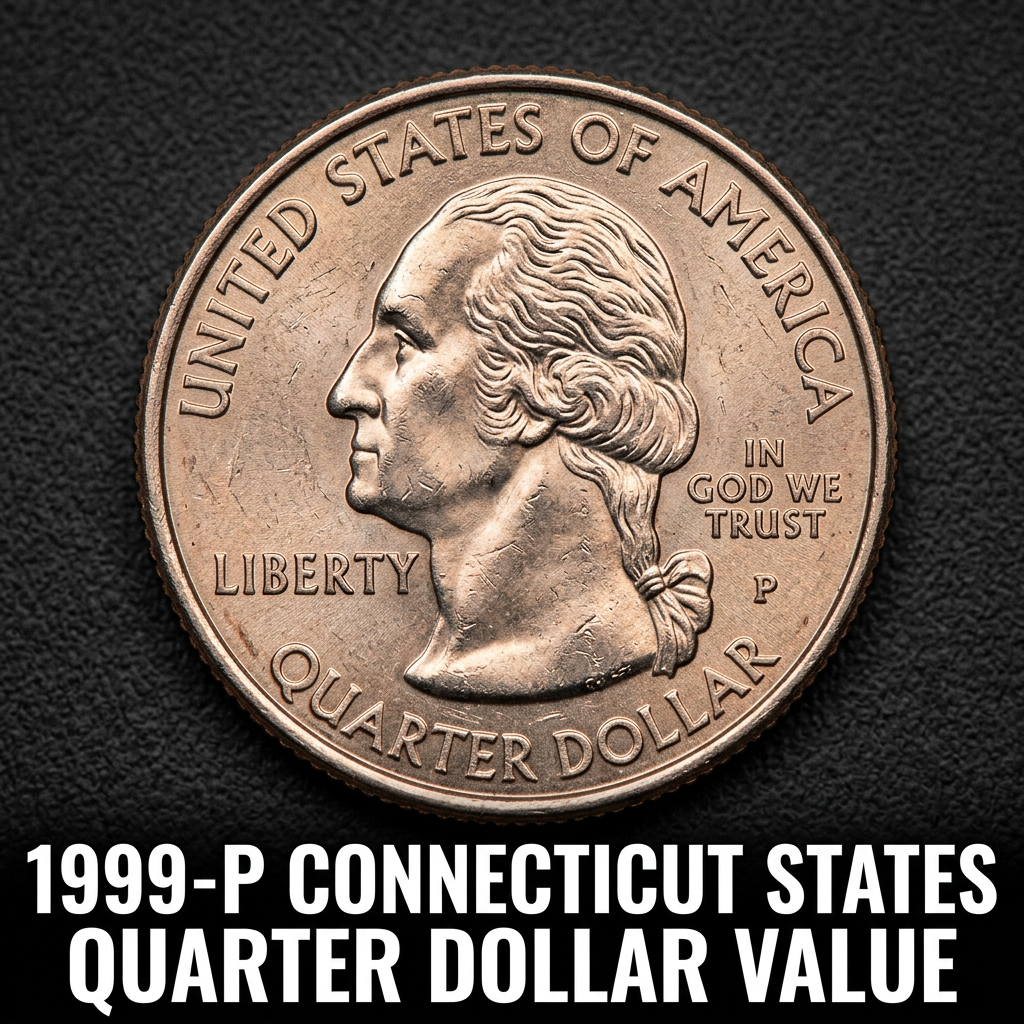
The 1999-P Connecticut State Quarter is part of the U.S. Mint’s 50 State Quarters Program, which ran from 1999 to 2008. Connecticut was the fifth state released in the series, and the “P” mintmark tells you it was struck at the Philadelphia Mint.
The reverse of the coin features the iconic Charter Oak — a historic white oak tree that played a role in Connecticut’s colonial history. The obverse shows the classic George Washington portrait. These coins were produced in enormous numbers, which is an important factor when figuring out their value.
If you’re just getting started identifying coins from your pocket change, a coin identifier and value app can help you quickly confirm what you’re looking at and get a real-time estimate of its worth.
Your Old Coin Could Be Valuable!
Identify It & Know Its Real Value — Free Download
How Much Is the 1999-P Connecticut Quarter Worth in Circulated Condition?
For most people who find a 1999-P Connecticut Quarter in everyday circulation, the honest truth is that it’s worth face value — 25 cents — if it’s worn down from years of handling. These coins were minted in staggering quantities (over 688 million pieces), so supply is high and demand for average circulated examples is low.
Your Old Coin Could Be Valuable!
Identify It & Know Its Real Value — Free Download
That said, lightly circulated examples — coins that show only minor wear on the high points — can sometimes trade for 50 cents to a dollar or two among collectors who are completing state quarter sets.
The condition really does make all the difference. A coin that looks bright and crisp, even if it circulated briefly, is always going to attract more attention than one that’s been worn smooth.
Your Old Coin Could Be Valuable!
Identify It & Know Its Real Value — Free Download
Mint State Values and What Grading Means for Your Coin
When a 1999-P Connecticut Quarter has never been used in circulation and retains its original mint luster, it enters the world of “mint state” grading — on a scale from MS-60 to MS-70. This is where values start climbing meaningfully.
You can explore detailed 1999-P State Quarter mint state price data across different grade levels to see how condition impacts the numbers.
Your Old Coin Could Be Valuable!
Identify It & Know Its Real Value — Free Download
| Grade | Condition | Estimated Value |
|---|---|---|
| Circulated (G-VF) | Worn, detail loss | Face value – $1 |
| MS-63 | Mint state, some contact marks | $2 – $5 |
| MS-65 | Gem mint state | $5 – $12 |
| MS-67 | Superb gem | $15 – $40+ |
| MS-68+ | Near perfect | $100 – $500+ |
CoinKnow is a great tool for collectors at every level — whether you’re trying to understand MS grades or figure out if your coin is worth sending in for professional grading.
Error Coins and Special Varieties Worth More Money
Here’s where things get exciting. Some 1999-P Connecticut Quarters carry mint errors that dramatically increase their value. The most well-known error associated with this issue is the “Broadstruck” error, where the coin was struck outside its retaining collar, resulting in a wider, flatter appearance. These can sell for $20 to $100 or more depending on the severity.
Double die errors — where design elements show doubling due to a misaligned die — are also known on this issue and attract serious collector interest. Off-center strikes, die cap errors, and planchet errors round out the category.
Your Old Coin Could Be Valuable!
Identify It & Know Its Real Value — Free Download
If you suspect you have an error coin, CoinKnow can help you compare your coin against known error examples before you decide whether to get it professionally graded by PCGS or NGC.
Is It Worth Getting Your 1999-P Connecticut Quarter Graded?
Professional grading by services like PCGS or NGC costs money — typically $20 to $50 or more per coin for standard submissions. For a coin worth $5 to $15, that math usually doesn’t work out.
However, if your coin appears to be in MS-67 or better condition, or if it clearly shows an error variety, grading can absolutely be worth the investment. A certified MS-68 example or a notable error could return multiples of the grading fee.
For a complete look at 1999 quarter values across all mint marks and conditions, it’s worth taking a few minutes to research before making any decisions about submitting your coins.
Your Old Coin Could Be Valuable!
Identify It & Know Its Real Value — Free Download
Frequently Asked Questions
Q: How many 1999-P Connecticut Quarters were minted?
A: The Philadelphia Mint produced approximately 688,744,000 Connecticut State Quarters in 1999, making them one of the more common coins in the 50 State Quarters series. High mintage is the main reason most circulated examples are worth only face value.
Q: Can I use an app to find out what my 1999-P Connecticut Quarter is worth?
A: Yes — apps like CoinKnow let you scan your coin, identify its details, and get a value estimate right from your phone. It’s especially useful if you’re new to coin collecting and aren’t sure what grade or variety you might have.
Q: What makes a 1999-P Connecticut Quarter rare or valuable?
A: The two biggest value drivers are condition and errors. A perfectly preserved MS-68 or MS-69 example is genuinely scarce despite the high mintage. Mint errors such as off-center strikes, broadstrikes, or die doubling can also make an otherwise ordinary quarter worth significantly more to the right collector.