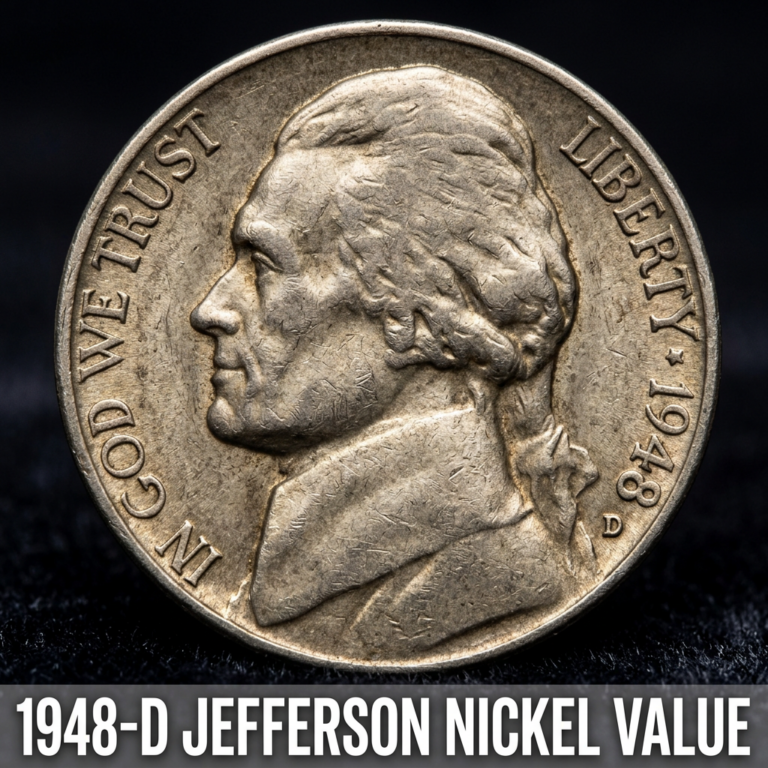
2000-P Jefferson Nickel Value: How Much Is It Worth Today?

Your Old Coin Could Be Valuable!
Identify It & Know Its Real Value — Free Download


The 2000-P Jefferson Nickel is worth anywhere from its face value of $0.05 in worn condition to over $1,500 for rare “Full Steps” specimens in high mint grades. While most of these coins found in pocket change aren’t hidden fortunes, specific errors and high-quality strikes can be surprisingly valuable to collectors.
| Condition / Grade | Estimated Value (USD) |
|---|---|
| Circulated (Average) | $0.05 – $0.10 |
| Uncirculated (MS60-MS65) | $1.00 – $15.00 |
| High Grade (MS67) | $25.00 – $150.00 |
| Rare MS67 Full Steps | $400.00 – $1,500.00+ |
Understanding the 2000-P Jefferson Nickel History
The year 2000 marked a massive production year for the United States Mint as the country headed into the new millennium. While many people were focused on the new State Quarters or the “Cheerios” Sacagawea dollars, the workhorse of the American economy—the Jefferson Nickel—was being minted in the hundreds of millions. Specifically, the Philadelphia Mint produced over 840 million nickels bearing the “P” mint mark.
Because of this high mintage, finding a 2000-P nickel in your change today is incredibly common. To determine if yours is special, you need to look at its condition. Most of these coins have been banging around in cash registers for two decades, resulting in scratches and wear. However, those that were tucked away in rolls or collections remain in “Mint State.” If you aren’t sure how to grade your find, using a top coin identifier and value app can help you distinguish between a common spender and a keeper.
Collectors often use tools like CoinKnow to track the market fluctuations of modern coinage. While the 2000-P design remains the classic depiction of Thomas Jefferson (pre-2005 redesign), the subtle details in the strike are what determine the final price.
Your Old Coin Could Be Valuable!
Identify It & Know Its Real Value — Free Download
Grading and Value Factors for the Philadelphia Issue
When evaluating a 2000-P Jefferson Nickel, professional graders look for “eye appeal” and sharpness. A coin that has no scratches and retains its original copper-nickel luster is considered Uncirculated. The scale goes from 1 to 70, with 70 being perfect. Most nickels found in change are “Circulated” and will only be worth their face value of five cents.
However, once you reach grades like MS65 or MS66, the price begins to climb. For example, the current 2000-P nickel market price for Mint State grades shows that even a small jump in quality can double or triple the value. A specimen graded MS67 is quite rare because 2000-P dies were often used until they were worn, leading to “mushy” details on the coin’s surface.
Your Old Coin Could Be Valuable!
Identify It & Know Its Real Value — Free Download
If you find a 2000-P nickel that looks exceptionally shiny and sharp, it might be worth sending to a grading service like PCGS or NGC. High-grade examples are the backbone of registry sets—collections where enthusiasts compete to own the highest-rated version of every coin from a specific series.
| Grade Designation | Visual Description | Value Range |
|---|---|---|
| Good (G4) | Heavily worn, outlines only | $0.05 |
| About Uncirculated (AU) | Slight wear on high points | $0.10 – $0.25 |
| Mint State (MS65) | High luster, few marks | $5.00 – $15.00 |
| Mint State (MS67) | Virtually flawless strike | $80.00+ |
The “Full Steps” Designation: The Holy Grail
For Jefferson Nickel collectors, the phrase “Full Steps” (FS) is the ultimate indicator of value. Look at the reverse side of your 2000-P nickel, where Monticello (Jefferson’s home) is depicted. Above the basement level of the building, there are a series of steps. In most strikes, these steps are blurry or merged together.
Your Old Coin Could Be Valuable!
Identify It & Know Its Real Value — Free Download
A “Full Steps” nickel is one where at least five or six steps are clearly visible and separated by distinct lines. To achieve this, the minting press must be perfectly calibrated with fresh dies. Because of the high mintage in 2000, “Full Steps” versions of the 2000-P are surprisingly hard to find. A 2000-P nickel graded MS67 with Full Steps is a significant rarity.
Current 2000-P Jefferson Nickel premium values for Full Steps coins can reach into the thousands. In 2021, a 2000-P FS specimen graded MS67+ sold at auction for over $1,600. If you are inspecting your change, a magnifying glass is essential to see if those tiny lines on Monticello are distinct. Using CoinKnow can help you compare your coin’s image against known FS examples.
Valuable Errors to Look For in 2000-P Nickels
While condition is important, errors are what make “ordinary” coins truly exciting for the average person. The year 2000 saw several interesting mint errors that slipped past quality control. One common error is the “Off-Center Strike,” where the coin blank was not properly aligned, resulting in a design that is shifted to one side. If 50% of the design is missing but the date “2000” and the “P” mint mark are still visible, the value can exceed $50.
Your Old Coin Could Be Valuable!
Identify It & Know Its Real Value — Free Download
Another error to watch out for is the “Double Die.” While there are no major “King of Varieties” for this year, minor doubling on the lettering of “In God We Trust” or on the pillars of Monticello can still command a premium. To see these, you’ll need a loupe or a high-quality camera phone.
“Die cracks” are also frequent on 2000-P nickels. These look like raised jagged lines across the surface of the coin. While small die cracks only add a few dollars to the value, large “cuds” (where a piece of the die actually broke off) can make a coin worth $100 or more. CoinKnow users often share photos of these anomalies to get community feedback on potential value.
| Error Type | Description | Estimated Value |
|---|---|---|
| 5-10% Off-Center | Design slightly shifted | $5 – $15 |
| 50% Off-Center | Half the design is blank | $50 – $100 |
| Broadstruck | Coin is flatter and wider than usual | $10 – $30 |
| Die Break (Cud) | Raised blob of metal near rim | $20 – $150 |
How to Store Your 2000-P Nickels for the Future
If you have found a 2000-P Jefferson Nickel that appears to be in perfect condition or features a potential error, proper storage is vital. Handling a coin with your bare hands can transfer oils and acids that eventually lead to “toning” or corrosion. Always hold coins by their edges, or better yet, wear cotton gloves.
For storage, avoid PVC-based plastic flips, as these can damage the coin over time. Instead, use “non-PVC” flips, cardboard 2x2s, or hard plastic capsules. Keeping your coins in a cool, dry place will ensure that if the value of 2000-P nickels rises in the coming years, yours will remain in top-tier condition.
Your Old Coin Could Be Valuable!
Identify It & Know Its Real Value — Free Download
Many collectors start by filling coin folders, but for high-value items, individual holders are better. The more you learn about the hobby, the more you’ll realize that the difference between a $1 coin and a $1,000 coin is often down to how well it was cared for by its previous owners. Using tools like CoinKnow can help you document your collection and keep track of which coins are safely stored away.
Final Thoughts on the 2000-P Jefferson Nickel
While most 2000-P nickels are simply five-cent pieces used for daily transactions, the “treasures in the attic” mentality is alive and well. Identifying a Full Steps version or a significant mint error can transform a common pocket coin into a valuable collector’s item.
Always keep an eye out for the unusual—whether it’s an odd color, a weird shape, or an incredibly sharp strike. Modern coins are a great entry point for new hobbyists because they are accessible and fun to hunt. With a little bit of luck and a sharp eye, your next trip to the grocery store could result in a 2000-P nickel worth much more than its face value.
FAQ
Q: Where is the mint mark on a 2000-P nickel?
A: The mint mark is located on the obverse (heads) side of the coin, just to the right of Thomas Jefferson’s ponytail and below the date “2000.” The “P” indicates it was struck at the Philadelphia Mint.
Your Old Coin Could Be Valuable!
Identify It & Know Its Real Value — Free Download
Q: Why are some 2000-P nickels gold in color?
A: If a 2000-P nickel looks gold, it is likely either “toned” naturally due to environmental exposure or it has been plated by a third party for novelty purposes. Genuine gold-colored errors are extremely rare and usually involve the coin being struck on a planchet intended for a different denomination (like a Sacagawea dollar).
Q: Is a 2000-P Jefferson Nickel made of silver?
A: No, the 2000-P Jefferson Nickel is composed of 75% copper and 25% nickel. The US Mint stopped making silver nickels in 1945 (the famous “War Nickels”).
Q: How many 2000-P nickels were made?
A: The Philadelphia Mint produced 846,680,000 of these coins. Because of this massive number, only those in the very highest grades or with errors are considered valuable to collectors.