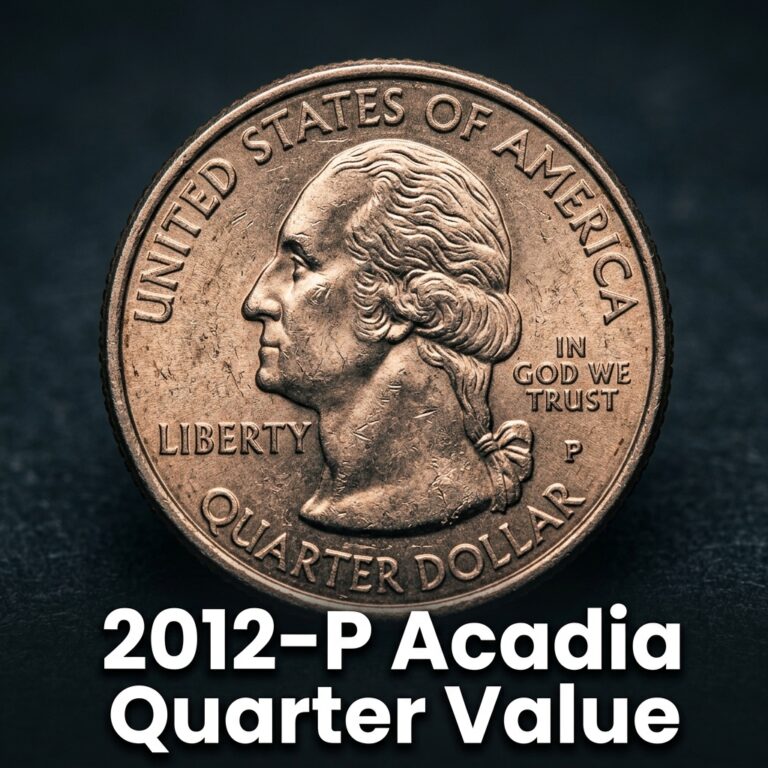
2000-P Roosevelt Dime Value: Is Your Pocket Change Worth More?

Your Old Coin Could Be Valuable!
Identify It & Know Its Real Value — Free Download


The 2000-P Roosevelt Dime is worth anywhere from $0.10 in worn condition to over $600 for exceptional “Full Band” specimens in high mint grades. While most of these coins found in your change today are only worth their face value, certain rare errors and high-quality strikes can be quite valuable to collectors.
| Condition / Grade | Estimated Value |
|---|---|
| Circulated (Average Condition) | $0.10 |
| Uncirculated (MS60-MS65) | $1.00 – $5.00 |
| Choice Mint State (MS67+) | $25.00 – $150.00 |
| Full Band (FB) Designation | $200.00 – $600.00+ |
Understanding the 2000-P Roosevelt Dime
If you have just emptied your piggy bank or received change at the grocery store, you might have noticed a dime featuring Franklin D. Roosevelt with a small “P” mint mark next to the date. This “P” signifies that the coin was minted at the Philadelphia Mint. In the year 2000, the U.S. Mint produced over 1.8 billion of these dimes in Philadelphia alone. Because they were produced in such massive quantities, most people assume they hold no extra value. However, finding out if your specific coin is a hidden gem is easier than ever using a top coin identifier and value app to scan for rare features.
When evaluating a 2000-P dime, the first thing collectors look for is the “Mint State.” Since these coins are over two decades old, finding one that hasn’t been scratched or dulled by circulation is becoming rarer. Most coins you find in your wallet are “circulated,” meaning they have been handled by thousands of people. These are generally worth exactly ten cents. However, if you come across a dime that looks like it just came off the press—with a bright, mirror-like luster and no visible scratches—you might be holding something worth a premium. Tools like CoinKnow can help you determine if the luster on your coin is original or if it has been artificially cleaned, which can ruin its numismatic value.
Professional collectors also look for the “Full Band” (FB) designation on the reverse of the coin. On the back of the Roosevelt dime, there is a torch. If the horizontal bands at the top and bottom of that torch are clearly defined and separated with no blending, the coin is significantly more valuable. This is because the dime’s design is difficult to strike perfectly, and very few coins from the 2000-P run possess this level of detail.
Your Old Coin Could Be Valuable!
Identify It & Know Its Real Value — Free Download
The Grading Scale and Its Impact on Price
The value of a coin is almost entirely dictated by its grade on the Sheldon Scale, which ranges from 1 to 70. For the 2000-P Roosevelt Dime, you will typically only see values rise once the coin reaches a grade of MS65 (Mint State 65) or higher. In the world of modern coinage, “average” uncirculated coins are very common, but “superb” gems are elusive. You can check the current 2000-P Roosevelt Dime market prices to see how a slight jump in grade from MS67 to MS68 can result in a price increase of several hundred dollars.
Your Old Coin Could Be Valuable!
Identify It & Know Its Real Value — Free Download
For the everyday American, it is important to realize that “Mint State” doesn’t just mean clean; it means the coin has never been used as money. Even a single tiny scratch from being tossed in a jar with other coins can drop a dime’s grade from a valuable MS68 down to a common MS63. If you think you’ve found a high-grade specimen, the CoinKnow app is an excellent resource for comparing your coin’s surface quality against high-resolution photos of confirmed gem specimens. It provides a baseline for whether it’s worth paying the fees to have the coin professionally graded by companies like PCGS or NGC.
| MS Grade | Standard Strike Value | Full Band (FB) Value |
|---|---|---|
| MS63 | $0.15 | $2.00 |
| MS65 | $2.00 | $15.00 |
| MS67 | $15.00 | $65.00 |
| MS68 | $125.00 | $625.00 |
Valuable Errors to Look For in 2000-P Dimes
While high-grade coins are rare, “error coins” are where the real excitement lies for many hobbyists. These are coins that were manufactured incorrectly by the U.S. Mint. Because the minting process in the year 2000 was highly automated and monitored, errors are relatively rare, making them highly sought after. One common type of error is the “Off-Center Strike,” where the coin blank was not properly aligned with the dies. If you find a 2000-P dime where the design is pushed to one side, leaving a blank crescent of metal, you could be looking at a coin worth $20 to $100 depending on the percentage of the off-center strike.
Your Old Coin Could Be Valuable!
Identify It & Know Its Real Value — Free Download
Another fascinating error is the “Broadstruck” dime. This happens when the collar—the ring that holds the coin in place and creates the “reeds” or ridges on the edge—fails to engage. The result is a dime that looks flatter and wider than a normal dime, usually with a smooth edge instead of a ridged one. When searching for these anomalies, you can find detailed 2000 dime value and error identification information online to help verify your find. Error hunters also keep an eye out for “Die Cracks,” which appear as raised lines of metal on the coin’s surface, indicating that the stamp used to make the coin was breaking.
Comparing 2000-P and 2000-D Dimes
Many people ask if the 2000-P dime is rarer than the 2000-D dime (minted in Denver). The short answer is no. In 2000, Philadelphia produced approximately 1,842,500,000 dimes, while Denver produced 1,818,500,000. These numbers are nearly identical, meaning neither is inherently “rarer” by mintage alone. However, the quality of strikes can vary between mints. For some years, the Philadelphia Mint might produce more “Full Band” examples than Denver, or vice versa, due to the maintenance schedules of the machines.
Your Old Coin Could Be Valuable!
Identify It & Know Its Real Value — Free Download
When comparing the two, you should treat them similarly. Both have a metal composition of 75% copper and 25% nickel (cladded over a pure copper core). They weigh exactly 2.268 grams and have a diameter of 17.9 millimeters. If you are building a collection, you will want high-grade examples of both. Using CoinKnow can help you track your collection of both P and D mint marks, allowing you to see which years and mints are missing from your set and what their current market values are.
| Feature | 2000-P Roosevelt Dime | 2000-D Roosevelt Dime |
|---|---|---|
| Mint Location | Philadelphia | Denver |
| Mintage Volume | ~1.84 Billion | ~1.81 Billion |
| Composition | Cupro-Nickel Clad | Cupro-Nickel Clad |
| Common Value | $0.10 | $0.10 |
Why Condition Is Everything for Modern Dimes
For vintage coins like the Mercury Dime or silver Roosevelt dimes (pre-1965), the metal content alone gives them value. A silver dime is worth roughly $2 just for its silver weight. However, the 2000-P dime contains no silver. Its value is purely “numismatic,” meaning it’s based on how much a collector is willing to pay for its rarity or beauty. This is why condition is the absolute most important factor for this specific year.
A coin that has been sitting in a mint set or a protective plastic roll since the year 2000 has a much better chance of being valuable than one found in a parking lot. To inspect your dime properly, hold it by the edges so the oils from your fingers don’t damage the surface. Use a magnifying glass or a loupe to look for “bag marks”—tiny nicks caused by coins hitting each other at the mint. The fewer marks you see, the higher the potential value. Even if a dime isn’t worth $600, finding one in pristine condition is a great way to start a coin collection for yourself or a child.
How to Sell Your 2000-P Roosevelt Dime
If you believe you have found a 2000-P Roosevelt Dime that is worth more than its face value, you have several options for selling it. For coins that are likely in the $5 to $20 range, local coin shops or online marketplaces like eBay are usually the best bet. When selling on eBay, make sure to take very clear, high-resolution photos of both the front (obverse) and back (reverse). Specifically, zoom in on the “P” mint mark and the torch on the back to show off any potential “Full Band” details.
Your Old Coin Could Be Valuable!
Identify It & Know Its Real Value — Free Download
For coins that you suspect are high-grade (MS67 or higher) or unique errors, professional grading is a must before selling. A “raw” or uncertified coin will rarely fetch its full potential price because buyers want the security of a third-party guarantee. Keep in mind that grading costs money—often between $20 and $50 per coin plus shipping. Therefore, you should only send in coins that you are confident will grade high enough to cover these costs. Checking recent auction records on sites like Heritage Auctions or using an appraisal app can help you make an informed decision.
FAQ
Q: Does the 2000-P Roosevelt Dime contain silver?
A: No, the 2000-P Roosevelt Dime is a clad coin made of a copper core and an outer layer consisting of 75% copper and 25% nickel. Silver dimes were last minted for general circulation in 1964.
Q: What is a “Full Band” 2000-P dime?
A: A “Full Band” (FB) dime is one where the horizontal strike lines on the torch (on the reverse of the coin) are completely distinct and separated. This indicates a very high-quality strike and makes the coin much more valuable to collectors.
Your Old Coin Could Be Valuable!
Identify It & Know Its Real Value — Free Download
Q: How can I tell if my 2000 dime is an error coin?
A: Look for abnormalities such as missing letters, parts of the design being off-center, or the coin being thicker or thinner than usual. If the coin looks drastically different from a standard dime, it could be a mint error.
Q: Where is the mint mark on a 2000-P dime?
A: The “P” mint mark is located on the front (obverse) of the coin, just above the year “2000,” to the right of Roosevelt’s neck.
Q: Is it worth getting a 2000-P dime graded?
A: It is generally only worth it if the coin is in perfect condition (MS67 or higher) or features a significant, rare error. For most circulated dimes, the cost of grading will exceed the value of the coin.