2010-P Weak Edge Lettering Sacagawea Dollar Value and What Makes It Special

Your Old Coin Could Be Valuable!
Identify It & Know Its Real Value — Free Download


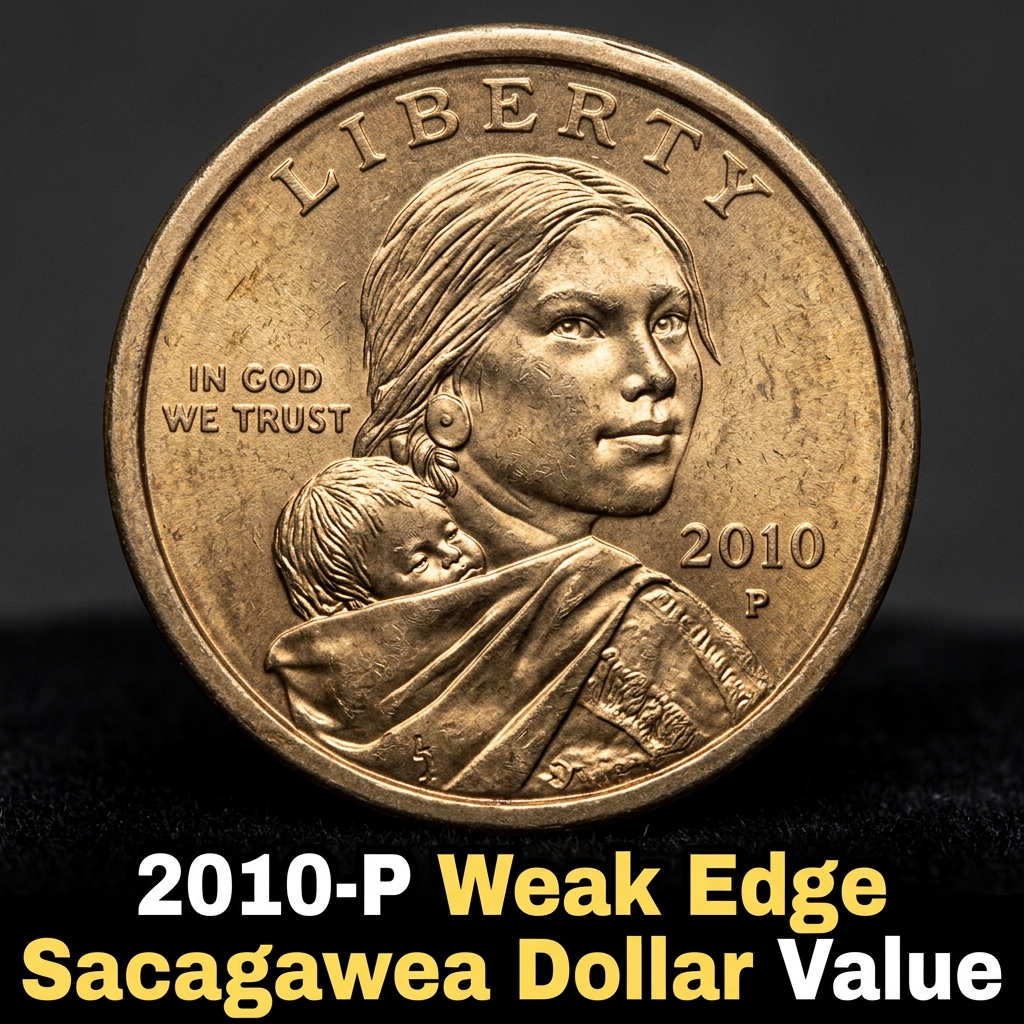
The 2010-P Weak Edge Lettering Sacagawea Dollar is worth anywhere from $1 to $2 in circulated condition, but certified examples with strong eye appeal can fetch $10 to $50 or more depending on the grade and variety. If you found one of these coins and want to know what it’s actually worth, you’re in the right place — let’s break it all down in plain English.
Whether you just discovered this dollar in a drawer or got it in change years ago, using a reliable coin identifier and value app is one of the fastest ways to get a ballpark value before taking it to a dealer.
What Is the 2010-P Weak Edge Sacagawea Dollar?
The Sacagawea Dollar has been minted since 2000 and features the famous Shoshone guide Sacagawea on the obverse. Starting in 2009, the U.S. Mint launched the Native American Dollar series, which replaced the reverse designs annually with imagery honoring Native American contributions to American history.
The 2010 issue features a design called “Government — The Great Tree of Peace,” depicting the Haudenosaunee Confederacy and the Hiawatha Belt. The “P” mint mark means it was struck at the Philadelphia Mint.
Your Old Coin Could Be Valuable!
Identify It & Know Its Real Value — Free Download
Now, the “Weak Edge Lettering” variety is where things get interesting. On these coins, the edge inscription — which includes IN GOD WE TRUST, the date, and the mint mark — is faint or barely visible. This happens due to a die or striking issue during production. It’s a recognized variety among collectors and adds a layer of interest to an otherwise common coin.
Your Old Coin Could Be Valuable!
Identify It & Know Its Real Value — Free Download
How Much Is the 2010-P Weak Edge Sacagawea Dollar Worth?
Most 2010-P Sacagawea Dollars in average circulated condition are worth face value — just $1. However, uncirculated examples in high mint state grades can be worth significantly more, especially if they exhibit strong luster and no contact marks.
Your Old Coin Could Be Valuable!
Identify It & Know Its Real Value — Free Download
The Weak Edge Lettering variety is not as dramatically rare as some error coins, but it does attract collector attention. Coins that are certified by PCGS or NGC in grades of MS65 or higher tend to carry premiums in the $15 to $50+ range.
For a detailed look at certified MS grade pricing for the 2010-P Native American Dollar, you can review auction records and population reports to understand how the market is currently pricing these coins by grade point.
Here’s a general value table to help you understand the range:
Your Old Coin Could Be Valuable!
Identify It & Know Its Real Value — Free Download
| Grade / Condition | Estimated Value |
|---|---|
| Circulated (Good to Fine) | $1 (face value) |
| Uncirculated (MS60–MS63) | $2 – $8 |
| Choice Uncirculated (MS64–MS65) | $10 – $25 |
| Gem Uncirculated (MS66+) | $30 – $50+ |
| Weak Edge Lettering Variety (Certified) | $15 – $60+ depending on grade |
How to Tell If Your Coin Has Weak Edge Lettering
Identifying the Weak Edge Lettering variety is straightforward if you know what to look for. Hold the coin by its rim and rotate it slowly under good lighting. You’re looking at the edge where the date, mint mark, and motto appear.
On a normal 2010-P Sacagawea Dollar, these inscriptions are clearly readable. On the Weak Edge Lettering variety, the text appears shallow, faint, or almost missing in spots. It’s not damage — it’s a production characteristic from the time of striking.
If you’re unsure whether your coin qualifies, CoinKnow is a great tool to help you identify varieties and compare your coin’s features against known examples in their database. Apps like CoinKnow are especially helpful for first-time collectors who don’t want to spend money on professional appraisals just to find out what they have.
Your Old Coin Could Be Valuable!
Identify It & Know Its Real Value — Free Download
Should You Get It Certified?
Certification makes sense if your coin appears to be in uncirculated condition and shows the weak edge lettering variety clearly. PCGS and NGC are the two most respected grading services in the hobby. A certified coin will carry more value on the resale market because buyers can trust the grade.
For everyday circulated examples, however, certification fees ($20–$40 or more per coin) would exceed the coin’s market value. In that case, your best bet is to consult resources like the full value breakdown for the 2010 Sacagawea Dollar, which gives you solid reference data without spending a dime.
CoinKnow also lets you photograph your coin and get an instant identification, saving you time before deciding whether professional grading is worth the investment.
Your Old Coin Could Be Valuable!
Identify It & Know Its Real Value — Free Download
FAQ
Q: Is the 2010-P Weak Edge Sacagawea Dollar rare?
A: It’s not considered a rare coin in the traditional sense — millions were minted — but the Weak Edge Lettering variety is a recognized error type that attracts collector interest and can add a modest premium to the coin’s value, especially in high grades.
Q: Where is the best place to sell a 2010-P Weak Edge Sacagawea Dollar?
A: Online platforms like eBay are popular for selling modern dollar coins to a large audience. For higher-grade certified examples, major coin auction houses or dealer networks may get you better results. Always compare recent sold listings before pricing your coin.
Q: How do I know if my 2010-P Sacagawea Dollar is uncirculated?
A: Look for original mint luster — a cartwheel-like sheen that flows across the coin’s surface under light. Any signs of wear on the high points of the design, like Sacagawea’s cheekbone or the eagle’s feathers, indicate the coin has been circulated. When in doubt, scan it using a tool like CoinKnow for a quick assessment.