1892 Indian Head Penny Value Guide What Is This Old Cent Really Worth

Your Old Coin Could Be Valuable!
Identify It & Know Its Real Value — Free Download


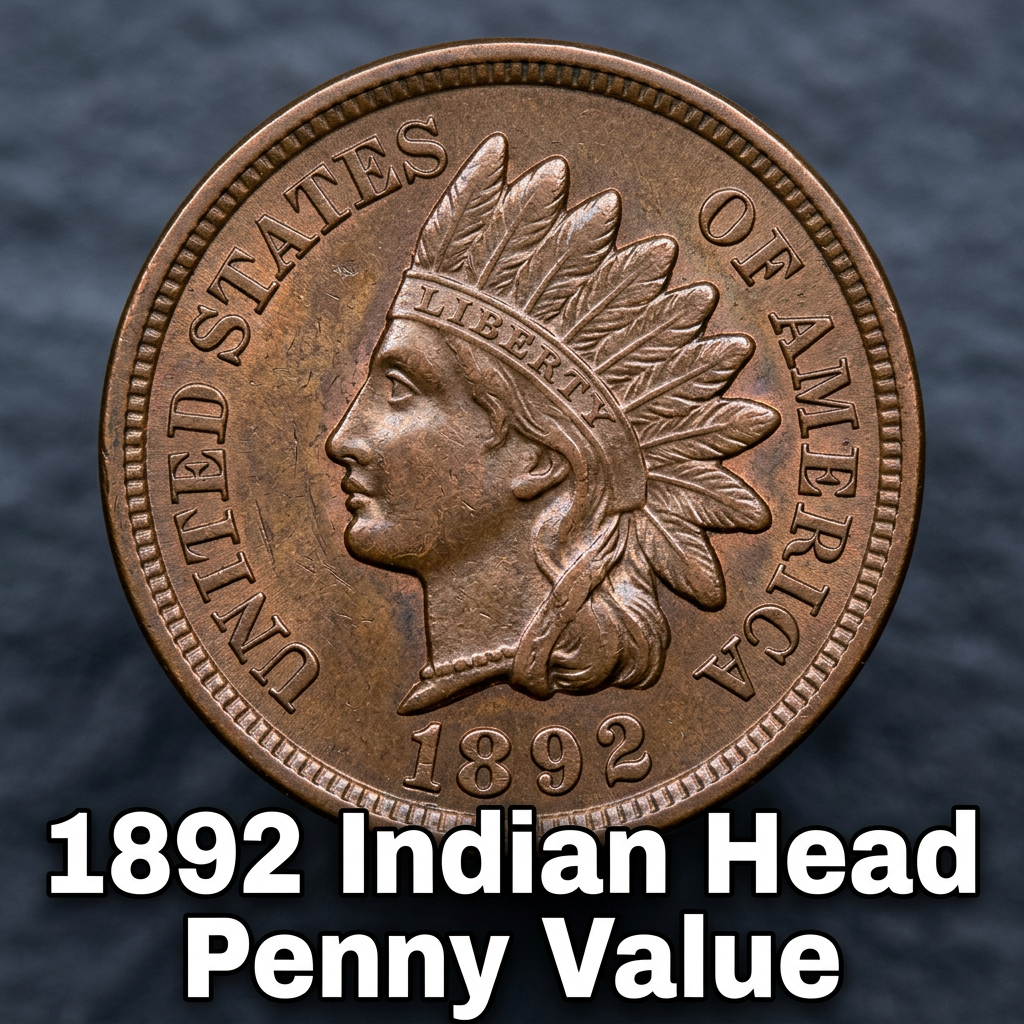
The 1892 Indian Head Penny is worth anywhere from $2 in heavily worn condition to over $100 or more in well-preserved mint state examples. If you found one in a drawer, an old coin collection, or a jar of loose change, you may be sitting on a small but genuine piece of American history.
What Makes the 1892 Indian Head Penny Special
The Indian Head Penny series ran from 1859 to 1909, and the 1892 issue is one of the more common dates — but common doesn’t mean worthless. Over 37 million coins were struck that year at the Philadelphia Mint, making it relatively easy to find. That said, finding one in good condition is a different story.
These cents were used heavily in everyday commerce, so most surviving examples show significant wear. A coin that has been handled, spent, and passed around for decades will show flat details on the feathers of Lady Liberty’s headdress and a worn reverse design. The better the detail, the higher the value.
If you’re not sure what you have, using a coin identifier and value app is one of the easiest ways to get a quick read on your coin’s condition and approximate worth before deciding whether to sell or hold onto it.
Your Old Coin Could Be Valuable!
Identify It & Know Its Real Value — Free Download
1892 Indian Head Penny Value by Grade
Coin grading is the single biggest factor that affects value. Collectors and dealers use a standardized scale — from AG-3 (About Good) all the way up to MS-65 or higher (Mint State). Here’s a breakdown of typical values for the 1892 Indian Head Penny across different grades:
| Grade | Description | Estimated Value |
|---|---|---|
| AG-3 / G-4 | Heavy wear, date visible | $2 – $4 |
| VG-8 | Major details visible | $5 – $8 |
| F-12 | Moderate wear, clear design | $10 – $15 |
| EF-40 | Light wear on high points | $25 – $40 |
| MS-63 (Red-Brown) | Uncirculated, some marks | $60 – $90 |
| MS-65 (Red) | Gem uncirculated, full red | $150 – $300+ |
For a detailed look at 1892 Indian Head Penny MS Red auction prices and current market data, it’s worth checking up-to-date sales records to see what collectors are actually paying right now.
Your Old Coin Could Be Valuable!
Identify It & Know Its Real Value — Free Download
How to Identify Condition at Home
You don’t need to be an expert to get a rough sense of your coin’s grade. Start by looking at the feathers in the headdress on the obverse. On a well-worn coin, those fine lines completely disappear. On a fine or very fine example, you can make out individual feather details without too much trouble.
Next, check the diamond-shaped ribbon on the headdress that reads “LIBERTY.” If you can clearly read all seven letters, your coin is at least in Good condition. If they’re all crisp and sharp, you might be looking at a Fine or better example.
The color of the coin also matters. Uncirculated Indian Head Pennies come in three color designations — Red (RD), Red-Brown (RB), and Brown (BN). Full Red coins command the highest premiums because the original copper luster is still visible.
Your Old Coin Could Be Valuable!
Identify It & Know Its Real Value — Free Download
CoinKnow is a popular tool among casual collectors for getting an instant estimate at home — just snap a photo and the app walks you through grading basics and current market comparisons.
Errors and Varieties That Can Increase Value
Most 1892 Indian Head Pennies are straightforward business strikes with no special characteristics. However, like any coin from the 19th century, errors and die varieties do exist and can make a coin worth significantly more than its regular counterpart.
Doubling on the date or letters is one thing to look for — sometimes called a Doubled Die variety. These are relatively rare and require a magnifying glass to spot. Repunched dates, where the digits appear to have a shadow underneath, are another variety worth researching.
Your Old Coin Could Be Valuable!
Identify It & Know Its Real Value — Free Download
Off-center strikes and lamination errors can also show up occasionally. These are mistakes that happened during the minting process and were never caught before the coins left the Mint. A strong off-center error on a well-preserved 1892 cent could fetch several times the normal value.
If you suspect your coin might have an unusual characteristic, CoinKnow can help you compare it against known varieties in its database before you take it to a dealer.
Should You Clean or Sell Your 1892 Indian Head Penny
One of the most common mistakes first-time sellers make is cleaning their old coins. It feels natural — a shiny coin looks better, right? Actually, the opposite is true in the collector market. Cleaning removes the original surface and leaves telltale hairline scratches that experienced collectors and dealers immediately recognize.
A cleaned 1892 Indian Head Penny will typically sell for significantly less than an original, unaltered example in the same grade. Leave it alone, store it in a soft coin flip or acid-free holder, and let its natural patina do the talking.
Your Old Coin Could Be Valuable!
Identify It & Know Its Real Value — Free Download
When it comes to selling, your options include local coin dealers, online auction platforms like eBay, and coin shows. If you want a professional opinion, a certified grading service like PCGS or NGC can authenticate and grade your coin — useful if you think it’s in particularly nice shape.
For comparison, take a look at how nearby-year Indian Head Penny values compare to get a sense of how much the date and condition can shift prices across the series.
CoinKnow is also a handy starting point for getting a ballpark value estimate before committing to a sale.
—
Your Old Coin Could Be Valuable!
Identify It & Know Its Real Value — Free Download
Frequently Asked Questions
Q: How much is a 1892 Indian Head Penny worth in average circulated condition?
A: In typical circulated grades (Good to Fine), a 1892 Indian Head Penny is generally worth between $2 and $15. Coins in Very Fine or Extremely Fine condition can bring $20 to $40, while uncirculated examples jump considerably higher.
Q: Is there a mint mark on the 1892 Indian Head Penny?
A: No. All 1892 Indian Head Pennies were struck at the Philadelphia Mint, which did not use a mint mark at that time. There is only one variety of the regular issue for this year, which makes identification straightforward.
Q: Does cleaning a 1892 Indian Head Penny affect its value?
A: Yes, significantly. Cleaned coins are worth far less than original, uncleaned examples in the same condition. Collectors prize original surfaces and natural toning, so it’s always best to leave an old penny exactly as you found it.