2020-D Lincoln Penny Value Guide What It’s Worth and Why Collectors Care

Your Old Coin Could Be Valuable!
Identify It & Know Its Real Value — Free Download


The 2020-D Lincoln Penny is worth anywhere from face value to around $1–$3 in average circulated condition, with top-grade uncirculated examples fetching $10 or more from collectors. If you found one in your change or a coin jar, you’ve come to the right place to learn exactly what you’ve got.
What Is the 2020-D Lincoln Penny?
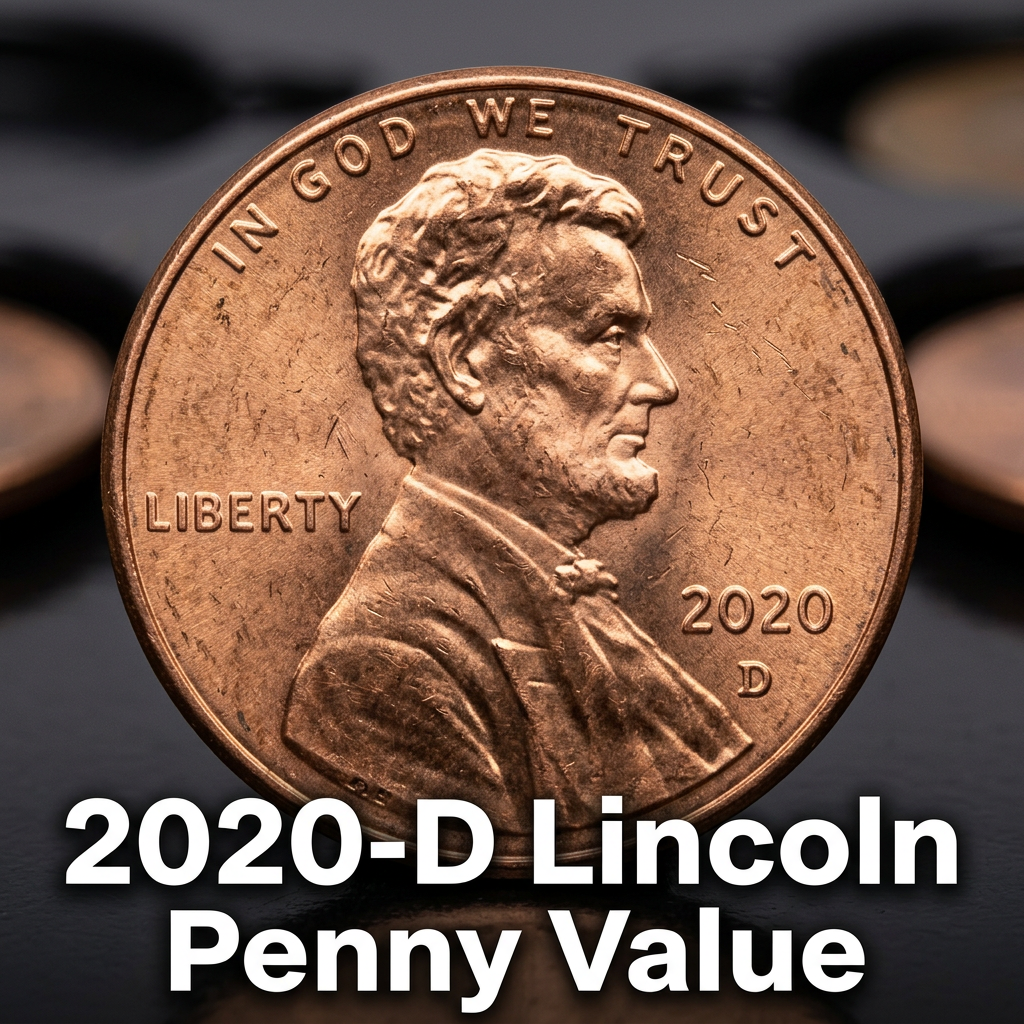
The 2020-D Lincoln Penny was minted at the Denver Mint, which is indicated by the small “D” mintmark on the obverse (front) side of the coin, just below the date. Denver produced over 4.8 billion pennies in 2020, making this one of the most common modern Lincoln cents in circulation.
Like all Lincoln cents minted since 2010, the reverse features the Union Shield design — a simple but patriotic image of a shield with “ONE CENT” written across it. The coin is composed of 97.5% zinc and 2.5% copper, giving it that familiar reddish-orange appearance when new.
Even though these coins were minted in massive quantities, that doesn’t mean they’re all worthless. Condition, luster, and eye appeal play a huge role in determining what a collector will pay. Using a coin identifier and value app can help you quickly assess whether your 2020-D penny is just a spender or something worth holding onto.
Your Old Coin Could Be Valuable!
Identify It & Know Its Real Value — Free Download
How Much Is a 2020-D Lincoln Penny Worth?
For most people, a 2020-D Lincoln penny found in everyday change is worth exactly one cent. It’s common, it’s modern, and millions of them are still floating around in wallets and couch cushions across the country.
That said, the value changes significantly based on grade. A coin in mint state — meaning it’s never been circulated, has full luster, and shows no wear — can be worth anywhere from $1 to $10 or more depending on how perfectly it was struck and preserved.
Your Old Coin Could Be Valuable!
Identify It & Know Its Real Value — Free Download
The highest-graded examples, certified by PCGS or NGC at MS68 or above, have sold for surprising amounts at auction. If you have a roll of uncirculated 2020-D pennies that came straight from the bank, those are the ones worth checking carefully. You can review up-to-date 2020-D Lincoln penny price data by grade to see exactly where your coin falls on the value spectrum.
| Grade | Condition | Estimated Value |
|---|---|---|
| Good (G-4) | Heavily worn, design visible | $0.01 (face value) |
| Fine (F-12) | Moderate wear, details clear | $0.01–$0.05 |
| Extremely Fine (EF-40) | Light wear, sharp details | $0.05–$0.25 |
| Mint State (MS-63) | Uncirculated, some marks | $0.50–$2 |
| Mint State (MS-65) | Gem uncirculated, strong luster | $3–$8 |
| Mint State (MS-68+) | Superb gem, near perfect | $50–$200+ |
Error Coins and Special Varieties Worth More
Here’s where things get exciting. Some 2020-D Lincoln pennies are worth significantly more than face value — not because of grade, but because of minting errors.
Your Old Coin Could Be Valuable!
Identify It & Know Its Real Value — Free Download
Double die errors, off-center strikes, and die cap errors are among the most sought-after varieties. A double die obverse (DDO) shows doubling in Lincoln’s portrait or the date, and collectors will pay a noticeable premium for confirmed examples.
Off-center strikes — where the design is noticeably misaligned from the center of the blank — can fetch anywhere from $10 to $50 or more, depending on how dramatic the shift is. Always examine your 2020-D penny under a magnifying glass or loupe before tossing it aside.
CoinKnow is a great tool to run a quick scan on your coin and check it against known error varieties. Many users are surprised to find that what looked like a common cent turned out to be a legitimate mint error worth holding onto.
Your Old Coin Could Be Valuable!
Identify It & Know Its Real Value — Free Download
How to Grade Your 2020-D Penny at Home
Grading your own coin doesn’t require expensive equipment or years of experience. Start by examining the coin under good lighting. A brand-new, shiny coin with no scratches or dullness is likely in the MS-60 to MS-65 range.
Look for bag marks — small nicks from coins bumping together in mint bags. These are common on uncirculated coins and actually lower the grade slightly. A coin with fewer marks and stronger luster earns a higher grade.
If the coin has been used in circulation even briefly, it will show subtle wear on Lincoln’s cheekbone and the high points of the lettering. That wear typically drops the coin into the Extremely Fine or lower category, bringing the value back down to face.
For a more detailed look at what your 2020 penny is worth based on condition and mint mark, specialized coin value resources break it down step by step. And if you want a fast second opinion, CoinKnow lets you photograph your coin and get an instant value estimate — perfect for beginners.
Your Old Coin Could Be Valuable!
Identify It & Know Its Real Value — Free Download
Should You Keep or Spend Your 2020-D Lincoln Penny?
The honest answer: if your coin is in circulated condition, it’s probably only worth face value. But if you have a roll of uncirculated pennies, a high-luster example, or something that looks “off” in an interesting way, it may be worth getting a second look.
Modern coins in perfect condition are rarer than most people think, because most pennies get handled, tossed, and beat up quickly. A pristine 2020-D penny in a protective sleeve or mint set holder has a much better shot at appreciating over time.
CoinKnow can help you decide whether a coin deserves a protective flip or a coin roll — and it’s free to try. Knowing the difference between a keeper and a spender is the first step to becoming a smarter collector.
—
Your Old Coin Could Be Valuable!
Identify It & Know Its Real Value — Free Download
FAQ
Q: Is a 2020-D Lincoln penny rare?
A: No, the 2020-D Lincoln penny is not rare. Denver minted nearly 5 billion of them in 2020. However, error varieties and perfectly preserved uncirculated examples can still be worth more than face value to the right collector.
Q: What does the “D” mintmark mean on a 2020 penny?
A: The “D” stands for Denver, meaning the coin was struck at the U.S. Mint’s Denver facility. Philadelphia-minted pennies from 2020 carry no mintmark, while proof coins from San Francisco use an “S” mintmark.
Q: How do I know if my 2020-D penny has an error?
A: Examine the coin closely under magnification. Look for doubling in the lettering or portrait, off-center designs, or unusual die marks. You can also use a coin identification tool like a coin identifier and value app to compare your coin against known error types quickly and easily.