1918 Wheat Penny Value No Mint Mark What It’s Worth Today

Your Old Coin Could Be Valuable!
Identify It & Know Its Real Value — Free Download


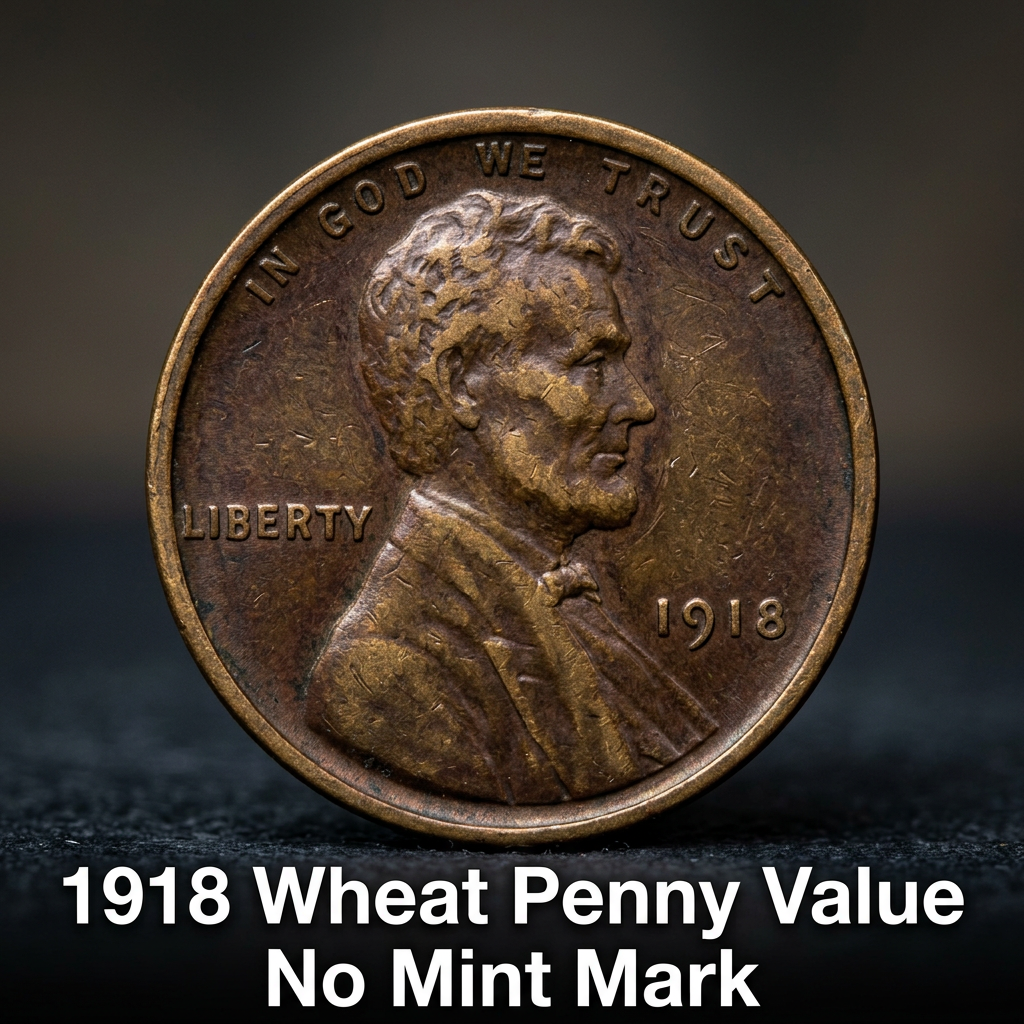
The 1918 Wheat Penny with no mint mark is worth anywhere from $0.50 in heavily worn condition to over $100 or more in higher mint state grades. If you found one in a coin jar, a dresser drawer, or an old collection, you’re holding a piece of American history — and it might be worth more than you think.
When you’re trying to figure out what an old Lincoln cent is really worth, having the right tools makes all the difference. A good coin identifier and value app can help you quickly identify the mint mark, grade the coin’s condition, and get a realistic value estimate — all from your phone. Whether you’re a casual collector or just curious, these tools save you a lot of guesswork.
What Is the 1918 Wheat Penny No Mint Mark?
The 1918 Lincoln Wheat Penny with no mint mark was struck at the Philadelphia Mint, which was standard practice at the time — Philadelphia didn’t use a mint mark on cents until much later.
That year, the Philadelphia Mint produced over 288 million of these coins, making them one of the more common issues of the era. The coin features Victor David Brenner’s iconic design: Abraham Lincoln on the obverse and two wheat stalks framing “ONE CENT” on the reverse.
Your Old Coin Could Be Valuable!
Identify It & Know Its Real Value — Free Download
Because so many were made, circulated examples aren’t rare. But coins in excellent condition — especially those with full original red luster — can be surprisingly valuable. The 1918 Wheat Penny no mint mark sits in a sweet spot for collectors who want an affordable yet historically meaningful Lincoln cent.
Your Old Coin Could Be Valuable!
Identify It & Know Its Real Value — Free Download
1918 Wheat Penny Value by Grade
The condition of your coin is everything when it comes to value. A coin graded “Good” (G-4) shows heavy wear but still has a visible date and design. As you move up the grading scale toward Fine, Extremely Fine, and Mint State, the value jumps significantly.
Your Old Coin Could Be Valuable!
Identify It & Know Its Real Value — Free Download
Here’s a general value chart based on current market trends:
| Grade | Description | Estimated Value |
|---|---|---|
| Good (G-4) | Heavy wear, flat details | $0.50 – $1.00 |
| Fine (F-12) | Moderate wear, major details clear | $2.00 – $4.00 |
| Extremely Fine (EF-40) | Light wear on high points | $10 – $20 |
| About Uncirculated (AU-55) | Slight traces of wear | $25 – $45 |
| MS-63 Red | Uncirculated, original luster | $60 – $90 |
| MS-65 Red | Gem uncirculated, bright red | $150 – $250+ |
For the most up-to-date 1918 Wheat Penny MS Red price data across all mint state grades, it’s worth checking a live pricing database before buying or selling.
How Condition and Color Affect the 1918 Lincoln Cent Value
One thing that surprises a lot of new collectors is how much color matters on Lincoln cents. Copper coins are graded not just by wear but also by their surface color: Red (RD), Red-Brown (RB), or Brown (BN).
Your Old Coin Could Be Valuable!
Identify It & Know Its Real Value — Free Download
A 1918 penny that has retained its original bright red copper color is worth significantly more than one that has turned brown over time. For example, an MS-65 Red example can fetch two to three times more than the same grade in Brown.
This is why storage matters. Coins kept in albums, holders, or away from humidity tend to preserve that red color much longer. If your 1918 Wheat Penny no mint mark still has a coppery or reddish glow, that’s a great sign for its value.
CoinKnow is a great resource for understanding how coin grading and color designations work — especially if you’re just starting to build your collection or assess what you’ve found.
Your Old Coin Could Be Valuable!
Identify It & Know Its Real Value — Free Download
Where to Sell or Learn More About Your 1918 Wheat Penny
Once you know what you have, the next step is deciding what to do with it. Circulated 1918 cents are easy to sell at coin shows, on eBay, or through local dealers. Higher-grade examples — especially those graded by PCGS or NGC — tend to attract more serious buyers and command better prices.
If you want a thorough breakdown of what your coin might be worth in different scenarios, this detailed guide covering the full 1918 penny value across grades and mint marks is a helpful starting point.
CoinKnow also helps collectors track values over time and identify coins from photos, which is especially useful when you’re sorting through a large collection or estate find.
Your Old Coin Could Be Valuable!
Identify It & Know Its Real Value — Free Download
FAQ
Q: Is a 1918 Wheat Penny with no mint mark rare?
A: No, the 1918 Philadelphia Mint cent is not rare — over 288 million were produced. However, coins in high uncirculated grades with original red color are much scarcer and can be quite valuable to collectors.
Q: How do I know if my 1918 penny is worth getting professionally graded?
A: Generally, if your coin appears uncirculated or shows strong original luster and color, professional grading by PCGS or NGC can significantly increase buyer confidence and sale price. For coins in average circulated grades, grading fees may not be worth it. CoinKnow can help you assess this before spending money on third-party grading.
Q: What makes a 1918 Wheat Penny more valuable than others from the same year?
A: The main factors are condition (grade), color designation (Red vs. Brown), and eye appeal. A coin that looks clean, sharp, and retains its original copper red color will always command a premium over a dull or heavily worn example — regardless of the year.