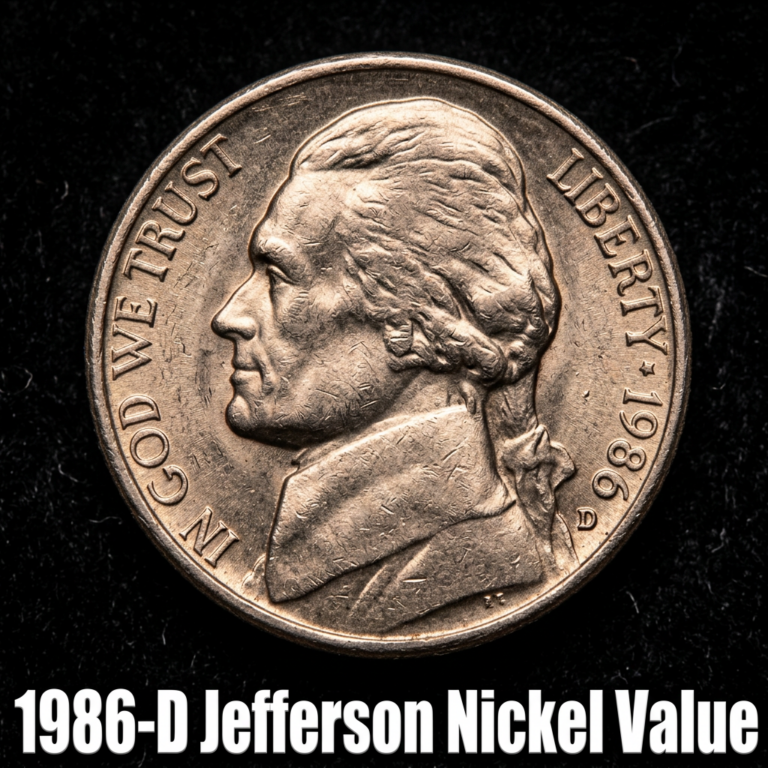
1950 Washington Quarter Value: No Mint Mark Coin Guide

Your Old Coin Could Be Valuable!
Identify It & Know Its Real Value — Free Download


The 1950 Washington Quarter with no mint mark is worth anywhere from $6 in worn condition to over $1,500 in high-grade mint state. Whether you found one in a jar of change or inherited a collection, these silver coins hold significant value beyond their face value due to their 90% silver content and collector demand.
| Condition | Estimated Value Range |
|---|---|
| Good (G-4) to Very Fine (VF-20) | $6.00 – $9.00 |
| About Uncirculated (AU-50) | $12.00 – $18.00 |
| Mint State (MS-63 to MS-65) | $25.00 – $65.00 |
| High Grade (MS-67+) | $400 – $1,500+ |
Identifying the 1950 Washington Quarter with No Mint Mark
If you are looking at a quarter dated 1950 and cannot find a small letter on the reverse side, you are holding a coin minted in Philadelphia. During this era, the Philadelphia Mint did not use a mint mark (like the “D” for Denver or “S” for San Francisco). To accurately identify your treasure, you can use the top coin identifier and value app to scan the coin’s surface and confirm its origin.
Philadelphia struck over 24 million quarters in 1950. While this might seem like a large number, many of these coins were heavily circulated or melted down for their silver content when prices spiked in later decades. Today, finding one in “original” condition is becoming increasingly difficult for hobbyists.
When evaluating your coin, focus on the details of George Washington’s hair and the feathers on the eagle’s breast. If these areas are smooth, the coin has seen heavy use. If you are unsure if your coin is a variety or just worn, the CoinKnow app can help you categorize it in seconds.
Your Old Coin Could Be Valuable!
Identify It & Know Its Real Value — Free Download
Silver Content and Melting Value of the 1950 Quarter
Before looking at collector “numismatic” value, every 1950 Washington Quarter has an inherent “melt value.” These coins were struck in 90% silver and 10% copper. Each coin contains roughly 0.1808 troy ounces of pure silver, which acts as a price floor. Even if the coin is completely flat and damaged, it will never be worth just 25 cents.
As the price of silver fluctuates on the global market, so does the base price of your 1950 Philadelphia quarter. Generally, when silver is around $25 per ounce, your quarter is worth at least $4.50 to $5.00 just for its metal content alone. This makes them a popular choice for “stackers” who collect silver bullion.
However, collectors are usually willing to pay a premium above the silver price for coins that are well-preserved. You can track the latest 1950 quarter value data to see how the silver market and collector demand are influencing prices this week.
Your Old Coin Could Be Valuable!
Identify It & Know Its Real Value — Free Download
Understanding the Grades of a 1950 Philadelphia Quarter
The value of a 1950 Washington Quarter with no mint mark is determined primarily by its “grade.” Grading is a process of evaluating the amount of wear on a coin on a scale from 1 to 70. For a common-date coin like the 1950 Philadelphia, the jump in price from a “circulated” grade to an “uncirculated” grade can be quite dramatic.
“Good” and “Very Fine” coins show significant wear, with Washington’s profile looking somewhat flat. “About Uncirculated” coins have slight wear on the highest points but still retain some of the original “luster” or shine from the mint. These are great starter coins for new collectors.
Your Old Coin Could Be Valuable!
Identify It & Know Its Real Value — Free Download
The real money is found in “Mint State” (MS) grades. A coin graded MS-65 or higher looks exactly as it did the day it was struck, with no visible wear and a beautiful, frosty surface. Using CoinKnow allows you to see high-resolution examples of these grades so you can compare them to the coin in your hand.
| Grade Designation | Visual Description | Price Estimate |
|---|---|---|
| Very Good (VG-8) | Heavy wear, clear rims | $6.50 |
| Extremely Fine (EF-40) | Light wear on hair/eagle | $11.00 |
| Mint State (MS-60) | No wear, many bag marks | $18.00 |
| Mint State (MS-65) | Gem quality, high luster | $55.00 |
Rare 1950 Quarter Varieties and Errors to Watch For
While the standard 1950 Philadelphia quarter is common, professional hunters look for specific errors and varieties that can make a coin worth hundreds. At Philadelphia, the most famous variety for this year is a “Doubled Die.” This happens when the die used to strike the coin has a doubled image, which is then transferred to the silver.
Look closely at the lettering in “IN GOD WE TRUST” or the date “1950.” If you see a clear doubling or “shadow” of the letters, you might have a Doubled Die Obverse (DDO). These are significantly more valuable than standard strikes. You can check the current market prices for MS graded 1950 quarters to see how much of a premium these specialty coins command at auction.
Your Old Coin Could Be Valuable!
Identify It & Know Its Real Value — Free Download
Other errors include “off-center” strikes or “die cracks.” Because 1950 was a high-production year, quality control sometimes slipped, leading to these unique collectibles. If your coin looks “weird” or “wrong,” don’t clean it! Cleaning a coin actually reduces its value by 50% or more. Instead, use the CoinKnow app to research the specific error type.
Is a 1950 Proof Quarter Worth More?
In 1950, the Philadelphia Mint also produced “Proof” coins for collectors. These were not meant for circulation. They were struck twice on polished blanks to create a mirror-like finish. Only 51,386 Proof quarters were made in 1950, making them much rarer than the 24 million business strikes.
A 1950 Proof quarter will not have a mint mark, just like the regular version. However, you can tell them apart by their shiny, reflective backgrounds and sharp, square edges. A standard 1950 quarter in circulated condition is common, but a 1950 Proof quarter in excellent condition can sell for $100 to $500 depending on how deep the “cameo” effect is.
If you find a quarter that looks exceptionally shiny, even if it is 70 years old, it might be a proof that someone accidentally spent. These “Proof-in-circulation” finds are rare but exciting. Always handle these by the edges to avoid leaving fingerprints on the delicate surfaces.
Your Old Coin Could Be Valuable!
Identify It & Know Its Real Value — Free Download
| Type | Mintage | Average Value |
|---|---|---|
| 1950 (No Mint Mark) Business Strike | 24,920,126 | $6 – $60 |
| 1950 Proof | 51,386 | $120 – $700 |
Tips for Selling Your 1950 Washington Quarter
If you decide to sell your 1950 Washington quarter, there are a few things you should know to get the best price. First, never take your coins to a “we buy gold” kiosk in a mall or a pawn shop if you think the coin has collector value. They usually only pay the “melt value” for the silver content.
For coins that are in Mint State or have an error, visiting a reputable local coin shop or listing the coin on a specialty auction site is a better bet. You should also consider getting high-value coins certified by a third-party grading service like PCGS or NGC. This “slabbing” process guarantees the grade and authenticity, making it much easier to sell for a high price.
Before you sell, use the CoinKnow app to get an up-to-date valuation. Prices for silver coins can change daily, and having the latest data in your pocket ensures you won’t get low-balled by a buyer. Keeping your coins in protective “flips” or capsules will also prevent further damage and preserve their value for years to come.
FAQ
Q: Why does my 1950 quarter have no mint mark?
A: A 1950 quarter with no mint mark was produced at the Philadelphia Mint. At that time, Philadelphia did not use mint marks on quarters. It is a completely normal part of the production process for that year.
Q: Is a 1950 quarter made of real silver?
A: Yes, all Washington Quarters minted in 1950 are composed of 90% silver and 10% copper. This makes them valuable for their precious metal content regardless of their condition.
Your Old Coin Could Be Valuable!
Identify It & Know Its Real Value — Free Download
Q: How can I tell if my 1950 quarter is a Proof?
A: Proof coins have a mirror-like finish on the flat surfaces (fields) and very sharp, detailed designs. They also typically have “squared-off” edges rather than the slightly rounded edges found on coins made for general circulation.
Q: Should I clean my 1950 silver quarter to make it look better?
A: No! You should never clean a collectible coin. Cleaning creates microscopic scratches on the surface that professional graders can easily detect. A cleaned coin is almost always worth significantly less than an uncleaned one with natural patina or “toning.”
Q: What is the most expensive 1950 Philadelphia quarter ever sold?
A: While average pieces sell for $10-$50, rare examples in perfect condition (MS-67 or higher) have sold at major auctions for over $2,000. The ultimate value depends on the lack of scratches and the beauty of the coin’s original luster.