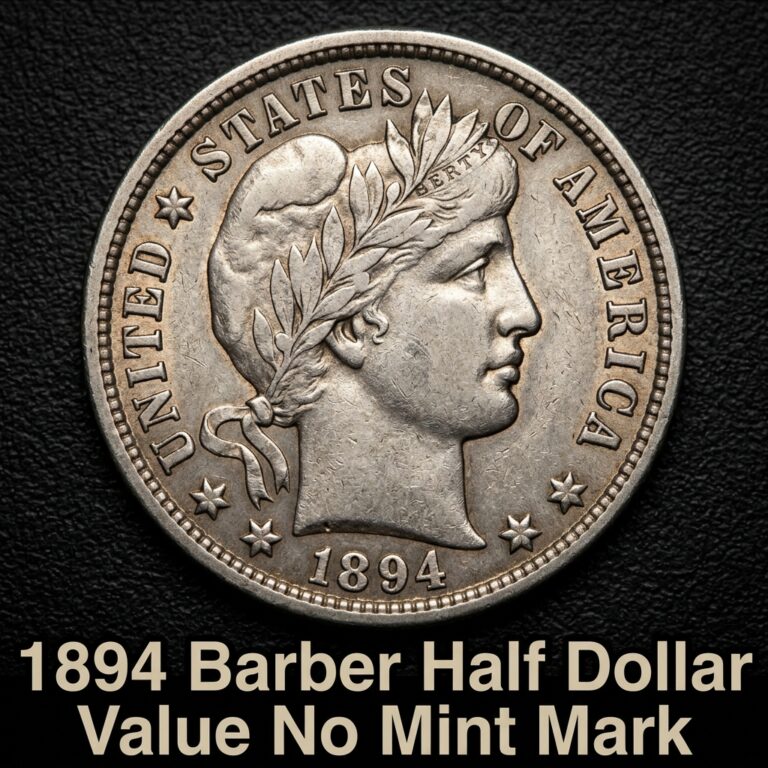
1923-S Standing Liberty Quarter Value: What Is It Worth?

Your Old Coin Could Be Valuable!
Identify It & Know Its Real Value — Free Download


The 1923-S Standing Liberty Quarter is worth anywhere from $350 in worn condition to over $20,000 in pristine mint state. This San Francisco minted coin is a legendary “semi-key date” in the series, making it a highly desirable find for any everyday American or serious collector exploring their spare change or inherited collections.
| Condition / Grade | Estimated Value |
|---|---|
| Good (G-4) | $350 – $450 |
| Fine (F-12) | $650 – $800 |
| Extremely Fine (XF-40) | $1,100 – $1,400 |
| Uncirculated (MS-63) | $3,500 – $5,000 |
| Gem Mint (MS-65 FH) | $15,000 – $25,000+ |
Why the 1923-S Standing Liberty Quarter is a Treasure
If you have stumbled upon an old quarter featuring a lady standing between two pedestals, you might be holding a small fortune. The 1923-S Standing Liberty Quarter is particularly special because of its incredibly low mintage of only 1,360,000 coins. Compared to modern quarters minted by the hundreds of millions, this San Francisco issue is a rare survivor of the early 20th century.
Identifying this coin accurately is the first step to realizing its potential. Many people use a top coin identifier and value app to quickly discern if their quarter is the rare “S” mint mark version or the more common Philadelphia version. The 1923-S is considered a “semi-key date,” which in collector terms means it is one of the hardest coins to find to complete a full set of Standing Liberty Quarters.
Beyond its rarity, the design itself is a piece of American art. Created by Hermon Atkins MacNeil, it reflects a time of transition in the United States. Finding one in a drawer or an old jar is like finding a hidden savings bond. Using the CoinKnow app can help you keep track of your discovery and monitor its market trends as prices for rare silver coins continue to fluctuate.
Your Old Coin Could Be Valuable!
Identify It & Know Its Real Value — Free Download
Understanding the Importance of the Mint Mark
The “S” on your 1923 quarter stands for the San Francisco Mint. During the 1920s, the San Francisco Mint often produced fewer coins than the main mint in Philadelphia. For the year 1923, Philadelphia minted nearly 10 million quarters, while San Francisco produced just over 1 million. This disparity is why the 1923-S is significantly more valuable than the 1923-P.
To find the mint mark, look at the front (obverse) of the coin. It is located just to the left of the date, near the bottom of the left-hand stone wall that Liberty is standing against. If there is no letter there, it was made in Philadelphia. If there is a “D,” it’s from Denver (though Denver did not mint quarters in 1923). The “S” is what turns a $10 coin into a $400 coin.
Your Old Coin Could Be Valuable!
Identify It & Know Its Real Value — Free Download
Because these coins are nearly 100 years old, the mint mark can sometimes be worn away. If the coin is heavily circulated, you might need a magnifying glass. Professionals often check 1923 silver quarter value information to see how even slightly visible marks affect the bottom line. CoinKnow users often share high-resolution photos to get a second pair of eyes on these tiny, crucial details.
Grading and Condition: The Key to Five-Figure Values
When it comes to the 1923-S Standing Liberty Quarter, condition is everything. Collectors use a 1-to-70 scale to grade coins. Most coins found in “the wild” or in old collections will fall into the “Good” or “Fine” categories. At these levels, the coin shows significant wear, but the date and the “S” mint mark must be clearly visible to command a premium price.
Your Old Coin Could Be Valuable!
Identify It & Know Its Real Value — Free Download
The real excitement begins with “Uncirculated” or “Mint State” (MS) coins. An uncirculated 1923-S looks like it just dropped off the press yesterday, with full luster and no wear on Liberty’s knees or chest. A high-grade example can fetch tens of thousands of dollars at auction. You can view specific 1923-S Mint State price data to see how a single grade point (like moving from MS-63 to MS-64) can add thousands of dollars to the value.
| Grade Designation | Visual Characteristics | Value Range |
|---|---|---|
| G-4 (Good) | Date is visible but worn; rims are flat. | $350 – $425 |
| VF-20 (Very Fine) | Liberty’s gown has some detail; most lines visible. | $850 – $1,000 |
| AU-50 (About Uncirculated) | Slight wear on high points; original mint luster. | $2,000 – $2,800 |
| MS-65 (Gem Mint) | No wear; beautiful luster and few marks. | $15,000+ |
The “Full Head” Factor in Quarters
You may hear advanced collectors talk about “Full Head” (FH) versions of the 1923-S Standing Liberty Quarter. This is a special designation given to coins where the strike was so strong that every detail of Liberty’s hair, her helmet-like cap, and even her ear is clearly defined. Most Standing Liberty Quarters were weakly struck, meaning the head often looks like a smooth blob even on uncirculated coins.
A 1923-S with a “Full Head” designation is extremely rare. For example, an MS-65 without a full head might sell for $16,000, but the same grade with a “Full Head” could easily double that price. This is because the San Francisco mint was notorious for “soft strikes” during this era. Finding a sharp, crisp 1923-S is like finding a needle in a haystack.
Your Old Coin Could Be Valuable!
Identify It & Know Its Real Value — Free Download
Before you get too excited, remember that the Full Head designation only applies to coins that have no wear (Mint State). If your coin has been used to buy groceries in 1925, it won’t qualify for Full Head status. Still, even “low grade” 1923-S quarters are worth a substantial amount of money compared to their 25-cent face value. Use CoinKnow to identify the specific features of your coin’s strike.
Historical Context: Why Was it Minted in San Francisco?
In 1923, the U.S. economy was roaring. The “Roaring Twenties” saw a massive demand for coinage as commerce expanded. However, silver production was shifting. The Standing Liberty series itself was relatively young, having only started in 1916. The San Francisco Mint primarily served the Western states, which is why their production numbers were often much lower than Philadelphia, which served the more populous East Coast.
The design of the 1923-S Standing Liberty Quarter is also historically significant because it is the “Type 2” design. The original 1916/1917 design featured Liberty with an exposed breast, which caused a public outcry. By 1923, she was wearing chainmail for a more modest appearance. This “warrior” version of Liberty was meant to symbolize a country prepared for defense after the First World War.
Understanding this history helps beginners realize why these coins are more than just metal; they are historical artifacts. When you hold a 1923-S, you are holding a piece of Post-WWI American history that was minted in a city still rebuilding from the great earthquake only 17 years prior. The rarity of the “S” mint mark reflects the regional economic needs of the time, making it a favorite for “VAM” collectors and history buffs alike.
Your Old Coin Could Be Valuable!
Identify It & Know Its Real Value — Free Download
| Year and Mint | Mintage Figure | Relative Rarity |
|---|---|---|
| 1923-P (Philadelphia) | 9,716,000 | Common |
| 1923-S (San Francisco) | 1,360,000 | Rare / Semi-Key |
| 1924-P (Philadelphia) | 10,920,000 | Common |
How to Sell Your 1923-S Quarter Safely
If you are lucky enough to own a 1923-S Standing Liberty Quarter, do not rush to the first pawn shop you see. Because this coin is worth several hundred dollars even in poor condition, you should consider having it “graded” by a professional service like PCGS or NGC. This involves sending your coin to experts who verify its authenticity and give it an official grade in a plastic slab.
Slabbed coins almost always sell for more because the buyer has peace of mind that the coin isn’t a counterfeit. Counterfeits do exist for this date because the value is so high. Some people try to “add” an S to a 1923 Philadelphia quarter. A professional grading service will catch this immediately. If your coin is worth thousands, the $50 grading fee is a vital investment.
Lastly, check reputable auction sites or local coin shops with good reviews. Avoid cleaning your coin! Cleaning an old silver coin with polish or even soap and water can destroy its value. Collectors want “original skin,” which is the natural patina or tarnish that develops over a century. A dirty-looking 1923-S is worth far more than a shiny, scrubbed one.
FAQ
Q: Where is the mint mark on a 1923 quarter?
A: The mint mark on a 1923 Standing Liberty Quarter is located on the front (obverse) of the coin. Look to the left of the date, just above the “23.” If you see a small “S,” it was minted in San Francisco. If there is no letter, it was minted in Philadelphia.
Your Old Coin Could Be Valuable!
Identify It & Know Its Real Value — Free Download
Q: Is a 1923-S quarter made of silver?
A: Yes, all Standing Liberty Quarters minted between 1916 and 1930 are made of 90% silver and 10% copper. Even if the coin is too worn to be a collector’s item, it will always be worth its weight in silver (though a 1923-S is far too rare to sell for just its silver content).
Q: What is the most expensive 1923-S quarter ever sold?
A: High-grade examples of the 1923-S with the “Full Head” designation have sold for over $40,000 at major auctions. The price depends entirely on the perfection of the strike and the preservation of the coin’s surface over the last 100 years.
Q: Can I find a 1923-S quarter in my pocket change today?
A: While it is technically possible, it is extremely unlikely. Quarters from this era were replaced by the Washington Quarter in 1932. Most Standing Liberty Quarters were pulled from circulation by collectors or silver hoarders decades ago. However, they are frequently found in “estate” collections or old jars of coins left by grandparents.