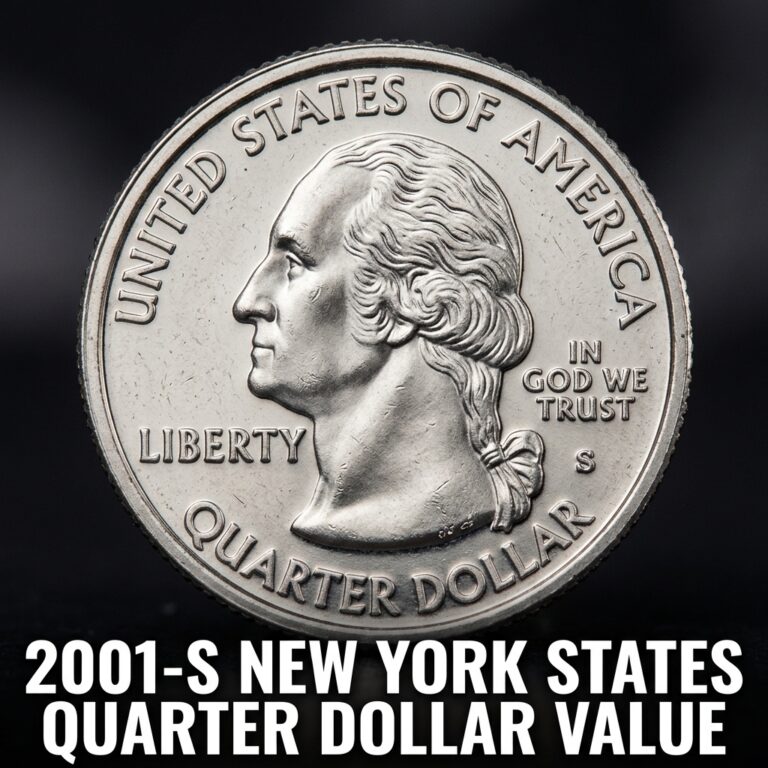
2008-S Roosevelt Dime Value: Is Your Proof Coin Worth Money?

Your Old Coin Could Be Valuable!
Identify It & Know Its Real Value — Free Download


The 2008-S Roosevelt Dime is worth anywhere from $2.50 in typical Proof condition to over $45 for high-grade silver specimens. While these coins were not released into general circulation for daily spending, many everyday Americans find them in inherited collections or “Mint Sets” and wonder if they have hit the jackpot.
| Condition/Type | Estimated Value |
|---|---|
| 2008-S Clad Proof (PR69) | $3.00 – $5.00 |
| 2008-S Clad Proof (PR70) | $25.00 – $35.00 |
| 2008-S Silver Proof (PR69) | $10.00 – $15.00 |
| 2008-S Silver Proof (PR70) | $40.00 – $60.00 |
Understanding the 2008-S Proof Roosevelt Dime
If you have found a dime dated 2008 with a small “S” mint mark, you are holding a “Proof” coin. Unlike the dimes minted in Philadelphia (P) or Denver (D) that we use to buy coffee, the San Francisco (S) mint produced these specifically for collectors. They were struck using polished dies and specially prepared blanks to ensure a mirror-like finish. Because they were sold in protective plastic lenses, finding one in your pocket change is rare, but it does happen when collections are accidentally spent. To find out exactly what you have, you can use a top coin identifier and value app to scan the surface and check for the distinct mirror fields.
The 2008-S Roosevelt Dime comes in two distinct varieties: the standard copper-nickel clad version and the 90% silver version. Identifying the difference is the first step in determining the value. CoinKnow users often report that weighing the coin is the easiest way to tell them apart at home. A standard clad dime weighs 2.27 grams, while the silver version is heavier at 2.50 grams. If you aren’t sure, check the edge of the coin. A clad coin will show a distinct copper stripe, whereas the silver version will have a solid, bright white silver edge all the way around.
Collectors highly prize “Deep Cameo” (DCAM) finishes. This term describes the intense contrast between the frosted portrait of FDR and the shiny, reflective background. In 2008, the Mint’s technology was so advanced that almost every proof coin came out as a Deep Cameo. Consequently, for a 2008-S dime to be truly valuable, it must be in “Perfect” condition, known as PR70. Even a tiny hairline scratch visible only under a magnifying glass can drop the price significantly.
Your Old Coin Could Be Valuable!
Identify It & Know Its Real Value — Free Download
Detailed Price Guide for 2008-S Clad and Silver Dimes
The market for modern proof dimes is generally stable, but prices fluctuate based on the current price of silver and the demand from registry set collectors. While a 2008-P dime is common, the 2008-S varieties carry a higher premium because of their limited production and precious metal content. You can find comprehensive 2008 Roosevelt Dime price data online to see how the S-mint compares to its siblings from other mints.
Your Old Coin Could Be Valuable!
Identify It & Know Its Real Value — Free Download
For the clad version, you are mostly looking at “numismatic value,” which is the value to a collector. For the silver version, you have the “melt value”—the actual value of the silver metal—plus the collector premium. As silver prices rise, the baseline for the 2008-S Silver Proof Dime increases regardless of its condition. Below is a breakdown of what you can expect to pay or receive for these coins in today’s market.
| Grade/Variety | Clad Value | 90% Silver Value |
|---|---|---|
| Proof 67 (Slight Wear) | $1.50 | $8.00 |
| Proof 68 (Excellent) | $2.50 | $10.00 |
| Proof 69 (Near Perfect) | $5.00 | $15.00 |
| Proof 70 (Flawless) | $35.00 | $55.00 |
The Rarity of the 2008-S Mint Mark
While “rare” is a relative term in the coin world, the 2008-S is much scarcer than the dimes minted for circulation. In 2008, the Philadelphia mint produced over 450 million dimes, and Denver produced over 590 million. In contrast, the San Francisco mint produced only about 2.1 million Clad Proofs and 1.3 million Silver Proofs. This makes the 2008-S much harder to find in the wild. For more detailed statistics, you can check this 2008-S dime value and mintage guide.
Your Old Coin Could Be Valuable!
Identify It & Know Its Real Value — Free Download
The limited mintage is why these coins are almost always found in collector sets. If you find one in a jar of loose change, it is likely that someone broke open a “Proof Set” to spend the money. Unfortunately, circulation quickly ruins the “Proof” finish. A 2008-S dime that has been sliding around in a pocket or cash register loses its mirror sheen and becomes an “impaired proof.” These are worth significantly less than those still in their original government packaging.
Using an app like CoinKnow can help you determine if your coin is a proof or just a very shiny business-strike coin from Philadelphia. Many beginners mistake the luster of a fresh 2008-P dime for a proof. However, the “S” mint mark is the definitive proof of its origin. Without that “S,” the coin is likely only worth its face value of ten cents unless it has a major error.
Key Features to Look For on Your 2008-S Dime
When examining your coin, look closely at the “Full Torch” (FT) details on the reverse side. The Roosevelt Dime design features a torch, an olive branch, and an oak branch on the back. Collectors pay a premium for dimes where the horizontal bands at the top and bottom of the torch are fully separated and distinct. On proof coins like the 2008-S, these details are usually very sharp, but any smudge or wear can disqualifying it from the highest grades.
Your Old Coin Could Be Valuable!
Identify It & Know Its Real Value — Free Download
Another factor is the color (toning). Most 2008-S dimes remain brilliant white or silver because they have been protected. However, occasionally these coins develop “rainbow toning” due to reactions with the air or the packaging materials. Beautifully toned 2008-S silver dimes can sometimes sell for twice the price of a standard white coin to the right buyer.
| Feature | What to Look For |
|---|---|
| Mint Mark | Look for a clear ‘S’ to the right of Roosevelt’s neck. |
| Reflectivity | The fields should look like a mirror. |
| Edge Color | Solid white indicates 90% silver; copper stripe indicates clad. |
| Torch Bands | Check for complete separation in the torch lines. |
Is It Worth Getting Graded?
One of the most common questions for CoinKnow users is whether they should spend the money to have their 2008-S Roosevelt Dime professionally graded by companies like PCGS or NGC. The answer depends entirely on the condition. Grading services cost roughly $20 to $50 per coin when you factor in shipping and insurance. If your clad 2008-S dime is a PR69 (worth about $5), it makes zero financial sense to pay for grading.
However, if you have a 90% Silver 2008-S Dime that looks absolutely flawless—not a single microscopic scratch or “milk spot”—it could potentially be a PR70. A PR70 specimen can sell for upwards of $60. In this case, the professional slab (holder) adds enough value and liquidity to make the process worth it. Always use a high-powered loupe to inspect the coin before sending it off. If you see even one tiny tick mark, it will not get the “70” grade.
Your Old Coin Could Be Valuable!
Identify It & Know Its Real Value — Free Download
For most casual finders, keeping the coin in a simple cardboard “2×2” holder or a plastic flip is the best way to preserve its current value without spending a fortune. Keeping it away from moisture and direct sunlight will prevent “milk spots,” which are white, cloudy patches that often plague modern silver coins and lower their eye appeal to collectors.
Final Thoughts on the 2008-S Dime
The 2008-S Roosevelt Dime is a beautiful example of modern American minting. Whether you have the copper-nickel clad version or the precious 90% silver variety, it is a coin worth more than its ten-cent face value. While you likely won’t retire on the proceeds of selling one, they serve as a fantastic “gateway” coin for new collectors. Identifying the mint mark, determining the metal content, and assessing the grade are the fundamental skills of numismatics.
If you are lucky enough to find one of these in your change, set it aside! It is a piece of history from a year of significant transition in the United States. Even if it is “impaired” from circulation, it still carries the story of the San Francisco Mint and the artistry of the Roosevelt design. Keep searching your pockets—good luck!
FAQ
Q: How can I tell if my 2008-S dime is silver without a scale?
A: The easiest way is the “Edge Test.” Hold the coin and look at the ridged edge. If you see a solid silver/white color, it is likely the 90% silver version. If you see a brown or orange copper stripe sandwiched between two silver layers, it is a clad coin. You can also try the “Ping Test”—tapping the coin gently often produces a higher, longer ring if it’s silver, but be careful not to damage the coin!
Your Old Coin Could Be Valuable!
Identify It & Know Its Real Value — Free Download
Q: Why is there an ‘S’ on my dime but it doesn’t look like a mirror?
A: This is called an “Impaired Proof.” It means the coin was originally a mirror-like proof but has been handled, dropped, or spent in circulation. The friction against other coins and surfaces wears down the polished finish. While it is still technically a proof, its value is significantly lower than a “Gem Proof” that stayed in its original packaging.
Q: Are there any valuable errors for the 2008-S Roosevelt Dime?
A: Major errors are extremely rare on proof coins because the Mint has very strict quality control for collector products. However, some collectors look for “Minor Doubled Dies” on the year or the lettering. Currently, there are no widely recognized, high-value errors for the 2008-S, but new discoveries are made occasionally.
Q: Where is the best place to sell my 2008-S Dime?
A: For common grades (PR68 or PR69), local coin shops may not offer much because their profit margin is thin. Online marketplaces like eBay are better for individual sales. For silver versions, you can also sell to bullion dealers, though you will only get the metal value rather than the collector value. Professional grading is only recommended for potential PR70 coins.