1941 DDO Wheat Penny Value What It’s Really Worth and Why Collectors Care

Your Old Coin Could Be Valuable!
Identify It & Know Its Real Value — Free Download


The 1941 DDO Wheat Penny is worth anywhere from $5 in lightly worn condition to well over $150 or more for high-grade examples with strong doubling — and rare, pristine specimens can fetch even higher prices at auction. If you just found one of these coins in an old jar or inherited collection, you might be sitting on a genuinely interesting piece of American numismatic history.
What Makes the 1941 DDO Wheat Penny Special
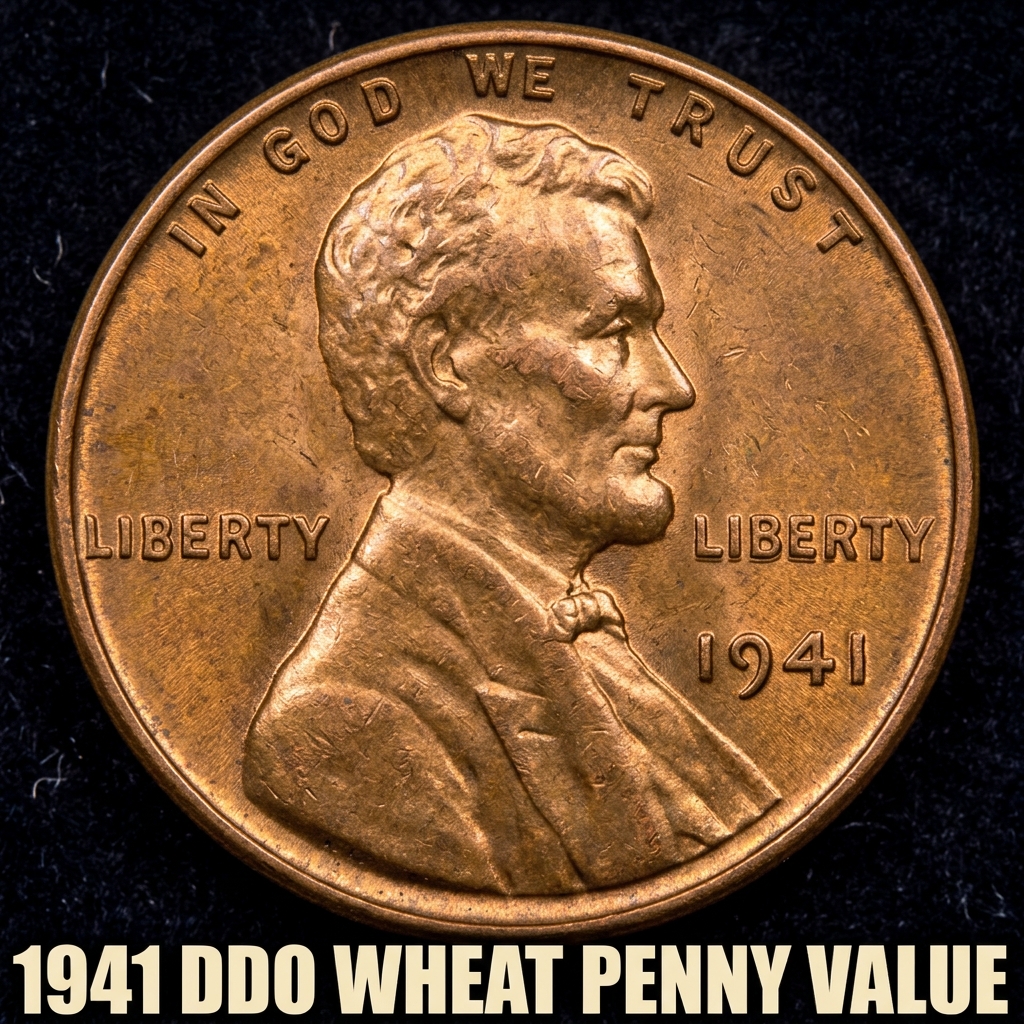
The “DDO” in this coin’s name stands for Doubled Die Obverse — a minting error that occurs when the coin’s design is struck more than once at a slightly different angle. On the 1941 DDO Wheat Penny, this doubling is visible on Lincoln’s portrait, the lettering, and sometimes the date itself.
To spot it, you’ll want a magnifying glass or jeweler’s loupe. Look closely at the word “LIBERTY” and “IN GOD WE TRUST” on the front of the coin. If you see a slight shadow or ghost image alongside the letters, that’s the doubled die effect — and it’s exactly what collectors are hunting for.
This variety is scarcer than the regular 1941 Lincoln Wheat Penny, which makes it significantly more valuable to the right buyer. Using a coin identifier and value app can help you quickly confirm whether what you’re holding is a standard issue or a genuine doubled die variety before you decide what to do with it.
Your Old Coin Could Be Valuable!
Identify It & Know Its Real Value — Free Download
Understanding the 1941 Wheat Penny in Context
Before diving into the DDO premium, it helps to understand the base coin. In 1941, the U.S. Mint struck Lincoln Wheat Pennies at three facilities — Philadelphia (no mint mark), Denver (D), and San Francisco (S). The Philadelphia mint produced the most coins that year, making it the most common.
Your Old Coin Could Be Valuable!
Identify It & Know Its Real Value — Free Download
Regular 1941 Wheat Pennies in circulated condition are typically worth between $0.05 and $0.50, nothing to write home about. But uncirculated examples can fetch $3 to $10, and high-grade red specimens climb higher.
Now add the DDO variety into the mix and the numbers shift considerably. The rarity of the doubling error, combined with the already nostalgic appeal of the Wheat Penny series, creates real collector demand. For detailed pricing on specific grade points, you can check out up-to-date 1941 Wheat Penny value information broken down by condition and mint mark.
Your Old Coin Could Be Valuable!
Identify It & Know Its Real Value — Free Download
1941 DDO Wheat Penny Value by Grade
Coin grading is the single biggest factor in determining what your 1941 DDO Wheat Penny is worth. Coins are graded on a scale from 1 (barely identifiable) to 70 (perfect mint state). Here’s a general value guide:
| Grade / Condition | Description | Estimated Value (DDO) |
|---|---|---|
| Good (G-4) | Heavy wear, design visible | $5 – $15 |
| Fine (F-12) | Moderate wear, details clear | $15 – $35 |
| Extremely Fine (EF-40) | Light wear on high points | $40 – $75 |
| About Uncirculated (AU-55) | Slight friction, near full luster | $75 – $110 |
| Mint State (MS-63+) | No wear, strong luster | $120 – $200+ |
Keep in mind these are estimates. Auction results can swing higher for coins with exceptional eye appeal or strong documented doubling.
How to Check Your Coin’s Value the Smart Way
If you’re serious about figuring out what your 1941 DDO Wheat Penny is worth, don’t just rely on guesswork. Start by examining the coin under magnification and comparing it to known DDO examples online.
Your Old Coin Could Be Valuable!
Identify It & Know Its Real Value — Free Download
Then consider using CoinKnow, an app designed for everyday people who find old coins and want fast, reliable answers. You can photograph your coin and get an instant identification along with current market value estimates — no numismatic degree required.
For collectors looking at the broader 1941 series, including proof-like and red-designation examples, detailed 1941-S Wheat Penny red proof-like pricing data can give you a clearer picture of how mint state coins in this era are trending on the market.
Professional grading through PCGS or NGC is always worth considering for higher-value examples. A certified grade adds buyer confidence and often results in better sale prices.
Your Old Coin Could Be Valuable!
Identify It & Know Its Real Value — Free Download
Tips for Selling or Keeping Your 1941 DDO Wheat Penny
Once you know what you have, you need to decide: hold it or sell it? If you’re a casual finder, selling through eBay, a local coin show, or a reputable dealer are all solid options. Make sure to photograph the coin clearly and describe the doubling accurately in any listing.
If you want to build a collection around error coins and varieties, the 1941 DDO is a great starting point. CoinKnow can help you track down other doubled die varieties and compare values across different years and series — making your collecting journey much more organized and fun.
Never clean your coin. Cleaning destroys the surface and dramatically reduces collector value, even if the coin looks shinier afterward.
—
Your Old Coin Could Be Valuable!
Identify It & Know Its Real Value — Free Download
Frequently Asked Questions
Q: How do I know if my 1941 penny is really a DDO?
A: Look for visible doubling on the lettering and Lincoln’s features using a 5x or 10x loupe. Compare your coin to verified DDO images from PCGS or NGC. If you’re unsure, CoinKnow can help you identify it quickly using your phone’s camera.
Q: Is the 1941 DDO Wheat Penny rare?
A: It’s not extremely rare, but it is a genuine variety that’s harder to find than a standard 1941 penny. The scarcity of strong, clearly doubled examples in high grades is what drives the premium in collector markets.
Q: Should I get my 1941 DDO Wheat Penny professionally graded?
A: If your coin appears to be in Extremely Fine or better condition and shows clear doubling, professional grading from PCGS or NGC is likely worth the cost. It can significantly increase buyer trust and final sale value.